Humane Declawing Alternatives: A Complete Guide for Cat Owners in 2026
Protect your furniture and your cat's wellbeing. Discover effective, humane alternatives to declawing, from scratching posts to nail caps and behavior training.
Share this page
Humane Declawing Alternatives: A Complete Guide for Cat Owners in 2026
Declawing, or onychectomy, is a surgical procedure that involves amputating the last bone of each toe. It is now widely recognized as an inhumane and unnecessary practice that can cause lasting physical and behavioral problems for cats. Fortunately, numerous effective and compassionate alternatives exist to manage scratching behavior while respecting your cat's natural instincts and ensuring their long-term health.
Understanding Why Cats Scratch
Scratching is a normal, instinctive, and necessary feline behavior. It serves several vital purposes:
Allows for a full-body stretch, engaging back and shoulder muscles.
Scent Marking
Deposits pheromones from paw pads to mark territory.
Visual Marking
Leaves visible scratches as a territorial signal.
Emotional Expression
Can be a outlet for excitement, stress, or happiness.
The Significant Harm of Declawing
Declawing is not a simple nail trim; it is a major amputation with serious consequences.
Physical Consequences:
Chronic pain, often from retained bone fragments.
Lameness and altered gait.
Long-term back and joint pain due to changed weight distribution.
Increased risk of arthritis.
Litter box avoidance because digging in litter becomes painful.
Behavioral Consequences:
Increased biting, as the cat loses its primary defense mechanism.
Heightened anxiety, stress, and fearfulness.
Potential for aggression or social withdrawal.
Persistent litter box issues.
Medical Consensus:
Major veterinary associations, including the American Veterinary Medical Association (AVMA) and the American Association of Feline Practitioners (AAFP), oppose routine declawing due to the high risk of complications and lack of medical benefit to the cat.
Alternative 1: Provide Proper Scratching Posts
How to Choose the Right Scratching Post
Cats have material preferences. Offering the right texture is key to success.
Material
Cat Preference
Durability
Best For
Sisal Fabric
Very High
Excellent
Most cats, heavy use
Sisal Rope
High
Good
Good all-around option
Corrugated Cardboard
High
Replaceable
Horizontal scratchers, cost-effective
Wood
Moderate
Excellent
Cats who prefer tree bark
Carpet
Moderate
Moderate
Can confuse cats if similar to household carpet
Key Specifications:
Height: At least 32 inches tall to allow for a full stretch.
Sturdiness: Must be solid and not wobble or tip over during use.
Variety: Offer both vertical posts and horizontal or angled surfaces.
Quantity: Have multiple posts in a multi-cat household.
Strategic Placement & Training
Placement Rules:
Start where the problem is: Place the post directly next to the furniture being scratched.
Near resting areas: Cats love to stretch after a nap.
In social areas: Near entryways or common rooms where cats mark territory.
Accessibility: Ensure posts are in visible, uncluttered locations.
Training Steps:
Step
Action
1
Position the post strategically (see above).
2
Make it attractive with catnip, silver vine, or treats.
3
Gently mimic scratching with your own nails or your cat's paws.
4
Immediately reward any investigation or use with praise and treats.
5
Once the post is used consistently, you can gradually move it to a more ideal permanent spot (a few inches per day).
Alternative 2: Regular Nail Trimming
Keeping your cat's nails blunt is one of the simplest and most effective solutions.
Essential Supplies:
Guillotine-style or scissor-style cat nail clippers.
Styptic powder (in case of a minor bleed).
High-value treats.
A towel for wrapping a nervous cat (optional).
Safe Trimming Technique:
Gently press the toe pad to extend the claw.
Identify the quick (the pink, sensitive vein inside the nail).
Clip only the sharp, translucent tip, well clear of the quick.
Reward your cat immediately after each nail or session.
Frequency: Trim every 2-3 weeks for maintenance.
Acclimating Your Cat to Nail Trims
Go slowly to build positive associations.
Week
Goal
1
Touch and gently massage paws during petting sessions. Reward.
2
Press the pads to extend the claws briefly. Reward.
3
Bring the clippers out, let your cat sniff them, and reward.
4
Clip just one nail, reward lavishly, and end the session.
5+
Gradually increase the number of nails per session.
Alternative 3: Soft Nail Caps (e.g., Soft Paws®)
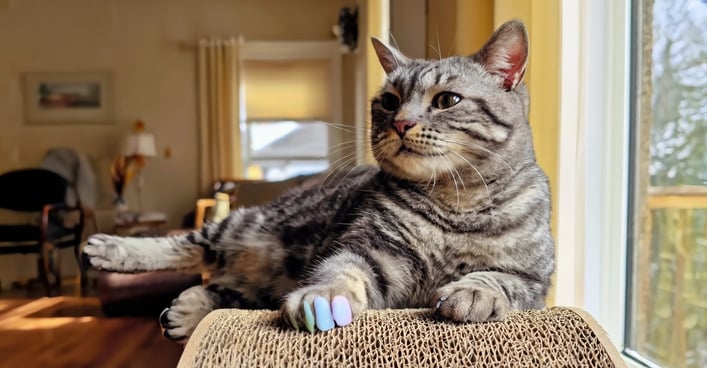
These vinyl caps are glued over the cat's natural nail, creating a blunt tip.
How They Work:
Applied over trimmed nails with pet-safe adhesive.
Last 4-6 weeks until the nail grows out and the cap sheds naturally.
The cat can still retract its claws normally.
Completely harmless and humane when applied correctly.
Application Process:
Trim the cat's nails.
Fill the cap about 1/3 full with the provided adhesive.
Slide the cap onto the nail and hold for a few seconds to set.
Allow the adhesive to dry fully (about 5 minutes).
Pros & Cons:
Pros: Highly effective at preventing damage; safe; comes in fun colors; many vets/groomers offer application.
Cons: Requires periodic replacement; some cats may need time to adjust; initial cost for kit.
Use physical barriers to make undesirable surfaces less appealing.
Product
Use Case
Effectiveness
Double-Sided Tape
On corners/arms of furniture
Very High (cats dislike sticky paws)
Clear Vinyl Guards
Adhesive corner protectors
High
Aluminum Foil
Temporarily on couches or counters
Moderate to High
Plastic Carpet Runner
Spike-side up on carpeted areas
High
Furniture Throws/Slips
Washable covers for protection
Moderate (requires training)
Deterrent Sprays:
Citrus, menthol, or commercial pet deterrent sprays can be applied to furniture (always test on a hidden area first). Reapplication is necessary.
Alternative 5: Behavior Modification
The Redirection Protocol
When you catch your cat scratching furniture:
Interrupt calmly: Use a neutral sound like a clap or "eh-eh," not yelling.
Immediately redirect: Gently carry or lure your cat to an approved scratching post.
Encourage use: Use your fingers to scratch the post or dangle a toy near it.
Reinforce: The instant your cat uses the post, reward with a treat and praise.
Positive Reinforcement & Enrichment
Reward desired behavior: Keep treats near posts to reward spontaneous use.
Increase play: Use interactive toys like wand teasers to burn energy and reduce stress-scratching.
Provide enrichment: Cat trees, window perches, hiding boxes, and puzzle feeders reduce boredom and anxiety, which can trigger unwanted scratching.
Consider pheromones: Feliway® diffusers mimic calming facial pheromones and can reduce stress-related marking.
Alternative 6: Seek Professional Help
When to Consult a Professional
If scratching is destructive and none of the above alternatives work.
If scratching is linked to obvious anxiety, fear, or conflict in a multi-cat home.
If inappropriate elimination (outside the litter box) accompanies the scratching.
Types of Professionals:
Veterinary Behaviorist: A vet with advanced training in behavior. Can rule out medical causes and prescribe medication if needed for severe anxiety.
Certified Cat Behavior Consultant: Can provide a home assessment and create a customized behavior modification plan.
Cost Comparison: Declawing vs. Humane Alternatives
First-Year & Ongoing Costs (Estimated):
Method
First-Year Cost
Ongoing Annual Cost
Declawing Surgery
$300 - $800+
Potential high costs for complications (pain management, infections, etc.)
Quality Scratching Posts/Stations
$100 - $300
$50 - $100 (for replacement pads/posts)
DIY Nail Trimming
$10 - $20 (clippers)
Minimal (clipper replacement)
Nail Caps (Self-Applied)
$50 - $100
$50 - $100
Professional Nail Trims/Grooming
$200 - $400
$200 - $400
Professional Behavior Consultation
$200 - $500
Possible follow-up fees
Conclusion: Humane alternatives are not only better for your cat's welfare but are often more cost-effective in the long run, avoiding the potential for expensive medical complications from declawing.
Legal, Ethical, and Veterinary Perspectives
Global Trend Toward Bans
Declawing for non-therapeutic reasons is banned or heavily restricted in many places, including:
The United Kingdom, European Union, Australia, Brazil, Israel.
Numerous cities across the United States (e.g., Los Angeles, San Francisco, Denver).
Multiple Canadian provinces (e.g., British Columbia, Nova Scotia).
This legal trend reflects a growing ethical understanding of animal welfare.
Veterinary Stance
Most mainstream veterinary organizations now strongly discourage or oppose elective declawing, advocating for the use of alternatives first.
Your Action Plan for Success
1. Adopt a Multi-Modal Approach:
Combine methods for best results. For example: Scratching Posts + Regular Trims + Temporary Furniture Guards during training.
2. Practice Patience and Consistency:
Behavior change takes time. Be consistent with redirection and rewards. Every cat learns at its own pace.
3. Know When to Reassess:
If a post isn't used, try a different material, orientation, or location.
If problems escalate, seek professional help promptly.
A sudden change in scratching habits warrants a veterinary check to rule out pain or illness.
Frequently Asked Questions (FAQ)
Q: Will my furniture be ruined if I don't declaw my cat?A: No. With the proper alternatives in place—especially appealing scratching posts and regular nail care—most cats will readily use appropriate surfaces. The key is providing a better option than your sofa.
Q: Do nail caps hurt or bother cats?A: When applied correctly over a trimmed nail, they are painless and comfortable. Most cats adjust within a few hours and behave completely normally. They can still retract their claws.
Q: What if I've tried everything and nothing works?A: Don't give up. Consult a veterinary behaviorist or a certified cat behavior consultant. They can identify subtle triggers and create a tailored plan. There is always another option to try before considering an irreversible, harmful surgery.
Q: Is "laser declawing" or "tendonectomy" a better alternative?A: No. Laser declawing is still amputation, with similar risks and complications. Tendonectomy (severing the tendon that controls the claw) leaves the claw intact but unable to retract, often leading to overgrowth, ingrown nails, and pain. Both are unacceptable alternatives.
Q: My landlord's lease requires declawing. What can I do?A: Many landlords are open to negotiation. Propose a compelling alternative: offer to use nail caps, provide a pet deposit, sign a specific damage addendum, or provide references from past landlords. Educate them on the availability of humane solutions.
Last Updated: 2026 | Choosing humane alternatives protects your furniture, your bond with your cat, and their fundamental wellbeing.
Get expert advice about cat care, behavior, nutrition, grooming, and training. Ask our AI cat care expert anything about your cat and receive professional guidance.