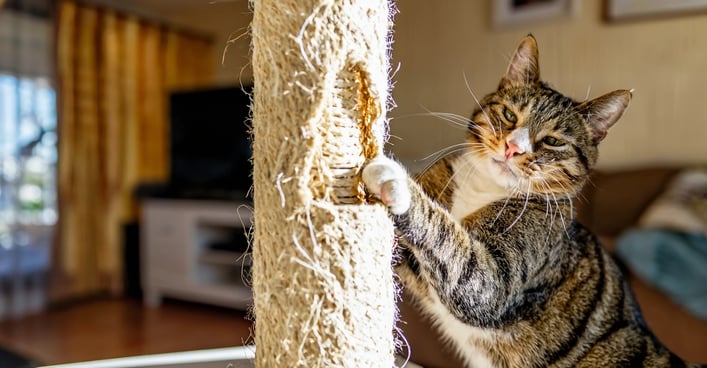
How to Stop a Cat from Scratching Furniture: A Complete Guide for 2026
Learn proven, humane strategies to redirect your cat's natural scratching instinct away from furniture and onto appropriate posts and surfaces.
Share this page
How to Stop a Cat from Scratching Furniture: A Complete Guide for 2026
Furniture scratching is a common and frustrating issue for cat owners, but it's a natural and necessary feline behavior. The solution isn't to stop your cat from scratching entirely, but to successfully redirect this instinct to appropriate surfaces. This guide provides proven, humane methods to protect your furniture while keeping your cat happy and healthy.
Understanding Why Cats Scratch
Scratching is a complex behavior rooted in your cat's biology and psychology. Understanding the "why" is the first step to finding a solution.
1. Nail Maintenance
Removes the outer nail sheath to reveal sharp, new claws underneath.
Keeps nails healthy and prevents painful overgrowth.
Sharpens claws for hunting and climbing.
2. Territory Marking
Leaves visual marks (scratches) as a sign of occupancy.
Deposits scent from glands in the paw pads, creating a chemical "signpost."
Communicates presence to other animals and establishes household boundaries.
3. Stretching and Exercise
Provides a full-body stretch that extends the spine, shoulders, and leg muscles.
Maintains flexibility and feels physically satisfying.
Serves as stress relief and an outlet for excitement or anxiety.
Can signal boredom if a cat lacks other enrichment.
May be a display of contentment in a secure environment.
The Declawing Myth: Why It's Never the Answer
What Declawing Actually Involves
Declawing (onychectomy) is not a simple nail trim. It is the surgical amputation of the last bone of each toe, equivalent to removing a human finger at the last knuckle. It is a permanent, invasive procedure with a painful recovery.
Physical and Behavioral Consequences
Chronic Pain & Arthritis: Altered gait can lead to lifelong joint pain.
Litter Box Avoidance: Post-operative paw pain makes digging in litter painful.
Increased Biting: Cats may resort to biting as a primary defense since claws are gone.
Balance Problems: Claws are essential for climbing, balance, and proper posture.
Legal and Ethical Status
Banned in many countries (including the UK, Australia, and most of Europe) and several U.S. states and cities.
Considered inhumane and ethically unacceptable by leading veterinary associations.
Humane alternatives are always available and more effective in the long term.
Prevention: Make Furniture Unappealing
Use safe, temporary deterrents to break the habit of scratching specific items.
Double-Sided Tape (Sticky Paws/Stikkiwikki): Apply transparent strips to targeted areas. Cats dislike the sticky sensation on their paws.
Aluminum Foil: Cover furniture corners with foil. Most cats hate the crinkly sound and texture.
Plastic Carpet Runners: Place them upside-down (nub-side up) on furniture arms or seats. The plastic points are uncomfortable to scratch.
Citrus or Menthol Sprays: Cats generally dislike these scents. Use pet-safe sprays and reapply regularly.
Motion-Activated Deterrents: Devices like the SSSCat use a harmless burst of air or sound to startle the cat away from forbidden zones.
The Golden Rule: Make the scratching post MORE appealing than the furniture.
Choosing the Right Scratching Post
Types of Scratching Posts
Type
Best For
Key Features
Vertical Posts
Stretching, marking, traditional scratchers.
Various heights; sisal rope is a favorite; must be tall and stable.
Horizontal Scratchers
Cats who scratch carpets or low surfaces.
Cardboard, sisal mats; often inexpensive and replaceable.
Combination Posts/Cat Trees
Multi-cat homes, cats who love to climb.
Integrates scratching with perches, condos, and platforms.
Wall-Mounted Scratchers
Saving floor space, modern aesthetics.
Can be placed at perfect stretching height; customizable.
Material Matters
Sisal Rope/Fabric: The gold standard. Durable, satisfying texture, and highly attractive to most cats.
Cardboard: Inexpensive and provides a great shredding sensation. Needs frequent replacement.
Wood: A natural option that mimics tree bark. Very durable, ideal for DIY projects.
Carpet: Use with caution. It can confuse cats if you have carpeted floors, as they may not differentiate.
Strategic Placement is Key
Location Principles:
Place posts directly next to the furniture your cat currently scratches.
Put them in high-traffic areas where your family spends time.
Have multiple posts in different rooms, especially near favorite sleeping spots (for post-nap stretches).
Ensure stability. A wobbly post will be rejected. It must withstand vigorous scratching.
For Multi-Cat Households: Follow the "N+1" rule: provide one scratching post per cat, plus one extra, in various locations to prevent competition and stress.
Training Your Cat to Use the Post
Positive Introduction Techniques
Catnip & Silver Vine: Sprinkle or rub into the post's material to attract your cat.
Treat Rewards: Use high-value treats to reward any interaction—sniffing, touching, and especially scratching the post.
Interactive Play: Use a wand toy to lure your cat to the post and encourage them to grab and scratch it during play.
Gentle Demonstration: You can gently simulate scratching with your own nails or gently guide your cat's paws down the post.
How to Redirect from Furniture
Interrupt Gently: Use a calm voice, a clap, or a shake of a treat jar—never yell.
Carry to the Post: Calmly pick up your cat and place them next to the approved scratching post.
Encourage & Reward: Guide their paws or use a toy. Lavishly praise and treat them for using the post.
Never: Use physical punishment, spray with water, or rub their nose in the damage. This creates fear and damages your bond without solving the problem.
Ensuring Long-Term Success
Maintain the Appeal
Refresh catnip or treats on the post monthly.
Tighten or replace worn sisal rope/fabric.
Rotate locations or introduce a "new" (cleaned or slightly moved) post occasionally to combat boredom.
Environmental Enrichment
A bored or stressed cat will scratch more. Provide:
Daily interactive play sessions (10-15 minutes, twice a day).
Puzzle feeders and food-dispensing toys.
Window perches for bird-watching.
Vertical space like cat trees and shelves.
Feliway or other calming pheromone diffusers if anxiety is a trigger.
Troubleshooting Common Problems
Problem
Likely Cause
Solution
Ignores the Post
Wrong material, poor location, instability.
Experiment with cardboard vs. sisal; move to a social area; ensure it doesn't wobble.
Uses Post AND Furniture
Not enough alternatives, post is unappealing.
Add more posts in strategic spots; refresh with catnip; improve furniture protection.
Scratches Carpet Only
Preference for horizontal scratching.
Provide ample horizontal cardboard or sisal mats; place them over targeted carpet areas.
Sudden Increase in Scratching
Stress, medical issue, or territorial conflict.
Rule out pain with a vet visit; identify new stressors (new pet, moving); increase enrichment.
Supplemental Nail Care
Regular Trimming:
Trim nails every 2-3 weeks to blunt the tips and minimize damage.
Use proper cat nail clippers and only trim the clear tip, avoiding the quick (pink vein).
Pair trimming with treats and praise to create a positive association.
Soft Paws (Nail Caps):
Small, vinyl caps are glued over the claw. They are harmless and fall off naturally as the nail grows (every 4-6 weeks).
An excellent, humane option for cats who tolerate them, especially during the training phase.
Always monitor for any signs of irritation.
Product Recommendations for 2026
Best Overall Vertical Post:SmartCat Ultimate Scratching Post (32", ultra-stable, premium sisal).
Best Modern Design:PetFusion Vertical Cat Scratcher (reversible sisal panels, wall-mount option).
Best Horizontal Scratcher:Omega Paw Ripple Board or Petstages Easy Life series (inexpensive, replaceable cardboard).
Best Multi-Cat Solution:FEANDREA or Go Pet Club Cat Trees (multiple scratching surfaces, perches, and hiding spots).
The Investment: Posts vs. Furniture
Protecting your furniture is a cost-effective strategy.
Investment
Approximate Cost
Value & Lifespan
Quality Scratching Post
$50 - $100
Lasts 5-10 years; protects specific furniture zones.
Multi-Post Home Setup
$150 - $300
Comprehensive coverage; meets all cat's scratching needs.
Annual Maintenance
$20 - $50
Replacement pads, catnip, deterrent sprays.
Potential Furniture Repair/Replacement
$1,000+
Cost avoided by providing proper outlets.
Realistic Success Timeline
Weeks 1-2: Introduction phase. Expect testing of boundaries. Consistently use deterrents and redirection.
Month 1: Gradual improvement. Cat begins using the post but may still attempt furniture.
Months 2-3: Habit formation. The post becomes the preferred option with consistent reinforcement.
Month 6+: Established routine. Occasional reminders may be needed, but furniture damage is minimal.
Conclusion
Successfully managing your cat's scratching behavior is about redirection, not punishment. By understanding this natural instinct and providing appealing, strategic alternatives, you can protect your belongings and enrich your cat's life.
The Five Pillars of Success:
Provide multiple, high-quality scratching posts in ideal materials (sisal, cardboard).
Place them strategically where your cat lives, sleeps, and already scratches.
Protect furniture with humane deterrents during the training period.
Train using only positive reinforcement—treats, praise, and play.
Be Patient and Consistent. Changing a behavior takes time, but the result is a harmonious home.
Your cat isn't being "bad"—they are simply being a cat. The investment in proper scratching solutions is minor compared to the cost and frustration of damaged furniture, and it leads to a happier, healthier feline companion.
Get expert advice about cat care, behavior, nutrition, grooming, and training. Ask our AI cat care expert anything about your cat and receive professional guidance.