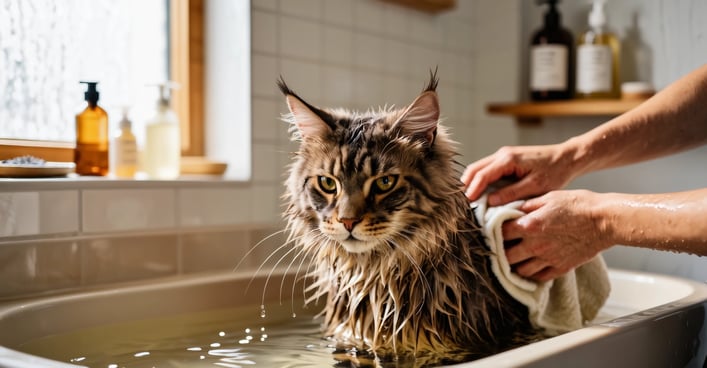
How to Bathe a Cat: The 2026 Guide to Stress-Free Cat Bathing
A complete, step-by-step guide to bathing your cat safely. Learn expert tips to reduce stress, choose the right products, and make bath time easier for you and your feline.
Share this page
How to Bathe a Cat: The 2026 Guide to Stress-Free Cat Bathing
While cats are famously fastidious self-groomers, there are times when a bath becomes necessary. Whether your cat has gotten into something sticky, has a skin condition requiring medicated treatment, or simply needs help with heavy soiling, knowing how to bathe a cat properly is an essential skill for every owner.
This comprehensive guide covers everything from preparation to post-bath care, designed to minimize stress for both you and your feline friend.
When Do Cats Need Baths?
Necessary Bathing Situations
Medical Reasons:
Skin conditions requiring medicated shampoo
Flea infestations (when recommended by your veterinarian)
Allergies needing regular rinsing
Post-surgical cleaning (as directed by your vet)
Hygiene Reasons:
Contact with toxic or sticky substances
Exposure to skunk spray or heavy mud
Feces or urine soiling
Excessive oil buildup (common in hairless breeds like the Sphynx)
How to Bathe a Cat: The 2026 Guide to Stress-Free Cat Bathing - Articles
Age & Mobility Reasons:
Obese cats unable to reach all areas for grooming
Senior cats with reduced mobility or arthritis
Cats That May Need Regular Baths
Cat Type
Recommended Bathing Frequency
Hairless breeds (Sphynx, Peterbald)
Weekly
Long-haired breeds (Persian, Maine Coon)
Monthly or as needed
Outdoor cats
As needed, based on activity
Senior or obese cats
Every 2-4 weeks for assistance
Show cats
Before competitions or shows
Preparing for the Bath: Your Essential Checklist
Gathering Your Supplies
Must-Have Items:
Item
Purpose
Cat-specific shampoo
Gentle, pH-balanced cleansing formulated for feline skin
Rubber bath mat
Prevents slipping and provides secure footing
Plastic pitcher or cup
For controlled, gentle rinsing
Absorbent towels (3-4)
Microfiber towels are ideal for efficient drying
Detachable showerhead
Makes thorough rinsing significantly easier
Cotton balls
Protects ear canals from water entry
High-value treats
Crucial for positive reinforcement
Optional but Helpful Items:
Pet hair dryer (low heat, low noise setting)
Cat grooming restraint bag (for anxious cats)
Non-slip grooming gloves
Calming pheromone spray (e.g., Feliway)
A helper for managing difficult cats
Choosing the Right Shampoo
Types of Cat Shampoos:
General Purpose: Mild, tearless, and pH-balanced for regular use.
Medicated: Requires a veterinary prescription for specific skin conditions.
Flea & Tick: Contains insecticides; use only as directed by your vet.
Waterless/Dry: Foam or spray formulas for spot cleaning or water-phobic cats.
Top Recommended Brands for 2026:
Burt's Bees for Cats: Hypoallergenic and natural.
Earthbath All Natural: Oatmeal-based for sensitive skin.
Veterinary Formula Clinical Care: Effective for various skin needs.
Setting Up the Bathing Area
Choose Your Location:
Bathroom Sink: Ideal for kittens and small cats; easier on your back.
Bathtub: Best for larger cats; provides more space and contains splashes.
Kitchen Sink: A good alternative if it has a sprayer attachment.
Environmental Prep:
Close all doors and windows to prevent escapes.
Remove any breakable items from the vicinity.
Place a rubber mat in the tub or sink.
Have all towels and supplies within arm's reach.
Ensure the room is warm and draft-free.
Step-by-Step Bathing Guide
Phase 1: Pre-Bath Preparation (10 Minutes)
Trim Nails: Do this a few hours before the bath to reduce scratching risk.
Brush Thoroughly: Remove all loose fur and mats; never bathe a matted cat.
Protect the Ears: Gently place cotton balls in the outer ear canals.
Calm Your Cat: Use calming treats, pheromone spray, or a gentle play session.
Phase 2: Wetting the Coat (5 Minutes)
Use Lukewarm Water: Test on your wrist—it should feel comfortably warm, not hot.
Introduce Gradually: Let your cat sniff the water. Wet from the neck down, avoiding the face.
Saturate Thoroughly: Use a pitcher or gentle spray to work water down to the skin.
Phase 3: Shampoo Application (5 Minutes)
Dilute the Shampoo: Mix with water in a cup (a 1:4 ratio) for easier application and rinsing.
Apply Gently: Start at the neck and work toward the tail, massaging into a lather. Avoid the face entirely.
Phase 4: Rinsing (5-10 Minutes)
This is the most critical step. Rinse until the water runs completely clear. Leftover shampoo causes skin irritation.
Use multiple rinses, checking under legs, the groin, and between toes.
For the face: Use only a damp washcloth (no soap) and wipe gently from the inner to outer eye corner.
Phase 5: Drying (15-30 Minutes)
Towel Dry: Blot (don't rub) with absorbent microfiber towels.
Air Dry: Keep your cat in a warm, draft-free room with cozy bedding.
Hair Dryer (If Tolerated): Use only the lowest heat and noise settings, keeping it moving at least 12 inches away.
Tips for Difficult Cats
For Anxious Cats
Apply calming pheromones (like Feliway) in the bathing area 30 minutes prior.
Use an anxiety wrap or Thundershirt.
Speak in a calm, reassuring tone and work quickly but gently.
Bathe during your cat's naturally calm time of day (often after a meal).
For Aggressive Cats
Consider using a grooming restraint bag that allows head access.
The "kitty burrito" towel wrap can provide gentle restraint.
Know when to seek help: Professional groomers or veterinary grooming services are a safe option for severely stressed or aggressive cats.
Waterless Bathing Alternatives
Foam Shampoos: Apply and towel off; no rinsing needed.
Cleaning Wipes: Pre-moistened cloths perfect for spot cleaning.
Dry Powder: Sprinkle on, brush out; absorbs oils.
Breed-Specific Considerations
Hairless Breeds (Sphynx): Require weekly baths to manage oil buildup. Use a gentle, moisturizing shampoo.
Long-Haired Breeds: Drying takes much longer. Be extra vigilant to prevent tangles and mats when the coat is wet.
Rex Breeds (Cornish, Devon): Can have oilier coats and may need more frequent bathing with clarifying shampoos.
Post-Bath Care & Monitoring
Keep Warm: Prevent chilling with warm blankets and a draft-free room.
Final Brushing: Once mostly dry, give a thorough brush to prevent mats.
Treat and Praise: Offer high-value treats and affection to build positive associations.
Monitor For: Skin irritation, excessive scratching, shivering, or signs of stress. Contact your vet if you suspect water entered the ears or if skin issues arise.
Common Bathing Mistakes to Avoid
Using Human Shampoo: It has the wrong pH and can dry out or irritate your cat's skin.
Submerging Your Cat: This causes panic and risks water inhalation.
Rushing the Rinse: Residual shampoo is a leading cause of post-bath itching and flaking.
Using Hot Water: Cats have sensitive skin that can burn easily.
Forcing a Terrified Cat: This creates lifelong trauma. Use alternatives or professional help instead.
Frequently Asked Questions (FAQ)
Q: How often should I bathe my healthy indoor cat?A: Most healthy, indoor short-haired cats rarely need full baths. Bathe only when necessary due to soiling, medical issues, or specific breed requirements.
Q: Can I use baby shampoo on my cat?A: It's not recommended. While gentler than adult shampoo, it is not pH-balanced for feline skin. Always use a product formulated for cats.
Q: My cat hates water. What are my options?A: Try waterless shampoos, professional grooming, or gradual desensitization (rewarding calm behavior near an empty sink, then damp cloths, etc.). Respect your cat's limits.
Q: Is bathing safe for kittens?A: Yes, but wait until they are at least 8 weeks old. Use kitten-specific products, keep water very shallow and lukewarm, and work quickly to prevent chilling.
Q: Can bathing reduce human allergies to cats?A: Weekly baths can significantly reduce the amount of allergen-laden dander on your cat's coat, which may help allergic family members when combined with other strategies like HEPA filters.
Conclusion
While bathing should remain an occasional necessity rather than a regular routine for most cats, knowing how to perform one properly is a vital part of responsible pet ownership. With the right preparation, supplies, and a calm, patient approach, you can handle necessary baths with minimal stress.
Remember, the goal is not to create a cat who loves baths, but to manage the experience safely and efficiently. Your patience and use of positive reinforcement will make all the difference for your furry companion.
Disclaimer: Always consult your veterinarian before using medicated shampoos or if your cat has any skin conditions. Seek professional grooming assistance for severely matted, extremely anxious, or aggressive cats.
Get expert advice about cat care, behavior, nutrition, grooming, and training. Ask our AI cat care expert anything about your cat and receive professional guidance.