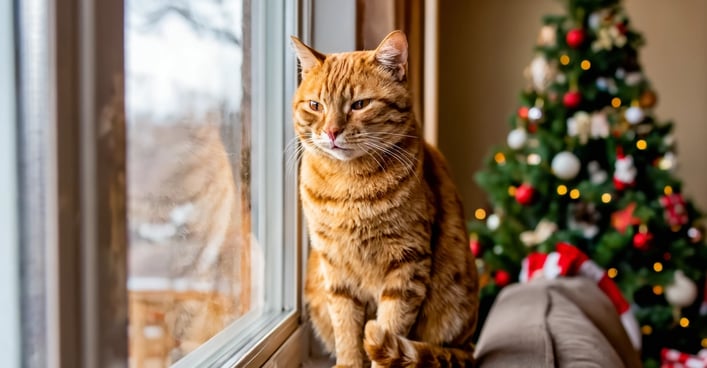
Holiday Safety for Cats: The Complete Guide for 2026
Ensure your cat's safety this holiday season. Our 2026 guide covers toxic plants, dangerous foods, decoration hazards, and stress management for a joyful, worry-free celebration.
Share this page
Holiday Safety for Cats: The Complete Guide for 2026
The holiday season brings joy, decorations, and festive gatherings—but it also introduces unique hazards for our feline companions. From toxic plants to stressful disruptions, proactive planning is essential to keep your cat safe while you celebrate.
Toxic Holiday Plants
Highly Dangerous Plants
Lilies (All Varieties) - EXTREMELY TOXIC
Toxicity: All parts of the plant are deadly to cats.
Effects: Causes acute kidney failure, often within 72 hours of ingestion.
Action: Never bring lilies (Easter, Tiger, Stargazer, etc.) into a home with cats. Even pollen contact can be fatal.
Mistletoe
Effects: Can cause cardiovascular problems, gastrointestinal upset, breathing difficulties, and neurological symptoms.
Action: Hang it completely out of reach or opt for high-quality artificial versions.
Holly
Effects: Berries and leaves cause severe vomiting, diarrhea, and depression.
Holiday Safety for Cats: The Complete Guide for 2026 - Articles
Action: Choose artificial holly for decorations to eliminate risk.
Amaryllis
Effects: The bulb is most toxic, leading to vomiting, diarrhea, abdominal pain, and tremors.
Action: Keep this popular gift plant in a cat-inaccessible room or avoid it altogether.
Moderately Toxic Plants
Poinsettias
Effects: Contrary to popular myth, they are mildly toxic, causing mouth irritation, drooling, and vomiting.
Action: Place out of reach or use convincing silk alternatives.
Real Christmas Trees & Pine Needles
Effects: Tree oils can cause mild stomach upset. Dry, sharp needles pose a puncture risk to the intestines.
Action: Vacuum fallen needles daily and consider an artificial tree to avoid these hazards.
Dangerous Holiday Foods
Foods to Never Share
Chocolate
Hazard: Contains theobromine, which cats cannot metabolize. Dark chocolate is most dangerous.
Action: Store all chocolate securely and clean up any wrappers.
Alcohol
Hazard: Even small amounts can cause depression, respiratory failure, coma, or death.
Action: Never leave drinks unattended and clean spills immediately.
Onions, Garlic, & Related Alliums
Hazard: Damage red blood cells, leading to life-threatening anemia. Often found in stuffing, gravies, and seasonings.
Action: Do not feed any table scraps.
Xylitol (Artificial Sweetener)
Hazard: Causes a rapid insulin release, leading to hypoglycemia (low blood sugar) and potential liver failure.
Action: Check labels on sugar-free baked goods, gums, and candies.
Fatty Foods (Turkey Skin, Gravy, Butter)
Hazard: High risk of triggering painful and dangerous pancreatitis.
Action: Resist those pleading eyes. Stick to their regular diet.
Cooked Bones
Hazard: Can splinter, causing choking, intestinal blockages, or perforations.
Action: Dispose of bones in a secure, outdoor trash bin immediately.
Grapes & Raisins
Hazard: Cause acute kidney failure in cats. The toxic mechanism is still unknown.
Action: Keep fruitcakes, trail mixes, and baked goods containing them sealed away.
Yeast Dough
Hazard: Dough can expand in the stomach, causing bloat (GDV). Fermentation produces alcohol.
Action: Keep rising dough covered and in a secure area.
Decorations and Physical Hazards
Tinsel, Ribbon, and String
The Danger: Known as a "linear foreign body." If ingested, it can saw through the intestines, requiring emergency surgery.
Prevention: The safest choice is to avoid tinsel entirely. Secure all ribbons and gift-wrapping materials.
Ornaments
Risks: Broken glass can cause cuts; small pieces or hooks pose choking and blockage risks.
Prevention: Use shatterproof ornaments and secure them firmly to lower branches.
Christmas Lights & Electrical Cords
Dangers: Chewing can lead to electrocution, severe mouth burns, or fire.
Prevention: Use cord protectors/covers, and unplug decorations when you are not present to supervise.
Candles
Hazards: A swishing tail can knock over a candle, leading to burns or fire. Inhaling smoke or ingesting wax is also harmful.
Prevention: Use flameless LED candles. If using real candles, place them in secure holders in cat-free zones.
Managing Feline Stress During Gatherings
Common Holiday Stressors
Unfamiliar guests and loud noises
Disrupted daily routines
New furniture arrangements and decorations
Travel (either leaving them or taking them along)
Signs Your Cat Is Stressed
Hiding more than usual
Decreased appetite or refusal to eat
Inappropriate elimination outside the litter box
Excessive grooming or vocalization
Uncharacteristic aggression or withdrawal
Creating a Safe Haven
Essential Setup:
Designate a Quiet Room: A spare bedroom or office away from the festivities.
Provide Comforts: Their favorite bed, blanket, and an item with your scent.
Ensure Essentials: Fresh water, food, and a clean litter box.
Add Calming Aids: A Feliway diffuser, calming music, or a white noise machine.
Usage Guidelines:
Introduce your cat to the space before the event.
Allow them to retreat voluntarily; never force them to socialize.
Inform guests (especially children) that the room is off-limits.
Check on them periodically for reassurance.
Guest Management Protocol
Brief Guests: Politely inform them not to feed your cat any human food.
Supervise Introductions: Allow your cat to approach guests on their own terms.
Child Safety: Teach children to be calm and gentle, and always supervise interactions.
New Year's Eve & Special Event Safety
Fireworks and Loud Noises
The Problem: Sudden, loud booms are terrifying and can trigger panic, escape attempts, or hiding.
Solutions:
Keep all doors and windows securely closed and locked.
Ensure your cat is indoors well before dusk.
Set them up in their safe haven with calming music.
Consult your vet beforehand about anti-anxiety options if your cat is severely noise-phobic.
Confetti, Streamers, and Noisemakers
Dangers: Ingested confetti can cause intestinal blockage. The strings in party poppers are hazardous.
Prevention: Clean up immediately after celebrations and keep these items away from your cat.
Alcohol and Spill Safety
Risk: Cats may be attracted to sweet drinks like eggnog. Even licking a small spill can cause alcohol poisoning.
Prevention: Never leave drinks unattended. Clean up any spills with pet-safe cleaner immediately.
Gift Wrapping and Presentation Hazards
Dangers: Ribbon, string, adhesive tape, and small decorative pieces are all enticing but dangerous if chewed or swallowed.
Prevention:
Wrap gifts in a closed room where your cat cannot access the materials.
Dispose of all wrapping debris promptly in a sealed trash can.
Store wrapped gifts in a closet until it's time to open them.
Travel Considerations
If You Are Traveling (Leaving Your Cat)
Pet Sitter: Provide detailed instructions, emergency contacts, vet info, and your cat's routine.
Boarding: Book early, tour the facility first, and bring familiar items (bed, toy) to reduce stress.
If Your Cat Is Traveling With You
Car Travel: Use a secure, well-ventilated carrier. Never let your cat roam freely in the vehicle.
Air Travel: Research airline pet policies thoroughly. A health certificate from your vet is typically required. Opt for direct flights.
Emergency Preparedness
Essential Information to Keep Handy
Primary Veterinarian: Phone number and address.
24/7 Emergency Vet Clinic: Know the location and contact info.
Poison Control Hotlines:
ASPCA Animal Poison Control: (888) 426-4435 (fee may apply)
Pet Poison Helpline: (855) 764-7661 (fee may apply)
Basic First Aid Kit for Cats
Hydrogen peroxide (3% - only use to induce vomiting if directed by a vet or poison control)
Digital thermometer (pet-specific)
Gauze rolls, non-stick pads, and self-adhering bandage
Copy of medical records and a recent photo of your cat
Your vet's recommended emergency medications
Recognize a True Emergency
Seek Veterinary Care Immediately If Your Cat:
Has difficulty breathing or is choking
Experiences seizures or collapses
Vomits repeatedly or has bloody diarrhea
Is known to have ingested a toxin (plant, food, chemical)
Is straining to urinate or crying in the litter box
Has a swollen abdomen or appears in severe pain
Understanding Potential Costs: Prevention vs. Treatment
Estimated Costs of Common Holiday Emergencies (2026)
Emergency
Estimated Treatment Cost
Foreign Body Surgery (e.g., tinsel)
$2,500 - $6,000
Toxicity Treatment & Monitoring
$800 - $4,000
Pancreatitis Hospitalization
$1,500 - $4,000
Burn Treatment & Wound Care
$300 - $2,000
Anti-Anxiety Medication Consultation
$75 - $250
The Value of Prevention:
Cat-Proofing Supplies: $50 - $300
Pet Insurance Annual Premium: $350 - $700 (can cover up to 90% of emergency costs)
Emergency Fund: Aim to save $500 - $1,000 specifically for pet care.
Holiday Safety Checklist for Cat Owners
Before the Celebrations Begin
Home Safety:
Remove or securely isolate all toxic plants.
Anchor Christmas tree and secure all decorations.
Cover or conceal electrical cords.
Fully set up your cat's "safe haven" room.
Verify your first-aid kit is stocked.
Post emergency numbers on the fridge.
Food Safety:
Plan to keep all human food covered and out of reach.
Inform guests in advance not to feed your cat.
Ensure trash cans have secure, locking lids.
Stress Prevention:
Plug in calming diffusers (e.g., Feliway) a few days prior.
Plan how to maintain your cat's feeding and play routine.
During the Festivities
Active Monitoring:
Check on your cat in their safe space every few hours.
Keep exterior doors closed to prevent escapes.
Supervise all interactions between guests and your pet.
Clean up food/drink spills instantly.
Conclusion
The holidays can be magical for every member of your family, including your cat, with thoughtful preparation. By prioritizing safety over spectacle, you prevent stress and avoid heartbreaking emergencies.
The Golden Rules for a Cat-Safe Holiday:
No Lilies, Ever.
Ban Tinsel and Secure All Ribbons.
Guard the Feast—No People Food for Pets.
Provide a Quiet, Uninterrupted Sanctuary.
Stick to Your Cat's Routine as Much as Possible.
Have Your Vet and Poison Control Numbers Programmed in Your Phone.
Final Thought: A home filled with peace and a content, healthy cat is the most beautiful decoration of all. Here's to a joyful, safe, and purr-filled holiday season in 2026!
Get expert advice about cat care, behavior, nutrition, grooming, and training. Ask our AI cat care expert anything about your cat and receive professional guidance.