Himalayan vs Persian Cat: The Complete 2026 Breed Comparison Guide
Discover the key differences between Himalayan and Persian cats, from their history and looks to their health and personality, to find your perfect fluffy companion.
Share this page
Himalayan vs Persian Cat: The Complete 2026 Breed Comparison Guide
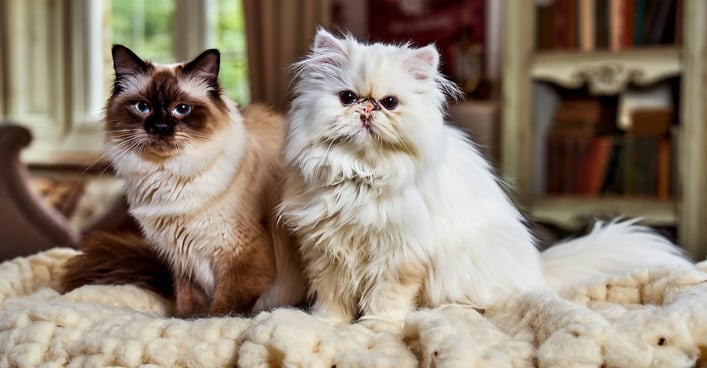
The Himalayan and Persian are two of the most beloved long-haired cat breeds, sharing a deep ancestral bond. While the Persian is the classic, elegant foundation, the Himalayan was created by crossing Persians with Siamese to achieve a stunning colorpoint coat and piercing blue eyes. This definitive guide compares their history, appearance, temperament, and care to help you choose your ideal feline friend.
Historical Origins
Persian History: The Ancient Aristocrat
The Persian cat is one of the world's oldest and most prestigious breeds, with origins tracing back centuries to Persia (modern-day Iran).
Historical Timeline:
1600s: Long-haired cats are introduced to Europe from Persia.
1871: The first organized breeding programs begin in England.
1900s: Selective breeding develops the extreme "Peke-face" type.
Modern Era: Two distinct types exist: Traditional (Doll Face) and Show (Peke-face).
Today: Consistently ranks among the most popular pedigree cat breeds globally.
Himalayan History: A Deliberate Creation
The Himalayan is a relatively modern American breed, developed to combine the Persian's luxurious body with the Siamese's striking colorpoint pattern.
Bicolor/Himalayan: Includes the colorpoint pattern.
Himalayan (Colorpoint) Pattern:
Definition: A heat-sensitive pattern where the cooler parts of the body (ears, face mask, paws, tail) are darker than the warmer torso.
Eye Color: Must be a deep, vivid blue.
Inheritance: This pattern is a direct genetic legacy from the Siamese cross.
Head and Facial Structure: Two Types
Both breeds are bred in two distinct facial types, which significantly impact health:
1. Traditional / Doll Face:
Features: A nose with a gentle break or slope, more moderate muzzle.
Health: Generally experiences fewer brachycephalic-related issues.
Appearance: A more natural, classic look.
2. Show / Peke-Face:
Features: An extremely flat face with the nose set high between the eyes.
Health: Prone to more severe breathing, dental, and eye problems.
Standard: This is the type favored in modern cat shows.
Temperament and Personality
Shared Personality Traits
Expect both breeds to be:
Gentle & Sweet: Known for their calm and affectionate nature.
Quiet Companions: Not typically vocal; they communicate with expressive eyes.
Low-Energy: Prefer lounging and gentle play over high activity.
Family-Oriented: Bond closely with their families and do well with respectful children and pets.
Indoor Cats: Their laid-back nature and grooming needs make them ideal indoor pets.
Subtle Personality Nuances
Trait
Persian
Himalayan
Activity Level
Low
Low (may be slightly more playful)
Affection Level
Moderate-High
High (often described as "clingy" or devoted)
Independence
Moderate
Low-Moderate
Vocalization
Very Low
Low (may "talk" softly on occasion)
Lap Cat Tendency
Sometimes
Often
Note: Individual personality varies greatly. A cat's upbringing and genetics often matter more than slight breed tendencies.
Health Considerations
Shared Health Concerns
Due to their similar build, both breeds are susceptible to:
Brachycephalic Syndrome: Breathing difficulties, snoring, heat intolerance, and dental issues due to their flat faces.
Polycystic Kidney Disease (PKD): A hereditary condition. Always request proof of PKD-negative genetic testing from breeders.
Hypertrophic Cardiomyopathy (HCM): A common heart disease; regular veterinary screening is advised.
Eye Problems: Excessive tearing, eye ulcers, and entropion (inward-rolling eyelids).
Skin Fold Dermatitis: Infections in facial folds (especially in Peke-face types).
Lifespan
Traditional/Doll Face: 12-17 years
Show/Peke-Face: 10-15 years
Choosing a Traditional type and maintaining preventive vet care are the best ways to ensure a long, healthy life.
Grooming Requirements: A Serious Commitment
The luxurious coat is their glory and your daily responsibility. Needs are identical for both breeds.
Essential Daily & Weekly Routine:
Daily Brushing (15-30 min): Prevents painful, skin-pulling mats. A stainless-steel comb is essential.
Daily Face Cleaning: Wipe eye discharge and clean facial folds to prevent staining and infection.
Weekly Bathing: Highly recommended to keep the coat clean, reduce oil, and minimize shedding.
Professional Grooming (Every 4-8 Weeks):
Lion Cut: A popular summer shave that leaves a mane, tail tip, and booties.
Sanitary Trim: For hygiene.
Full Service: Bath, blow-dry, nail trim, and ear cleaning.
Cost Comparison
Initial Purchase or Adoption
Source
Persian
Himalayan
Reputable Breeder (Pet Quality)
$800 - $2,500
$1,000 - $3,000
Reputable Breeder (Show Quality)
$2,000 - $6,000
$2,500 - $6,000+
Rescue/Adoption
$75 - $300
$75 - $300 (less common)
Himalayans often command a premium due to their specific colorpoint and blue-eye traits.
Estimated Annual Care Costs (2026)
Expense Category
Estimated Cost (Both Breeds)
High-Quality Food & Treats
$400 - $800
Premium Litter
$250 - $500
Routine Veterinary Care
$400 - $800
Professional Grooming / Supplies
$600 - $1,500
Pet Insurance
$350 - $700
Total Annual Range
$2,000 - $4,300
These costs are essentially the same for both breeds. Pet insurance is highly recommended for potential hereditary conditions.
Making Your Decision: Which Cat is Right for You?
Choose a Persian If You:
Desire a vast array of coat colors and patterns.
Prefer eye colors like copper, green, or odd-eyed.
Want the classic, timeless "Persian" look.
Are looking for slightly greater availability and potentially lower initial cost.
Choose a Himalayan If You:
Are captivated by the striking colorpoint contrast and sapphire-blue eyes.
Love the look of a Siamese but prefer a Persian's cobby body and ultra-plush coat.
Don't mind potentially paying a premium for specific coloring.
Want a cat that is often noted for being exceptionally devoted and affectionate.
The Bottom Line
Health, grooming, temperament, and cost are virtually identical. Your choice should come down to an aesthetic preference: the varied elegance of the Persian or the dramatic, blue-eyed contrast of the Himalayan.
Similar Breeds to Consider
If you love these breeds but want to explore alternatives:
Exotic Shorthair: The "Persian in pajamas" – same personality with a short, plush coat.
Ragdoll: Large, floppy, colorpointed, and semi-longhaired with a docile temperament.
Birman: Colorpointed with white gloves, semi-longhair, and a gentle nature.
British Shorthair: Extremely calm, plush coat (short), and a charmingly round face.
Final Verdict
Persian: 4.5/5 Stars
The quintessential lap cat, offering unparalleled elegance, serene companionship, and beautiful variety. A perfect match for someone dedicated to daily grooming.
Himalayan: 4.6/5 Stars
Offers every wonderful Persian trait wrapped in a uniquely dramatic package. The mandatory blue eyes and colorpoint pattern give it a slight edge in distinctive beauty for those who love the look.
The Winner? It's a tie on practicality. Let your heart decide based on which look you find more beautiful. Both are exceptional, loving companions that will reward your care with years of gentle affection.
Last Updated: 2026 | For the healthiest pet, prioritize breeders who health-test and consider the Traditional (Doll Face) variety.
Get expert advice about cat care, behavior, nutrition, grooming, and training. Ask our AI cat care expert anything about your cat and receive professional guidance.