Himalayan Cats: The Gentle, Blue-Eyed Beauties of the Feline World
Discover how 1930s breeders blended Persian luxury with Siamese drama to create the Himalayan—an enchanting blue-eyed, color-point cuddle companion whose regal fluff hides a heart-meltingly gentle soul.
The Himalayan cat combines the best of two worlds: the Persian's flowing coat and the Siamese's striking blue eyes and color-point markings. These gentle, sweet-natured felines have captured hearts worldwide with their calm demeanor and affectionate personality, making them perfect companions for those seeking a quiet, loving pet.
History & Origin
The Himalayan breed emerged in the 1930s through careful breeding programs in both the United States and United Kingdom. Breeders aimed to create a cat that possessed the Persian's luxurious long coat and distinctive body type while incorporating the Siamese's signature blue eyes and color-point patterning. The result was a stunning hybrid that quickly gained recognition and popularity among cat enthusiasts.
Named after the Himalayan rabbit, which shares similar color-point markings, these cats were officially recognized as a distinct breed in the 1950s. The development process required multiple generations of selective breeding to achieve the perfect balance of Persian and Siamese characteristics. Today, major cat associations recognize the Himalayan either as a separate breed or as a color-point variety of the Persian breed.
Physical Characteristics
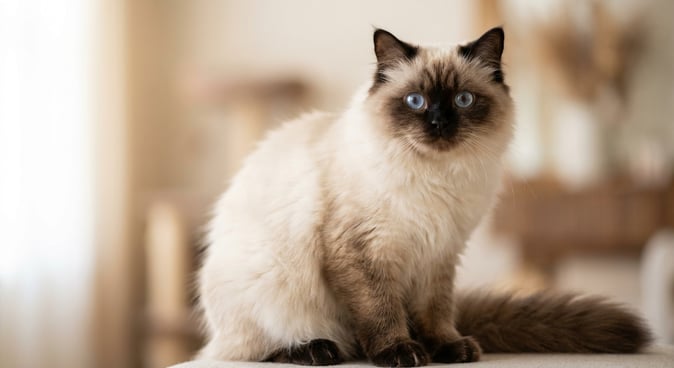
Himalayans are medium to large-sized cats, typically weighing between 3.5-6.5 kg (7.7-14.3 pounds) and measuring 35-45 cm in body length. Their most distinctive feature is their stunning blue eyes, which range from pale sky blue to deep sapphire, set in a flat-faced (brachycephalic) head structure inherited from their Persian ancestry.
The Himalayan cat represents the perfect blend of beauty and temperament, offering unmatched affection and tranquility to those who welcome them into their homes. While they require significant grooming commitment and careful health management, their loving nature and serene presence make them invaluable companions. For those prepared to invest time in their care, Himalayans reward their families with years of gentle companionship and unconditional love.
Himalayan Cats: The Gentle, Blue-Eyed Beauties of the Feline World - Articles
Their long, flowing coat is the epitome of feline elegance, requiring significant maintenance to keep it in pristine condition. The color-point pattern displays darker colors on the face, ears, legs, and tail, while the body remains a lighter shade. Common color variations include seal point (dark brown), blue point (gray), chocolate point (warm brown), and lilac point (pale gray with pinkish tones).
The breed's sturdy, cobby body type reflects their Persian heritage, with short legs, broad chest, and a distinctive flat face that gives them an almost doll-like appearance. Their small, rounded ears and full, brushy tail complete their regal appearance.
Temperament & Personality
Himalayans embody tranquility and affection, earning them a perfect 5/5 rating for affection level. These cats are renowned for their calm, gentle nature and sweet disposition, making them ideal lap cats and devoted companions. They form strong bonds with their human families and prefer quiet, stable environments where they can relax and receive plenty of attention.
Unlike more energetic breeds, Himalayans have minimal exercise needs (1/5 rating) and are content to spend their days lounging in sunny spots or curled up on comfortable furniture. Their quiet nature is reflected in their minimal vocalization (1/5), communicating more through soft chirps and gentle purrs rather than loud meows.
These cats are moderately playful (2/5) but prefer gentle interactive play over high-energy activities. They're intelligent enough to learn routines and basic commands (3/5 intelligence rating) but aren't typically driven to explore or get into mischief. Their patient, tolerant nature makes them excellent with children (4/5 kid-friendly rating) and other pets (4/5 pet-friendly rating) when properly introduced.
Care Requirements
Owning a Himalayan requires significant commitment to grooming, with their needs rated at the maximum 5/5. Daily brushing is essential to prevent matting and tangling of their long, luxurious coat. A metal comb and slicker brush should be used gently to work through their dense undercoat, paying special attention to areas prone to matting like behind the ears, under the legs, and around the neck.
Regular bathing every 4-6 weeks helps maintain coat health and appearance. Their flat facial structure requires daily cleaning of tear stains and facial folds to prevent skin irritation and infection. Eye discharge should be gently wiped away with a damp, soft cloth.
Despite their minimal exercise requirements, providing climbing structures, scratching posts, and interactive toys helps maintain their physical and mental well-being. They shed moderately to heavily (4/5 shedding level) year-round, with increased shedding during seasonal changes, making regular vacuuming essential for maintaining a clean home.
Health Considerations
Himalayans face several breed-specific health challenges that potential owners should understand. Polycystic kidney disease (PKD) is a significant concern, with responsible breeders testing their cats before breeding. This genetic condition causes fluid-filled cysts to develop in the kidneys, potentially leading to kidney failure.
Their brachycephalic (flat-faced) structure can cause breathing difficulties, especially in hot or humid conditions. They're sensitive to heat and should be kept in air-conditioned environments during warm weather. Dental malocclusions (misaligned teeth) are common, requiring regular dental care and veterinary check-ups.
Cherry eye, a condition where the third eyelid gland prolapses, can affect some individuals. Regular veterinary care, including annual health screenings and dental cleanings, is crucial. With proper care, Himalayans typically enjoy a lifespan of 10-15 years, though some may live even longer with excellent genetics and healthcare.
Is This Breed Right For You?
Himalayans are perfect for individuals or families seeking a calm, affectionate companion who thrives in a quiet environment. They're ideal for apartment living and make excellent pets for seniors or those with limited mobility due to their low exercise requirements. However, they're not suitable for households with very young children who might handle them roughly or homes where they'll be left alone for extended periods.
Potential owners must commit to daily grooming sessions and regular veterinary care. The financial investment in professional grooming, quality food, and healthcare should be factored into the decision. If you work long hours or travel frequently, this breed may not be the best choice as they crave human companionship and attention.
Those who appreciate a serene, loving presence and have time for daily grooming will find the Himalayan to be an incredibly rewarding companion. Their gentle nature and stunning beauty make them wonderful pets for the right household willing to meet their specific care requirements.
lap cats
affectionate breeds
indoor cats
grooming intensive
Cat's Doctor
Get AI-powered advice about your cat's health and care. Enter your cat's information and start a conversation with our veterinary assistant.
Get expert advice about cat care, behavior, nutrition, grooming, and training. Ask our AI cat care expert anything about your cat and receive professional guidance.