Hairless Cat Breeds: The Complete Guide to Bald Beauty (2026)
Discover the unique world of hairless cats. Learn about Sphynx, Donskoy, and other breeds, their care needs, personalities, and if a bald feline is the right companion for you.
Share this page
Hairless Cat Breeds: The Complete Guide to Bald Beauty (2026)
Hairless cats captivate and divide opinion. To some, they are exotic and elegant; to others, they lack the traditional feline charm. This definitive guide explores the fascinating world of hairless cat breeds, detailing their unique care requirements, distinct personalities, and what makes them extraordinary companions.
Understanding Hairless Cats
Why Are Some Cats Hairless?
Genetic Mutations:
Natural, spontaneous genetic mutations.
Recessive or dominant gene inheritance, depending on the breed.
Selective breeding has preserved and refined the trait.
Different breeds originate from distinct genetic mutations.
Not Truly Hairless:
Most are covered in a fine down or "peach fuzz."
Skin has a warm, suede-like texture.
The amount of fuzz varies between individuals and breeds.
Whiskers may be present, absent, or short and brittle.
Hairless Cat Breeds
Tags
hairless catsphynx catdonskoypeterbaldhypoallergenic catcat care
1. Sphynx
The Icon of Hairless Cats
Origin: Canada, 1966
Physical Characteristics:
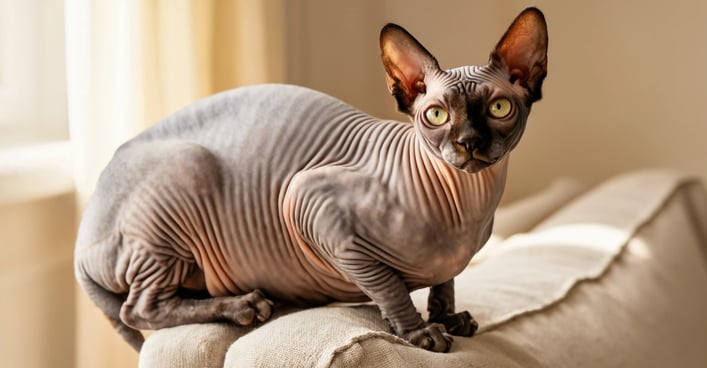
Body covered in fine peach fuzz.
Prominent wrinkled skin, especially on the head and body.
Strikingly large, bat-like ears.
Lemon-shaped, expressive eyes.
Distinctive pot-bellied appearance.
Surprisingly muscular and sturdy build.
Colors & Patterns:
Skin pigmentation displays all color patterns.
Every conceivable cat color and pattern is possible.
Patterns like solid, tabby, tortoiseshell, and pointed are visible on the skin.
Personality:
Extremely affectionate and people-oriented.
Known for being clingy and demanding of attention.
Constant heat-seekers, often found under blankets.
Exhibits dog-like devotion and follows owners everywhere.
Vocal and communicative.
Highly social with strangers, children, and other pets.
Grooming Needs:
Weekly baths are essential to remove oil buildup.
Ears require weekly cleaning due to minimal hair.
Regular nail cleaning and trimming.
Occasional moisturizing for dry skin patches.
Health Considerations:
Prone to Hypertrophic Cardiomyopathy (HCM); screening is crucial.
Potential for skin issues, yeast infections, and acne.
Highly sensitive to temperature extremes.
Average lifespan: 8 to 14 years.
Average Price: $1,500 - $4,500
2. Donskoy (Don Sphynx)
The Russian Hairless
Origin: Russia, 1987
Physical Characteristics:
Unique for having four accepted coat types within the breed.
Ranges from completely bald to a wiry "brush" coat.
Carries a dominant hairless gene (unlike the Sphynx's recessive gene).
Wrinkled skin and a muscular, medium build.
Coat Types:
Bald: Completely hairless from birth.
Flock: Ultra-soft, chamois-like coating that may shed.
Velour: Short, wiry hair with a bald spot on the head.
Brush: A wiry coat that often thins or disappears with age.
Personality:
Intelligent and inquisitive.
Energetic and playful.
Friendly and adaptable.
Excellent with families.
Grooming:
Similar regimen to the Sphynx: weekly bathing and ear care.
Bathing frequency may vary slightly based on coat type.
Average Price: $1,000 - $3,000
3. Peterbald
The Elegant Russian
Origin: St. Petersburg, Russia, 1994
Physical Characteristics:
Sleek, Oriental body type: long, slender, and graceful.
Large, pointed ears.
Almond-shaped, expressive eyes.
Exhibits a variety of coat types.
Overall appearance of elegance and refinement.
Coat Types:
Bald: Completely hairless.
Flock: Very short, almost invisible fuzz.
Velour: Short, wiry coat.
Brush: Coarse, wiry hair.
Straight: A rare, normal short coat (not hairless).
Personality:
Deeply devoted and dog-like in loyalty.
Highly intelligent and active.
Very social and talkative.
Playful and retains kitten-like energy.
Grooming:
Requires weekly baths, but skin is typically less oily than a Sphynx.
Regular ear and nail care.
Average Price: $1,500 - $3,000
4. Ukrainian Levkoy
The Folded-Ear Hairless
Origin: Ukraine, 2004
Physical Characteristics:
Defined by its unique inward-folding ears (similar to a Scottish Fold).
Angular, wedge-shaped head.
Hairless or with a very short coat.
Muscular yet slender body.
Personality:
Friendly, gentle, and affectionate.
Intelligent and playful.
Well-suited to family life.
Important Note:
A very rare and newly developed breed.
Limited number of breeders worldwide.
Average Price: $1,000 - $2,500
5. Bambino
The Short-Legged Hairless
Origin: United States, 2005
Physical Characteristics:
A cross between the Sphynx and the Munchkin.
Distinctive short legs.
Hairless or with a very short coat.
Compact, muscular body.
Controversy:
Purposely bred for two distinct mutations (hairlessness and dwarfism).
Raises ethical concerns among some feline organizations.
Potential for associated health issues.
Not recognized by all major cat registries.
Personality:
Playful, confident, and affectionate.
Active and curious despite short stature.
Average Price: $1,500 - $3,500
6. Elf Cat
The Curled-Ear Hairless
Origin: United States, 2004
Physical Characteristics:
A cross between the Sphynx and the American Curl.
Signature elegantly curled-back ears.
Hairless body.
Muscular and athletic build.
Personality:
Playful, intelligent, and highly social.
Active and seeks interaction.
Affectionate with their chosen people.
Average Price: $2,000 - $4,000
Caring for a Hairless Cat
Skin Care Regimen
Bathing:
Frequency: Weekly for Sphynx; may be slightly less frequent for other breeds.
Purpose: To remove accumulated sebum (skin oils) that isn't absorbed by fur.
Products: Use only gentle, pH-balanced, cat-specific shampoos.
Process: Use warm water, lather gently, and rinse thoroughly to prevent residue.
Common Skin Issues:
Blackheads and feline acne (often on the chin).
Bacterial or yeast skin infections.
Sunburn and skin damage from UV exposure.
Rashes or irritation from allergens.
Excessive oil buildup leading to greasiness.
Temperature & Environment Management
Cold Sensitivity:
Cannot regulate body temperature like furry cats.
Ideal home temperature: 70-80°F (21-27°C).
Provide sweaters, heated cat beds, and warm blankets in winter.
Never leave in a cold car or unheated room.
Heat Sensitivity:
Can also overheat easily.
Ensure access to cool, shaded areas.
Air conditioning is important in summer.
Always provide fresh, cool water.
Sun Protection
Outdoor Safety:
Extremely high risk of sunburn and skin cancer.
Strictly limit or eliminate direct sun exposure.
Apply pet-safe sunscreen to exposed skin if going outdoors.
Indoor-only living is highly recommended.
If outdoors, constant supervision and shade are mandatory.
Diet and Nutrition
Higher Metabolic Needs
Increased Caloric Requirement:
Higher baseline body temperature burns more calories.
Use significant energy to stay warm.
Require diets rich in high-quality, digestible protein and fat.
Weight must be monitored carefully to prevent obesity.
Feeding Guidelines:
May need 20-30% more calories than a similar-sized furry cat.
Prioritize premium, protein-first wet or dry food.
Monitor body condition score regularly.
Consult your veterinarian for a personalized feeding plan.
Personality Traits: What to Expect
Common Characteristics Across Breeds
Affectionate & Clingy:
Actively seek human body heat and contact.
Champion lap cats and "undercover" sleepers.
Often follow owners from room to room.
Highly Social:
Typically excellent with strangers, children, and other pets.
Prone to separation anxiety; dislike being alone for long periods.
Require companionship, whether human or animal.
Energetic & Playful:
Retain a kitten-like playfulness into adulthood.
Often exhibit clownish, entertaining behaviors.
Need regular interactive play sessions.
Vocal & Communicative:
Use a variety of chirps, trills, and meows to communicate.
Will "talk" to demand attention, food, or play.
Not a breed for those seeking a quiet cat.
Health Considerations
Common Health Issues
Hypertrophic Cardiomyopathy (HCM):
A form of heart disease prevalent in several hairless breeds.
Responsible breeders screen their breeding stock via echocardiogram.
Owners should consider regular cardiac check-ups.
Skin Conditions:
Increased susceptibility to bacterial, fungal, and yeast infections.
Rashes, acne, and allergic dermatitis.
Require vigilant skincare and prompt veterinary attention for issues.
Temperature-Related Issues:
Hypothermia if too cold.
Heatstroke if too hot.
Respiratory infections can be more common if chilled.
Dental Issues:
Some lines have a predisposition to gum disease and tooth decay.
Regular teeth brushing and professional veterinary dental cleanings are essential.
The Hypoallergenic Question
Are Hairless Cats Truly Hypoallergenic?
The Reality:
No cat is 100% hypoallergenic.
The primary cat allergen, Fel d 1 protein, is produced in saliva and skin oils.
Hairless cats still produce this allergen.
They may be better tolerated by some allergy sufferers because they don't shed fur laden with dander.
However, more direct skin contact can sometimes trigger reactions.
Key Factors:
Weekly bathing can significantly reduce surface allergens.
Individual reactions vary dramatically.
Recommendation for Allergy Sufferers:
Spend extended, repeated time with a hairless cat before committing.
Allergic reactions can be delayed, so multiple visits are key.
Always have a contingency plan in case allergies persist.
Cost of Ownership
Initial Investment (Purchase Price)
Breed
Average Price Range
Sphynx
$1,500 - $4,500
Donskoy
$1,000 - $3,000
Peterbald
$1,500 - $3,000
Bambino
$1,500 - $3,500
Elf Cat
$2,000 - $4,000
Ukrainian Levkoy
$1,000 - $2,500
Ongoing Annual Costs
Expect Higher-Than-Average Expenses:
Utilities: Increased heating costs to maintain a warm home.
Skincare: Specialized lotions, sunscreens, and acne treatments.
Nutrition: Higher-quality food and greater quantities.
Healthcare: Potentially more frequent veterinary visits for skin, dental, or cardiac care.
Estimated Additional Annual Cost: $300 - $700+
Is a Hairless Cat Right for You?
You Might Be a Great Fit If You:
Are committed to a weekly bathing routine.
Can maintain a consistently warm home environment.
Desire an extremely affectionate, clingy companion.
Have ample time to provide attention and interaction.
Are home often and don't travel frequently.
Are financially prepared for potential breed-specific health issues.
You Should Reconsider If You:
Want a low-maintenance, independent cat.
Prefer to keep your home on the cooler side.
Are uncomfortable with the idea of regularly bathing a cat.
Travel frequently or are away from home for long hours.
Desire a cat that can safely go outdoors.
Are unprepared for the possibility of higher veterinary costs.
Conclusion
Hairless cats offer a truly unique form of companionship, characterized by their profound devotion, entertaining antics, and singular, warm-to-the-touch presence. They are not low-maintenance pets; they require dedicated care, a climate-controlled environment, and an owner who appreciates their specific needs.
Most Popular & Recognizable: Sphynx
Often Cited as Lower Maintenance: Peterbald
Most Unusual Appearances: Elf Cat, Bambino
Rarest & Newest: Ukrainian Levkoy
While their bald beauty is an acquired taste for some, their capacity for love is immense. For the dedicated owner willing to meet their needs, a hairless cat provides unmatched loyalty, endless entertainment, and a deeply affectionate bond that is anything but skin-deep.
cat breeds
bald cat
Cat's Doctor
Get AI-powered advice about your cat's health and care. Enter your cat's information and start a conversation with our veterinary assistant.
Get expert advice about cat care, behavior, nutrition, grooming, and training. Ask our AI cat care expert anything about your cat and receive professional guidance.