Back to Articles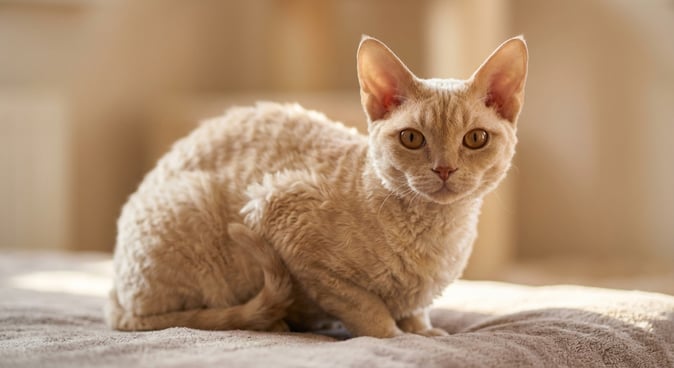
5 min read
German Rex: The Curly-Coated Cuddle Companion from Germany
Discover how a scrappy street cat named Lämmchen sparked the rise of the German Rex, Germany’s rare curly-coated cuddle companion whose accidental mutation became a beloved breed.
With its velvety, curly coat and heart-melting affection, the German Rex is one of Germany’s best-kept feline secrets. This medium-sized breed combines the elegance of a slender athlete with the soul of a lap-loving teddy bear, making it an ideal family companion. Whether curled up beside you or chasing feather toys with surprising agility, the German Rex brings quiet charm and boundless love to any home.
History & Origin
The German Rex story begins in the late 1940s, not in a cattery but on the streets of Königsberg, East Prussia (now Kaliningrad, Russia). A curly-coated stray black cat named Lämmchen (“Little Lamb”) was adopted by physician Dr. Rose Scheuer-Karpin. When Lämmchen later produced curly kittens, the doctor realized she had stumbled upon a spontaneous genetic mutation. In 1957, breeders Erna Schneider and Dr. R. Pfleger began a controlled breeding program in Berlin using Lämmchen and her offspring. The breed’s name pays homage to both its country of origin and the rexed (curly) fur mutation it shares with the Cornish Rex. Despite early enthusiasm, World War II and the Iron Curtain slowed exports; today the German Rex remains rare outside continental Europe, treasured by those lucky enough to find one.
Physical Characteristics
German Rex cats are medium-sized athletes—graceful yet substantial. Adults weigh 3–4.5 kg (6.6–10 lb) and measure 30–35 cm (12–14 in) from shoulder to base of tail, giving them a perfectly balanced rectangle silhouette. The head is rounded with prominent cheeks, a firm chin, and a slightly rounded forehead that flows into a medium-length neck. Large, open ears sit high and alert, while medium-sized eyes—always matching the coat color—can sparkle in shades of gold, green, or blue. The breed’s hallmark is its short, silky, curly coat that feels like plush velvet to the touch. Unlike the tight marcel waves of the Cornish Rex, German Rex curls are looser and more random, often forming ripples along the back, sides, and tail. Whiskers and eyebrows are also crimped, adding to the pixie-like expression. All coat colors and patterns are accepted, from solid black to pointed, tortoiseshell to tabby.
The German Rex is a rare gem that marries a low-maintenance curly coat with an impossibly sweet temperament. From its humble street-cat roots in post-war Germany to its modern role as a gentle family entertainer, this breed proves that the best things in life can be both beautiful and approachable. Bring home a German Rex, and you’ll gain not just a pet, but a velvety confidant ready to curl into your heart for 12–15 unforgettable years.
Tags
German Rexcurly haired cataffectionate cat breedfamily friendly catrare cat breedlow shedding cat