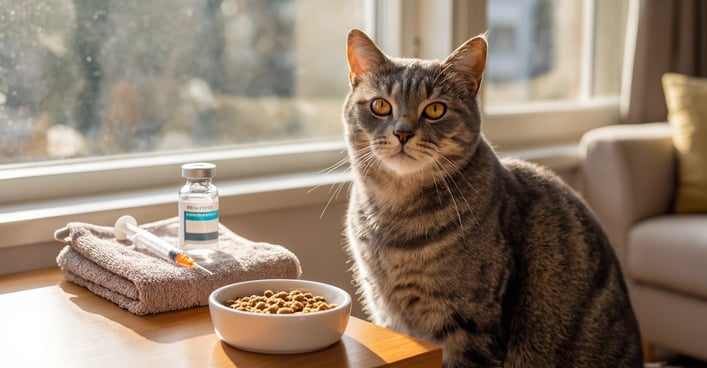
Feline Diabetes Mellitus: A Complete Care and Management Guide for 2026
A comprehensive guide to managing feline diabetes. Learn to recognize symptoms, administer insulin, manage diet, and provide daily care for a happy, healthy diabetic cat.
Share this page
Feline Diabetes Mellitus: A Complete Care and Management Guide for 2026
Feline diabetes mellitus is a prevalent endocrine disorder, affecting an estimated 1 in 200 cats. While a diagnosis can be daunting, with informed and consistent care, most diabetic cats can enjoy a high quality of life. This guide provides a comprehensive overview, from initial symptoms to long-term management, empowering you to confidently care for your feline companion.
Understanding Feline Diabetes
What Is Diabetes?
Diabetes mellitus develops when a cat's body fails to properly regulate blood glucose (sugar). This is due to either insufficient insulin production by the pancreas or the body's cells becoming resistant to insulin's effects.
Types of Feline Diabetes
Type 1 (Insulin-Dependent)
Destruction of insulin-producing pancreatic cells.
Feline Diabetes Mellitus: A Complete Care and Management Guide for 2026 - Articles
The most common form in cats (over 90% of cases).
Characterized by insulin resistance coupled with some insulin production.
Often has the potential for remission with aggressive management.
May require temporary or ongoing insulin.
Secondary Diabetes
Triggered by other underlying conditions or medications.
Common causes include pancreatitis, Cushing's disease, acromegaly, and chronic steroid use.
Obesity is a significant contributing factor.
Recognizing the Symptoms
Early Warning Signs
Early detection is crucial for effective management. Be vigilant for these common symptoms:
Symptom
Description
Why It Occurs
Increased Thirst (Polydipsia)
Drinking noticeably more water than usual.
The body attempts to dilute high blood glucose levels.
Frequent Urination (Polyuria)
Producing larger urine clumps or more frequent trips to the litter box.
The kidneys excrete excess glucose, pulling water with it.
Increased Appetite (Polyphagia)
Constant hunger, begging, or food-seeking behavior.
The body's cells are starved for energy despite high blood sugar.
Weight Loss
Losing weight despite a normal or increased food intake.
The body breaks down fat and muscle for energy it cannot get from glucose.
Lethargy
Decreased activity, sleeping more, lack of interest in play.
Cells are deprived of their primary energy source.
Poor Coat Condition
Fur becomes dull, dry, greasy, or unkempt.
Results from poor nutrient utilization and dehydration.
Advanced Symptoms
If left unmanaged, diabetes can lead to more serious complications:
Hind Leg Weakness (Diabetic Neuropathy): A plantigrade stance (walking on the hocks).
Vomiting and Anorexia
Severe Dehydration
Sweet-Smelling Breath: Caused by ketones (a sign of diabetic ketoacidosis).
Collapse or Coma: A medical emergency indicating diabetic ketoacidosis (DKA).
Risk Factors
Understanding risk factors can aid in prevention and early screening.
Factor
Risk Level
Obesity
Very High
Age (8+ years)
High
Physical Inactivity
High
High-Carbohydrate Diet (especially dry food)
High
Male, Neutered Cats
Moderate
Certain Breeds (e.g., Burmese)
Higher genetic predisposition
Chronic Corticosteroid Use
Moderate
The Diagnosis Process
Veterinary Examination
Your veterinarian will perform a thorough physical exam, assessing:
Body weight and condition score.
Signs of muscle wasting.
Neurological function, especially in the hind limbs.
Eye health for early cataract detection.
Overall hydration and health status.
Diagnostic Tests
A definitive diagnosis requires specific testing to rule out stress-induced hyperglycemia.
Blood Glucose Testing: Measures current blood sugar levels. Consistently elevated fasting glucose is indicative.
Fructosamine Test: Measures average blood glucose over the preceding 2-3 weeks, unaffected by stress.
Urinalysis: Checks for glucose in the urine (glucosuria) and ketones, and screens for urinary tract infections.
Additional Testing: May include tests for pancreatitis, thyroid function (in older cats), a full blood chemistry panel, and urine culture.
Treatment and Management Strategies
Insulin Therapy: The Cornerstone of Treatment
Most diabetic cats require insulin injections. Your veterinarian will select the most appropriate type.
Common Insulin Types for Cats:
Insulin
Duration
Dosing Frequency
Notes
Glargine (Lantus)
Long-acting (10-14 hrs)
Twice daily
Often considered the gold standard; associated with higher remission rates.
Detemir (Levemir)
Long-acting (12-16 hrs)
Twice daily
Similar profile to glargine; potent, so doses are typically small.
PZI (Protamine Zinc)
Intermediate-acting (12-14 hrs)
Twice daily
A veterinary-specific insulin.
NPH
Intermediate-acting (6-8 hrs)
Twice daily
Less commonly used today.
Starting Protocol:
Begin with a conservative dose (often 1-2 units) twice daily.
Doses are carefully adjusted based on blood glucose curves.
Never adjust the insulin dose without explicit guidance from your veterinarian.
Consistency in timing is paramount.
Blood Glucose Monitoring
Regular monitoring is essential for assessing control and safety.
Methods:
In-Hospital Glucose Curves: The cat stays at the clinic for a day, with blood glucose checked every 2 hours to map the insulin's effect.
Home Glucose Monitoring: Using a pet-specific glucometer, you test a small blood sample from the ear or paw pad. This is less stressful for the cat and provides more accurate daily data.
Target Blood Glucose Ranges:
Initial Goal: Keep pre-insulin levels between 200-300 mg/dL to avoid dangerous lows.
Nadir (Lowest Point): Aim for 100-150 mg/dL.
Danger Zones: <80 mg/dL (hypoglycemia risk) or persistently >400 mg/dL.
Dietary Management: A Critical Component
Diet is a powerful tool in managing feline diabetes and achieving remission.
Key Nutritional Principles:
Low Carbohydrate: The single most important factor. Aim for diets with <10% of calories from carbs. Canned/pouched food is vastly superior to dry kibble.
High Protein: Provides essential amino acids, promotes lean muscle mass, and increases satiety.
Moderate Fat: Supports energy needs while aiding in weight management for overweight cats.
Recommended Food Types:
Food Type
Examples
Carb Content
Prescription Diabetic Diets
Hill's Prescription Diet m/d, Royal Canin Glycobalance
Very Low
High-Protein, Grain-Free Canned Foods
Wellness CORE, Instinct Original
Low
Commercial Raw or Gently Cooked Diets
Various brands (consult your vet)
Very Low
Feeding Schedule:
Feed a measured meal immediately before each insulin injection.
Maintain strict consistency in meal times and food type.
Avoid free-feeding.
Implementing a Successful Home Care Routine
Daily Schedule Example
Consistency reduces stress and improves glycemic control.
Morning (e.g., 7:00 AM):
Provide fresh water.
Feed the measured breakfast.
Wait 20-30 minutes.
Administer the morning insulin injection.
Record food amount, insulin dose, and any observations in a log.
Evening (e.g., 7:00 PM):
Repeat the morning routine.
Check the litter box for urine output.
Observe your cat's energy and behavior.
Weekly/Monthly:
Perform a home glucose curve if recommended.
Weigh your cat to track body condition.
Take inventory of insulin, syringes, and test strips.
Administering Insulin Injections
With practice, this becomes a quick, stress-free routine for both you and your cat.
Step-by-Step Guide:
Gently roll the insulin vial to mix; do not shake.
Draw air into the syringe equal to your dose, inject it into the vial, and withdraw the correct dose.
Gently "tent" a fold of skin at the scruff or along the back.
Insert the needle (usually 31G) at a 45-degree angle into the tented skin.
Pull back slightly on the plunger (aspiration). If blood appears, withdraw and try a new spot.
If clear, inject the insulin smoothly.
Withdraw the needle and praise your cat! A small, low-carb treat can create a positive association.
Recognizing and Handling Emergencies
Hypoglycemia (Low Blood Sugar) - ACT FAST
This is a life-threatening emergency caused by too much insulin, missed food, or excessive exercise.
Symptom
Immediate Action
Weakness, lethargy, wobbliness
Apply honey, corn syrup, or glucose gel to the gums.
Trembling, disorientation
Call your vet or emergency clinic while administering sugar.
Seizures, unconsciousness
Go to the emergency vet immediately. Rub syrup on gums on the way.
Hyperglycemia (High Blood Sugar) & DKA
While less immediately critical, persistently high levels are harmful. If blood glucose is consistently >400 mg/dL or your cat shows signs of DKA (vomiting, lethargy, sweet breath), contact your veterinarian promptly for a plan adjustment.
The Goal: Diabetic Remission
What Is Remission?
Diabetic remission occurs when a cat maintains normal blood glucose levels without insulin injections. With intensive early management, 30-50% of cats can achieve remission.
Factors That Increase Remission Chances
Factor
Impact
Early Diagnosis and Treatment
Higher chance of pancreatic recovery.
Strict Low-Carbohydrate Diet
Essential for reducing glucose load.
Appropriate Insulin Therapy (e.g., Glargine)
Provides tight control to "rest" the pancreas.
Achieving and Maintaining a Healthy Weight
Reduces insulin resistance.
Absence of Concurrent Disease (e.g., pancreatitis)
Removes barriers to pancreatic healing.
Maintaining Remission
Continue the low-carb diet for life.
Monitor weight and body condition.
Perform periodic glucose checks (e.g., once a month).
Watch for the return of classic symptoms.
Schedule regular veterinary check-ups.
Potential Complications
Diabetic Neuropathy: Hind leg weakness that often improves with glycemic control. Supplements like methylcobalamin (B12) may help.
Diabetic Ketoacidosis (DKA): A metabolic crisis requiring intensive hospitalization.
Cataracts: A common long-term complication that can lead to blindness; surgery is an option.
Urinary Tract Infections: Diabetic cats are more susceptible; regular urinalysis is recommended.
Cost Considerations for 2026
Initial Diagnosis & Setup
Expense
Estimated Cost Range
Veterinary Examination
$75 - $200
Diagnostic Blood Work & Urinalysis
$200 - $500
Insulin & Starter Syringes
$100 - $250
Estimated Initial Total
$375 - $950
Monthly Ongoing Costs
Expense
Estimated Cost Range
Prescription Diet Food
$60 - $150
Insulin (vial lasts 2-4 months)
$15 - $50
Syringes
$20 - $40
Glucose Test Strips (if home monitoring)
$30 - $60
Estimated Monthly Total
$125 - $300
Annual Costs
Expense
Estimated Cost Range
Quarterly Veterinary Rechecks & Tests
$400 - $800
Ongoing Supplies (Monthly x 12)
$1,500 - $3,600
Estimated Annual Total
$1,900 - $4,400
Costs are estimates and vary significantly by location and clinic.
Tips for Long-Term Success
Establish Ironclad Routines: Use phone alarms for feeding and injection times. Keep a detailed logbook.
Minimize Stress: Stay calm during injections. Create a comfortable, dedicated space for testing.
Seek Support: Utilize online forums dedicated to diabetic cats, consult with a veterinary internal medicine specialist, and lean on your veterinary team.
Frequently Asked Questions (FAQ)
Q: Can I give my diabetic cat treats?A: Yes, in moderation. Opt for low-carb options like small pieces of freeze-dried chicken, turkey, or commercial treats designed for diabetic cats. Avoid all high-carb treats.
Q: What if I accidentally miss an insulin dose?A: Contact your veterinarian for advice. The general rule is to skip the missed dose and resume the normal schedule with the next dose. Never give a double dose to "catch up."
Q: Is it safe to travel or board my diabetic cat?A: Yes, with careful planning. The best option is a pet sitter who can follow your precise routine. If boarding, choose a facility experienced with diabetic pets and provide clear, written instructions.
Q: Will my cat inevitably go blind from cataracts?A: Not necessarily. While cataracts are a risk, maintaining good glucose control can delay or prevent their development. If they do occur, cataract surgery is a highly successful option for many cats.
Q: Is diabetes painful for my cat?A: The condition of high blood sugar itself is not typically painful. However, complications like neuropathy or untreated DKA can cause discomfort, which is why proactive management is so important.
Last Updated: 2026 | This guide is for informational purposes. Always work closely with your veterinarian to develop and adjust a personalized treatment plan for your cat. Never change insulin doses or treatment protocols without professional guidance.
Get expert advice about cat care, behavior, nutrition, grooming, and training. Ask our AI cat care expert anything about your cat and receive professional guidance.