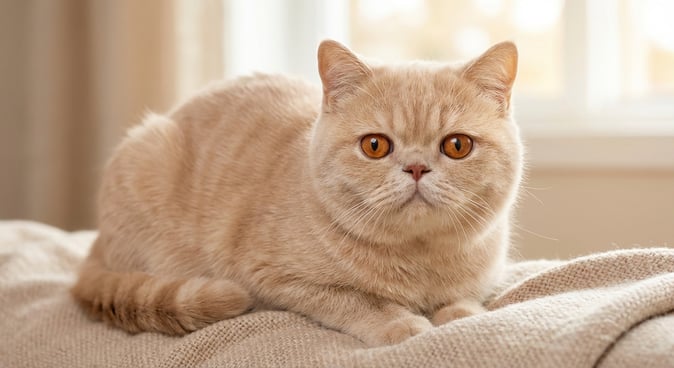
Meet the Exotic Shorthair—the “lazy man’s Persian”—whose teddy-bear looks come with a fraction of the grooming demands. Born from 1950s American ingenuity, this plush-coated charmer now purrs in the top five of North America’s favorite feline companions.
If you adore the sweet face and gentle soul of the Persian but dread daily grooming, the Exotic Shorthair is your dream come true. Developed in the United States as the "lazy man’s Persian," this breed wraps all the cuddly personality of its long-haired cousin into a plush, short coat that’s blissfully easy to maintain. Quiet, affectionate, and undeniably adorable, the Exotic has earned the nickname "teddy bear cat" for good reason.
The Exotic Shorthair burst onto the scene in the 1950s when American breeders wanted a silver-colored Persian look without the grooming marathon. They crossed Persians with American Shorthairs, later adding Burmese and Russian Blues to refine the dense, plush coat. CFA first recognized the breed for registration in 1967; championship status followed in 1978. Today the Exotic consistently ranks among North America’s top five most popular breeds, beloved for its Persian personality wrapped in a wash-and-wear coat.
Exotics are medium-to-large cats, typically weighing 3.5–6 kg (8–13 lb) and measuring 35–45 cm (14–18 in) from shoulder to tail base. The first thing you notice is the massive, round head, flattened face and chipmunk cheeks that give an eternally kittenish expression. Small, rounded ears tilt forward, while large, wide-set eyes sparkle in copper, blue, green, hazel or even odd-eyed combinations. The cobby body sits low on sturdy legs, ending in a short, plush tail. The coat—short yet gloriously thick—stands away from the body, creating a padded, stuffed-animal feel that begs to be stroked. Every Persian color and pattern is allowed, so you can choose from solid white, blue, black, red, cream, smoke, shaded silver, golden, tabby, tortoiseshell, bicolor, calico, colorpoint and more.
With the Exotic Shorthair you get the best of both worlds: the sweet, devoted heart of a Persian tucked inside a plush, no-fuss coat. Gentle, quiet and endlessly huggable, this teddy bear cat is content to love you softly for a dozen years or more. Give them warm laps, measured meals and proactive veterinary care, and your Exotic will reward you with steady companionship and the cutest chipmunk cheeks on the feline planet.
Exotics score a perfect 5/5 for affection and a whisper-quiet 1/5 for vocalization, making them ideal apartment companions. They greet you with soft chirps and follow you room to room, but they’re equally content to curl up on the sofa while you work. Calm, easygoing and gentle, they accept children, guests and respectful dogs with polite curiosity rather than panic. Playfulness sits at a moderate 3/5—expect spontaneous zoomies with a crinkle ball, but don’t anticipate marathon leaping sessions. Owners often describe their Exotic as "emotionally available but not needy," a cat that likes to be near you, not on top of you every second. Intelligence is middle-of-the-road; they learn routines quickly but won’t dismantle kitchen cabinets like some breeds.
Grooming an Exotic is refreshingly simple: a five-minute brush twice weekly keeps the dense coat free of dead hair and reduces the moderate shedding. A silicone grooming glove or soft slicker brush works wonders. Because the breed is brachycephalic, daily face wiping with a damp cotton pad prevents tear staining and keeps facial folds clean. Nails need trimming every two to three weeks; ears should be checked weekly for wax buildup. Exercise needs are moderate—offer a sturdy scratching post, a few toy mice and interactive wand sessions morning and evening to prevent pudginess. Puzzle feeders stimulate their hunting instincts while slowing down gobblers. Exotics thrive on high-quality, meat-based diets; measure meals to avoid obesity, which can worsen respiratory and joint issues.
Expect a lifespan of 12–15 years with vigilant care. The most serious inherited risk is polycystic kidney disease (PKD); reputable breeders DNA-test or ultrasound parents to ensure negative status. Brachycephalic conformation can lead to narrowed nostrils, elongated soft palate and dental crowding, so schedule annual dental cleanings and watch for noisy breathing or exercise intolerance. Calcium oxalate urinary stones occur more frequently in Exotics—provide plenty of fresh water and consider wet food or a prescription diet if your veterinarian recommends. Routine bloodwork, urinalysis and blood-pressure screening starting at age seven help catch kidney changes early. Pet insurance is wise; flat-faced breeds can rack up higher-than-average veterinary bills.
Choose an Exotic Shorthair if you want a loving, low-key lap cat that won’t demand hourly entertainment or leave fur tumbleweeds floating across the hardwood. They suit retirees, busy professionals, families with gentle children and anyone who swoons over the Persian look but refuses to wield a detangling comb. Pass them up if you crave a high-energy acrobat, need a truly hypoallergenic pet (they’re not), or dislike occasional snoring and watery eyes. First-time cat owners find Exotics forgiving and easy to handle, provided they budget for potential hereditary health costs. Adopt from a breeder who offers written PKD-negative guarantees, or check breed-specific rescues for adults already spayed, vaccinated and socialized.
Get AI-powered advice about your cat's health and care. Enter your cat's information and start a conversation with our veterinary assistant.
Start Chat with AIGet expert advice about cat care, behavior, nutrition, grooming, and training. Ask our AI cat care expert anything about your cat and receive professional guidance.
Start Chat with Expert