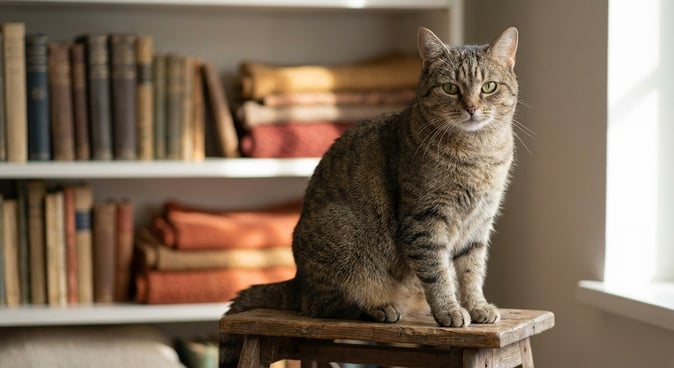
European Shorthair: Europe’s Native Feline Companion
Discover how the European Shorthair, Europe’s original barn cat, emerged from Roman battlefields and medieval granaries to become a continent-loved companion whose rugged charm and mouse-hunting mastery have been 2,000 years in the making.
Often mistaken for the everyday housecat, the European Shorthair is a pedigreed natural treasure that has roamed European farms, villages, and homes for centuries. Robust, affectionate, and endlessly adaptable, this medium-sized feline blends playful intelligence with an easy-going temperament that suits first-time owners and seasoned cat lovers alike.
History & Origin
The European Shorthair’s story begins on the cobblestone streets and grain storehouses of ancient Rome. Roman legions carried short-haired cats from Egypt and the Mediterranean northward, where the cats interbred with local wildcats. Over 2,000 years of natural selection produced a hardy, all-purpose mouser perfectly tuned to Europe’s climates and landscapes. Unlike many modern breeds created through deliberate crosses, the European Shorthair evolved naturally; it was only formally recognized by FIFe in 1982 and WCF shortly after, to preserve its authentic regional type.
Because the breed developed without human interference, regional varieties still exist: Scandinavian lines tend to be stockier and heavier-boned, while Central European cats display slightly longer muzzles and taller ears. Regardless of geography, all true European Shorthairs trace back to the landrace domestic cats that kept Europe’s rodents in check long before chemical pest control.
Physical Characteristics
European Shorthairs are medium-sized athletes—neither cobby nor svelte—built for stamina rather than extreme speed. Adults weigh 3.5–7 kg (8–15 lb) with males at the higher end; body length runs 35–45 cm (14–18 in) excluding the tail. The chest is broad, legs are well-muscled, and paws are rounded, giving the impression of a cat ready for farm work or apartment play in equal measure.
The European Shorthair is Europe’s living feline heritage—handsome, healthy, and heartwarmingly friendly. Whether patrolling a countryside barn or lounging in a city apartment, this adaptable breed brings 2,000 years of rugged charm straight into your living room. Give them love, play, and a warm windowsill, and you’ll share the next decade (or two) with a truly classic cat.
Tags
European Shorthairnatural cat breedfamily catlow groomingplayful catshealthy cat breeds
The hallmark is the coat: short, dense, and double-layered, lying close to the body with a healthy sheen. Every natural color and pattern is allowed, from classic black and red tabbies to smoke, tortoiseshell, colorpoint, and even odd-eyed whites. Eyes are large, round, and alert, coming in gold, green, blue, or mismatched “odd” colors that add to their endearing expression.
Head shape is a moderate wedge—neither Persian-round nor Siamese-triangular—with a firm chin, straight nose, and medium ears set one ear’s width apart. The overall look is one of balance: no feature is exaggerated, making the breed a living template for the quintessential cat.
Temperament & Personality
Imagine a feline that greets guests at the door, supervises children’s homework, and still has the prey drive to keep your home mouse-free—that’s the European Shorthair. Affection level scores a solid 4/5; they seek human company but are not overly clingy. They will follow you room to room, offer quiet head-butts, and curl beside you on the sofa, yet happily entertain themselves while you’re away.
Playfulness is equally high. These cats retain kitten-like curiosity well into their teens, pouncing on feather wands, mastering puzzle feeders, and inventing games with crumpled paper. Their intelligence (4/5) makes them quick learners: many owners report success with clicker training, leash walking, and even opening doors or faucets.
With kids and other pets, European Shorthairs earn 4/5 across the board. They tolerate respectful children, adapt to cat-friendly dogs, and usually accept new feline housemates if introductions are gradual. Vocalization is low (2/5); instead of loud meows, they communicate with soft chirps and expressive tail flicks, perfect for apartment living.
Care Requirements
Grooming is refreshingly simple. The dense double coat sheds moderately (3/5), so a five-minute brush once a week removes loose hair and distributes skin oils. During spring and autumn molts, up the routine to twice weekly. Bathing is rarely needed unless the cat is light-colored and shows grease. Routine nail trimming, ear cleaning, and dental care complete the basics.
Exercise needs sit at 3/5—enough to keep them fit but not overwhelming. Provide vertical space (cat trees or wall shelves), interactive toys, and at least one daily play session. Puzzle feeders tap into their hunting instincts and prevent obesity, a growing concern for any indoor cat.
Mental enrichment is key. Rotate toys, offer window perches for bird-watching, and consider leash training for safe outdoor exploration. Because they bond closely with humans, European Shorthairs dislike being left alone for long stretches; a compatible feline companion or scheduled play visits work well for busy households.
Health Considerations
Natural selection gifted the European Shorthair a broad gene pool and robust constitution. Average lifespan is an impressive 14–20 years, with many individuals reaching the upper teens with minimal veterinary intervention. That said, no breed is invincible. Hypertrophic cardiomyopathy (HCM), the most common feline heart disease, appears occasionally, so annual cardiac screening is wise from middle age onward.
Dental disease—gingivitis and resorptive lesions—can arise, making dental hygiene (daily brushing or dental treats) and yearly vet cleanings important. Maintain vaccination and parasite-control schedules, and keep them indoors or supervised outside to reduce infectious disease and trauma risks.
Because coat colors include white and white spotting, congenital deafness can occur in blue-eyed white cats; breeders should perform BAER testing. Otherwise, the European Shorthair is a low-maintenance patient your veterinarian will enjoy seeing.
Is This Breed Right For You?
Choose a European Shorthair if you want an all-around family cat that balances affection with independence. They thrive in active households with children, respectful dogs, or seniors seeking a devoted but undemanding companion. First-time owners appreciate their hardy health and easy grooming, while experienced fanciers value the authentic, centuries-old genotype.
Avoid if you desire an extreme look (flat face, tiny ears) or a couch-potato lap cat; this breed likes to be on the move. Likewise, if you work long hours and cannot provide daily interaction or a feline friend, their social nature may lead to boredom-driven mischief.
Adoption tip: because the breed resembles ordinary domestic cats, screen breeders for FIFe/WCF registration or consider rescues in Europe that specialize in native pedigrees. Ask for HCM testing records and meet the kitten’s parents to confirm the friendly, confident temperament described here.
Europe cat breeds
short-haired cats
Cat's Doctor
Get AI-powered advice about your cat's health and care. Enter your cat's information and start a conversation with our veterinary assistant.
Get expert advice about cat care, behavior, nutrition, grooming, and training. Ask our AI cat care expert anything about your cat and receive professional guidance.