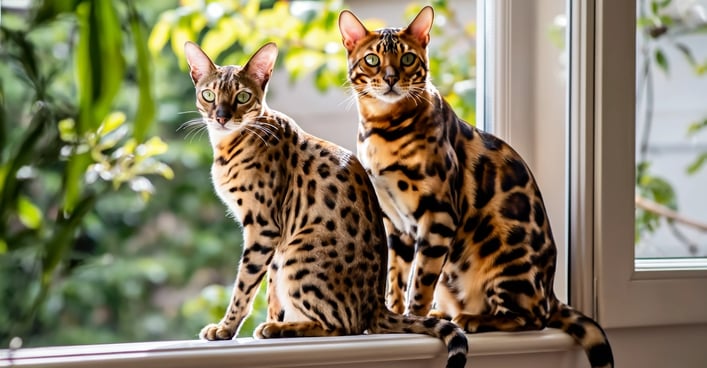
Egyptian Mau vs Bengal Cat: 2026 Breed Comparison Guide
Choosing between an Egyptian Mau and a Bengal cat? Our 2026 guide compares their history, personality, care needs, and costs to help you find your perfect spotted companion.
Share this page
Egyptian Mau vs Bengal Cat: 2026 Breed Comparison Guide
For cat enthusiasts captivated by exotic spotted coats, the Egyptian Mau and Bengal cat stand out as two of the most stunning and dynamic breeds. While both offer a wild aesthetic, their origins, personalities, and care requirements are distinctly different. This comprehensive 2026 guide provides a detailed comparison to help you determine which spotted beauty aligns with your lifestyle.
Breed Origins and History
Egyptian Mau Origins
The Egyptian Mau is one of the few naturally occurring spotted domestic cat breeds, with a lineage that traces back to ancient Egypt. Historical hieroglyphics, over 3,000 years old, depict spotted cats remarkably similar to the modern Mau. The breed was preserved and brought to the United States in the 1950s by Russian princess Nathalie Troubetskoy.
Key Historical Facts:
A natural breed, not human-engineered.
"Mau" is derived from the ancient Egyptian word for cat.
Considered a living relic of Egyptian history.
Holds the title of the fastest domestic cat breed.
Bengal Cat Origins
The Bengal is a modern hybrid breed, developed by crossing domestic cats with the wild Asian Leopard Cat. American breeder Jean Mill pioneered its development in the 1960s and 1970s, aiming to create a domestic cat with a wild appearance but a friendly temperament. The breed gained official recognition in the 1980s.
Egyptian Mau vs Bengal Cat: 2026 Breed Comparison Guide - Articles
Key Historical Facts:
A hybrid breed (domestic × wild ancestry).
Named after the Asian Leopard Cat's scientific name, Prionailurus bengalensis.
Cats from the fourth generation (F4) and beyond are considered fully domestic.
Bred intentionally for its exotic, leopard-like appearance.
Physical Appearance Comparison
Size and Build
Feature
Egyptian Mau
Bengal
Weight (Male)
8-12 pounds
10-18 pounds
Weight (Female)
6-10 pounds
8-12 pounds
Body Type
Graceful, muscular, and svelte
Athletic, muscular, and rugged
Legs
Long hind legs, shorter front legs
Medium length, powerful
Overall Build
Elegant and refined
Substantial and athletic
Coat Patterns and Colors
Egyptian Mau Coat:
Pattern: Natural, random spotting of varied sizes.
Colors: Silver, bronze, and smoke (black).
Texture: Silky and close-lying.
Unique Feature: Striking "gooseberry green" eyes in adults.
Bengal Coat:
Pattern: Rosettes (two-toned spots), spots, or marbling.
Colors: Brown, silver, and snow variations (seal lynx, mink, sepia).
Texture: Often has a "glitter" gene, creating a shimmering, pelt-like coat.
Unique Feature: Distinctive gold or silver glitter in the coat.
Distinctive Physical Traits
Egyptian Mau:
"Mascara" lines extending from the eyes.
A unique flap of skin from flank to knee, aiding in agility and jumping.
A characteristic "worried" expression.
Bengal:
Whitened belly and undersides.
Large, round eyes suited for nocturnal activity.
A thick tail often with a black tip.
Personality and Temperament
Egyptian Mau Personality
Egyptian Maus are known for their deep loyalty and gentle nature.
Bonding: Forms a strong, devoted attachment to their chosen person or family.
Activity: Exhibits moderate energy with impressive bursts of speed.
Social Style: Often reserved with strangers but affectionate with trusted humans.
Vocalization: Tends to be quiet, communicating with soft chirps and chortles.
Bengal Personality
Bengals are famous for their high intelligence and boundless energy.
Energy Level: Extremely high; requires constant activity and engagement.
Behavior: Displays dog-like traits, such as playing fetch and enjoying leash walks.
Social Style: Confident, outgoing, and typically friendly with strangers.
Quirks: Known for a unique love of water and being highly vocal.
Grooming and Care Requirements
Grooming Comparison
Both breeds have relatively low-maintenance coats, but their care extends beyond brushing.
Task
Egyptian Mau
Bengal
Weekly Brushing
15-20 minutes
15-20 minutes
Shedding
Moderate, seasonal
Minimal (single coat)
Water Tolerance
Average
High (often enjoys water play)
Key Focus
Dental hygiene
Nail maintenance (due to high activity)
Health and Lifespan
Health Overview
Egyptian Mau Lifespan: 13-16 years. Common concerns include urolithiasis (urinary stones) and hypertrophic cardiomyopathy (HCM).
Bengal Lifespan: 12-16 years. Common concerns include HCM and progressive retinal atrophy (PRA).
Estimated Annual Healthcare Costs
Expense
Egyptian Mau
Bengal
Wellness Exam & Vaccinations
$230 - $450
$230 - $450
Genetic Testing
$100 - $200
$150 - $300
Pet Insurance (Monthly)
$30 - $50
$35 - $60
Annual Estimate
$610 - $1,200
$735 - $1,470
Cost of Ownership
Initial Purchase Price (2026 Estimates)
Source
Egyptian Mau
Bengal
Pet Quality
$800 - $1,500
$1,000 - $2,500
Show Quality
$1,500 - $2,500
$2,500 - $5,000+
Rescue/Adoption
$100 - $300
$150 - $400
Estimated Monthly Ongoing Costs
Category
Egyptian Mau
Bengal
Premium Food
$40 - $70
$50 - $90
Litter & Supplies
$20 - $30
$20 - $30
Toys & Enrichment
$20 - $40
$40 - $80
Monthly Total
$125 - $215
$160 - $285
Living Environment & Lifestyle Fit
Ideal Home for an Egyptian Mau
Best For: Individuals or families seeking a loyal, moderately active companion.
Space: Adapts well to various home sizes but enjoys vertical space and warm spots.
Family: Suits adults or families with older children.
Time Commitment: Requires 20-30 minutes of dedicated interactive play daily.
Ideal Home for a Bengal
Best For: Active, experienced owners who can provide extensive engagement.
Space: Needs ample room to run, climb, and explore. A catio is highly beneficial.
Family: Thrives in energetic households that can include playtime in their daily routine.
Time Commitment: Requires 45-60+ minutes of vigorous play and mental stimulation daily.
Training and Intelligence
Egyptian Mau: Intelligent and trainable with positive reinforcement, but often selective and bonded to their primary person. They learn best through trust and gentle encouragement.
Bengal: Exceptionally intelligent and highly trainable. They excel at learning tricks, walking on a leash, and solving puzzles. Their intelligence requires constant channeling to prevent boredom.
Pros and Cons Summary
Egyptian Mau
Pros:
✅ Ancient, natural breed with historical significance.
✅ Moderately active; easier to manage than a Bengal.
✅ Deeply loyal and devoted to their family.
✅ Beautiful, low-maintenance spotted coat.
Cons:
❌ Can be shy or reserved with strangers.
❌ Has specific health considerations to monitor.
❌ As a rarer breed, kittens can be harder to find.
Bengal
Pros:
✅ Breathtaking, wild-looking appearance.
✅ Highly trainable and interactive (dog-like).
✅ Confident, outgoing, and entertaining personality.
✅ Unique love for water play.
Cons:
❌ Extremely high energy demands; can be destructive if bored.
❌ Requires significant time, space, and enrichment investment.
❌ Higher purchase price and ongoing costs.
Final Decision Guide
Choose an Egyptian Mau if:
You desire a spotted cat with a noble history and moderate energy.
You want a deeply loyal companion who forms a strong bond.
Your lifestyle allows for daily play but not marathon sessions.
You appreciate a more reserved, elegant feline presence.
Choose a Bengal if:
You are captivated by a wild aesthetic and unmatched energy.
You have ample time for daily interactive play and training.
You want a highly social, dog-like cat that learns tricks.
You can provide a stimulating environment with climbing structures and water features.
Conclusion
Choosing between an Egyptian Mau and a Bengal cat is a decision between ancient elegance and modern wild energy. The Mau offers a touch of history with devoted companionship, while the Bengal delivers non-stop entertainment and interactive engagement. Your choice should ultimately reflect your lifestyle, time commitment, and the type of feline relationship you seek. Both breeds promise a uniquely beautiful and rewarding experience for the dedicated owner.
Last Updated: February 2026 Share your experiences with these magnificent spotted breeds in the comments below!
Get expert advice about cat care, behavior, nutrition, grooming, and training. Ask our AI cat care expert anything about your cat and receive professional guidance.