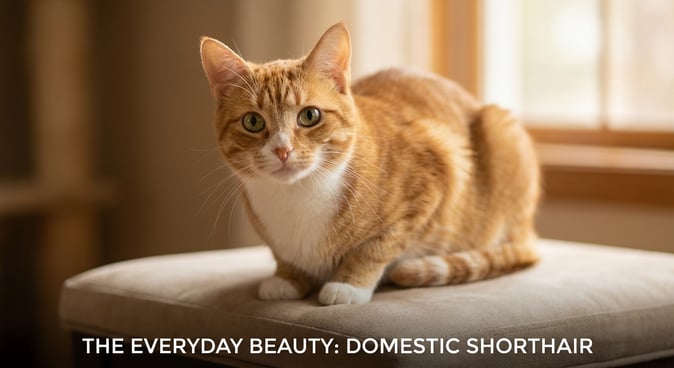
From ancient grain-store guardians to today’s couch-loving lap warmers, Domestic Shorthairs have spent 10,000 years perfecting the art of being the ultimate family cat. Discover how their globe-trotting past forged a breed bursting with rugged health, rainbow colors, and an easy-going charm that fits every home.
The Domestic Shorthair (DSH) isn’t a pedigreed breed but the affectionate nickname for short-coated cats of mixed ancestry. Found on every continent, these versatile felines outnumber any purebred and routinely top shelter adoption lists thanks to their easy-going temperament, rainbow of coat colors, and famously robust health.
Domestic Shorthairs descend from the first cats domesticated in the Fertile Crescent roughly 10,000 years ago. As trade routes expanded, these natural mouse hunters sailed aboard ships, safeguarding grain stores and spreading their genes worldwide. In America, early settlers relied on "working cats" to protect food supplies; over centuries, random breeding created a genetically diverse population far healthier than many closed-registry breeds. Today DSH cats account for about 90% of U.S. pet cats, proving that function, beauty, and charm can indeed come in one adorable package.
Expect a medium-sized, athletically built cat weighing 3–6 kg (7–13 lb) and measuring 30–45 cm (12–18 in) from shoulder to tail base. Their short, dense coat lies close to the body, requiring minimal upkeep yet offering enough shedding to merit a 3/5 rating. Every conceivable color and pattern appears in the DSH gene pool: solid black, white, orange, dilute blues and creams, classic tabby, mackerel tabby, tortoiseshell, calico, bi-color, van, smoke, and shaded silver—the list is endless. Eye color is equally varied; copper, gold, green, blue, or odd-eyed combinations all occur. This kaleidoscope means no two Domestic Shorthairs look exactly alike, letting adopters pick a truly one-of-a-kind companion.
From ancient granaries to modern living rooms, the Domestic Shorthair has earned its place as the world’s most popular cat through versatility, vigor, and heartfelt affection. Whether draped across your keyboard in classic tabby stripes or batting a toy mouse in calico patches, these all-American cats promise two decades of purring companionship—all wrapped in a delightfully low-maintenance package.
Domestic Shorthairs score an impressive 4/5 for affection, friendliness, kid-compatibility, and pet-friendly attitude, making them ideal family cats. They balance sociability with independence: happy to greet you at the door, curl on the sofa for Netflix night, yet content to entertain themselves while you’re at work. Their playful streak (4/5) lasts well into adulthood, but energy levels remain moderate (3/5), so interactive wands, puzzle feeders, and cardboard boxes easily satisfy exercise needs. Intelligence (4/5) shows in problem-solving skills—opening doors, learning tricks, or mastering treat puzzles. Vocalization sits at a polite 3/5; they’ll chirp or meow softly to communicate without the constant chatter of some Oriental breeds. Overall, the DSH is an adaptable, even-tempered friend who adjusts to apartments, houses, kids, seniors, dogs, or other cats with equal ease.
Grooming is refreshingly simple: a five-minute weekly brush removes loose hair, reduces hairballs, and distributes skin oils for a glossy coat. Increase frequency during spring and fall shedding seasons. Trim nails every 2–3 weeks, check ears for wax, and brush teeth several times a week to prevent periodontal disease—the most common health issue in any cat. Provide a tall scratching post, window perch, and daily play sessions to prevent obesity. Because Domestic Shorthairs love to climb and pounce, rotate toys to keep life interesting. A balanced, portion-controlled diet—measured meals rather than free feeding—helps maintain their ideal weight and avoids the pudgy "garage-cat" look.
Thanks to hybrid vigor, DSH cats enjoy one of the longest feline lifespans: 12–20 years, with many reaching their early 20s. Their broad gene pool lowers risk of inherited disorders common in purebreds, yet routine preventive care remains vital. Watch for weight gain; neutered indoor cats can easily tip the scales, predisposing them to diabetes, arthritis, and hepatic lipidosis. Schedule annual vet exams, keep vaccinations current, and run baseline bloodwork after age seven. Dental cleanings under anesthesia may be needed every few years. Otherwise, expect a hearty, low-maintenance companion whose vet bills typically run below breed-average.
Choose a Domestic Shorthair if you want a loving, low-maintenance cat who fits virtually any lifestyle. They’re perfect for first-time owners, busy families, or retirees seeking companionship without hourly grooming. If you crave predictability in size, color, or personality, a purebred might suit you better; but for a surprise package of charm, resilience, and devotion, the DSH delivers. Visit your local shelter—chances are a pair of eager eyes is waiting to claim your lap tonight.
Get AI-powered advice about your cat's health and care. Enter your cat's information and start a conversation with our veterinary assistant.
Start Chat with AIGet expert advice about cat care, behavior, nutrition, grooming, and training. Ask our AI cat care expert anything about your cat and receive professional guidance.
Start Chat with Expert