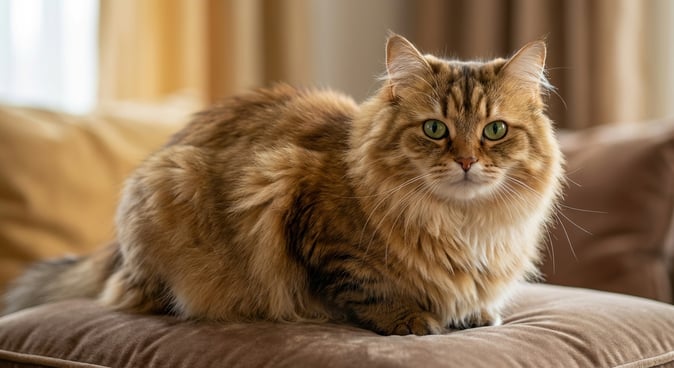
Cymric Cats: The Tailless Treasures of the Isle of Man
Discover the enchanting Cymric, a fluffy, tailless jewel born from a sailor’s cat and a fateful Isle of Man mutation. This preview unveils how a hidden gene turned rugged island strays into the luxurious, round-cats we cherish today.
Imagine a plush, tail-free feline bounding toward you with the easy confidence of a cat that has sailed through centuries of legend. The Cymric (pronounced “KIM-rick”) is the semi-long-haired cousin of the famous Manx, hailing from the misty Isle of Man. With a heart as warm as its coat is fluffy, this breed wraps intelligence, loyalty, and playfulness into one adorable package.
History & Origin
The Cymric’s story begins on the self-governing Isle of Man, nestled between England and Ireland. Sailors’ cats from trading ships are thought to have settled on the island, where a spontaneous genetic mutation caused kittens to be born without tails. Over generations, the trait was preserved in the isolated population. While the short-haired cats became known as Manx, the semi-long-haired variety—identical in every way except coat length—earned the name Cymric, derived from the Celtic word for Wales, paying homage to the broader Celtic region. Today, some registries still class the Cymric simply as a long-haired Manx, but fanciers celebrate it as a distinct variety worthy of its own spotlight.
Physical Characteristics
Cymrics are medium-sized, cobby cats with broad chests and powerful hindquarters that sit slightly higher than their front legs, giving them a distinctive “rabbit-like” hop. Females weigh 3.5–5 kg (8–11 lb), while males tip the scales at 4–5.5 kg (9–12 lb). Their body length ranges from 35–45 cm, compact yet surprisingly heavy when lifted. The hallmark feature is, of course, the absent or stubby tail—ranging from completely tailless (“rumpy”) to a small rise (“rumpy riser”) or short knob (“stumpy”).
The Cymric weaves centuries of island lore into a lovable, living companion. With its cloud-soft coat, whip-smart mind, and tail-free wiggle, this breed brings a touch of mythical charm to any household willing to offer moderate grooming and proactive health care. Invite a Cymric into your life and discover why, for generations, sailors and farmers alike considered these rounded rump cats the luckiest stowaways on the Isle of Man.
Tags
CymricManxtailless catlong-haired catIsle of Manfamily pet
The double coat is semi-long, silky, and well padded, forming a luxurious neck ruff and breeches that shimmer in every recognized color and pattern—from solid black to shaded silver, tabby to tortoiseshell, and even colorpoint. Eye color corresponds to coat: gold and copper dominate in most varieties, while blue or aqua grace colorpoint or white-coated individuals. Altogether, the Cymric presents a rounded silhouette: round head, round cheeks, round eyes—an adorable living plush toy.
Temperament & Personality
Don’t let the teddy-bear looks fool you; Cymrics are sharp thinkers. They score a perfect 5/5 for intelligence, quickly mastering puzzle feeders, doorknobs, and even fetch. Yet their energy meter is a moderate 3/5, meaning they balance play sessions with mellow lap time. Affection runs deep—4/5—manifesting in gentle head-butts and a tendency to follow chosen humans from room to room like loyal dogs.
They communicate with quiet trills (vocalization 2/5), reserving speech for important announcements such as “my bowl is half empty.” Kids, strangers, and other pets receive warm welcomes thanks to their 4/5 friendliness rating. Expect a Cymric to supervise homework, “help” fold laundry, and bat toys beneath the sofa only to plaintively request retrieval—an endearing blend of dignity and goofiness.
Care Requirements
That glamorous coat demands consistent upkeep. Grooming needs rank 4/5: a stainless-steel comb or slicker brush every other day prevents mats and reduces shedding (3/5 level). Pay special attention to the ruff and breeches where tangles first form. During spring and autumn sheds, daily sessions keep woolly clumps off carpets.
Exercise is moderate; rotate teaser wands, crinkle balls, and treat puzzles to engage their clever minds. A tall cat tree satisfies climbing instincts without risking tail injuries. Because Cymrics can be stocky, portion meals rather than free feeding, aiming for a high-protein, low-carb diet. Dental chews and weekly tooth-brushing curb periodontal issues, while monthly nail trims and ear checks complete the routine.
Health Considerations
The same tailless gene (M) responsible for the Cymric’s charm can also affect spinal development. “Manx syndrome” encompasses potential defects such as spina bifida, fused vertebrae, or megacolon. Reputable breeders allow kittens to remain with their mothers until 12–14 weeks and provide veterinary certification that the sacral end of the spine is properly formed. Even asymptomatic adults may develop arthritis at the tail-rump junction in later years, so keep them lean and provide joint supplements if your vet advises.
Less commonly, corneal dystrophy (an opacity in the eye) can occur; annual ophthalmologist screenings catch changes early. Routine bloodwork, stool checks, and ultrasound monitoring help ensure digestive motility remains normal. With vigilant care, the average lifespan is 9–13 years, though many Cymrics sail past their teens in fine fettle.
Is This Breed Right For You?
Choose a Cymric if you want a devoted, relatively quiet companion who offers interactive play without hyperactivity. They adapt well to apartments or houses, singles or families, but crave company—consider a second pet if the house stands empty all day. Be prepared for a twice-weekly grooming commitment and the possibility of higher veterinary surveillance due to spinal genetics. If you adore unique heritage breeds and can commit to responsible ownership, the tailless treasure from the Irish Sea will reward you with unwavering loyalty and plenty of plush cuddles.
intelligent cat
moderate grooming
cat breed profile
Cat's Doctor
Get AI-powered advice about your cat's health and care. Enter your cat's information and start a conversation with our veterinary assistant.
Get expert advice about cat care, behavior, nutrition, grooming, and training. Ask our AI cat care expert anything about your cat and receive professional guidance.