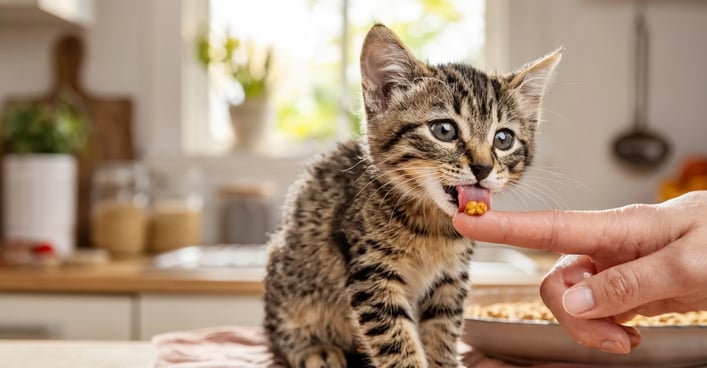
The Complete Kitten Weaning Guide for 2026: From Milk to Solid Food
Master the gentle transition from nursing to solid food with our step-by-step guide. Learn timing, techniques, and troubleshooting to raise healthy, thriving kittens.
Share this page
The Complete Kitten Weaning Guide for 2026: From Milk to Solid Food
Introduction
Kitten weaning is a pivotal developmental milestone, transforming dependent milk-drinkers into independent eaters capable of thriving on solid food. This gradual process, typically beginning around three to four weeks of age, requires patience, proper nutrition, and careful monitoring to ensure kittens develop healthy eating habits for life.
Whether you're weaning orphaned kittens from bottle feeding or supporting a mother cat's litter through natural weaning, understanding this process is crucial for preventing nutritional deficiencies, behavioral issues, and health complications. This comprehensive guide covers every aspect of successful kitten weaning.
Understanding the Weaning Process
What Is Weaning?
Weaning is the gradual transition from mother's milk (or kitten milk replacer) to solid food. This multifaceted process involves:
Nutritional Transition: Shifting from liquid to solid sustenance.
Goal: Introduce the concept of solid food without reducing milk intake.
Daily Routine:
Morning (8:00 AM): Offer a "gruel" made of 3 parts warm kitten milk replacer (KMR) to 1 part wet kitten food. Place in a shallow saucer and let kittens explore. Expect mess! After 20-30 minutes, offer a regular bottle feeding.
Afternoon (4:00 PM): Repeat the gruel introduction. Gently guide a kitten's mouth to the food or let them lick gruel from your finger.
Evening: Maintain normal bedtime bottle feeding.
Encouragement Techniques:
Finger Dipping: Let them lick food from your finger, then slowly lower your finger to the dish.
Nose Touch: Dab a tiny bit of food on their nose; their instinct is to lick it off.
Sibling Modeling: Place a hesitant eater with a more adventurous littermate.
Week 2: Active Transition (Days 8-14)
Goal: Increase solid food intake and begin reducing milk feedings.
Daily Routine:
Morning & Evening: Offer a thicker gruel (equal parts KMR and wet food). Allow 30 minutes to eat, then provide a bottle only if the kitten is still hungry.
Gradually thicken the consistency over the week towards a thin oatmeal texture.
Week 3: Building Independence (Days 15-21)
Goal: Majority of nutrition from solids; introduce texture variety.
Daily Routine:
Offer slightly thinned wet food alone at meals.
Introduce textures: from mashed, to small chunks, to dry kibble softened with water.
Bottle feeding should be reduced to 1-2 comfort sessions per day.
Week 4: Completion & Routine (Days 22-28)
Goal: Full transition to a solid food diet.
Established Feeding Schedule:
Morning & Evening: High-quality kitten wet food.
Midday/Throughout Day: Dry kitten kibble available for free-choice grazing.
Always: Fresh, clean water.
Most kittens are fully weaned onto solids by 6-8 weeks of age.
Feeding Schedules and Portions
Daily Food Amounts by Age
Age
Wet Food (3oz cans)
Dry Food
Feeding Frequency
4 weeks
¼ - ½ can
None
4-5 times daily
5 weeks
½ - ¾ can
Introduce softened
4 times daily
6 weeks
¾ - 1 can
Free choice available
3-4 times daily
7-8 weeks
1 - 1½ cans
Free choice available
3 times daily
Adjust portions based on individual kitten size, appetite, and activity level.
Troubleshooting Common Weaning Problems
1. Refusal to Eat Solid Food
Solutions:
Ensure food is warmed to body temperature (not hot).
Try a different brand or protein source (e.g., chicken, salmon).
Go back to a thinner, milkier gruel and transition slower.
Hand-feed for reassurance.
Rule out illness with a veterinarian if refusal persists.
2. Diarrhea
Causes & Management:
Cause: Transition too fast, overeating, or food intolerance.
Solution: Return to the last food that agreed with them. Offer smaller, more frequent meals. Consult a vet if diarrhea lasts over 24 hours or the kitten seems lethargic.
3. Constipation
Signs & Solutions:
Signs: Straining, hard dry stools, decreased appetite.
Solution: Increase hydration by adding water to wet food. A tiny amount (¼ tsp) of plain canned pumpkin can help. Gentle belly massages may stimulate digestion.
4. Food Guarding or Aggression (Multi-Kitten Litters)
Prevention:
Feed kittens in separate, spaced-out areas.
Provide one dish per kitten plus one extra.
Supervise meals to ensure each kitten gets their share.
Post-Weaning: Setting Up for Lifelong Health
Continue Kitten Food: Feed a growth-formulated diet until at least 12 months of age. Large breeds (Maine Coon, Ragdoll) may need kitten food for up to 18 months.
Transition to Adult Food: Consult your veterinarian. Signs of readiness include reaching adult size and stable weight, typically after spaying/neutering.
Conclusion
Successful kitten weaning hinges on patience, observation, and a gradual approach. By starting at the right time (3-4 weeks), using high-quality kitten food, and progressing at your kitten's unique pace, you lay the foundation for a lifetime of healthy eating habits.
Remember, weaning is more than a dietary change—it's a critical lesson in independence. Your attentive care during this short window fosters well-adjusted, thriving cats ready for their forever homes. Use this guide as your roadmap, but always let your kitten's behavior and health be your ultimate guide.
Get expert advice about cat care, behavior, nutrition, grooming, and training. Ask our AI cat care expert anything about your cat and receive professional guidance.