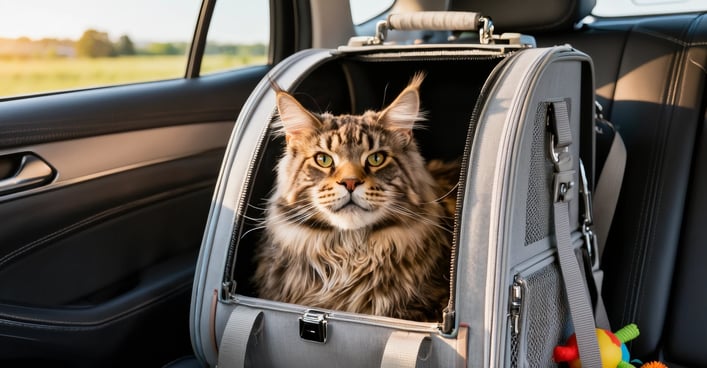
The Complete Guide to Traveling with Your Cat in 2026
A comprehensive guide to stress-free travel with your feline friend. Learn expert strategies for car trips, hotel stays, and air travel to ensure a safe and comfortable journey.
Share this page
The Complete Guide to Traveling with Your Cat in 2026
Meta Description: Your definitive 2026 guide to traveling with cats. Master car travel, hotel stays, and air travel with our expert tips for minimizing feline stress and ensuring a safe journey.
While most cats cherish the predictable comfort of home, life sometimes necessitates travel—be it a permanent move, a visit to a veterinary specialist, or a vacation where leaving your companion behind isn't an option. Unlike many dogs, cats typically perceive travel as a significant disruption. However, with meticulous preparation and proven techniques, you can dramatically reduce anxiety and create a manageable, even peaceful, experience for both you and your feline friend.
All medications (with instructions), basic pet first-aid kit, anti-nausea/anxiety meds if prescribed.
Comfort
Familiar bedding, favorite toys, unwashed t-shirt with your scent, Feliway spray or wipes.
Cleaning
Paper towels, pet-safe disinfectant wipes, enzymatic cleaner for accidents, plastic bags.
Safety
Secure harness and leash, extra collar with ID tag, a recent photo.
Mastering Car Travel with Your Cat
Optimal Carrier Setup and Safety
Securing the Carrier:
Use a seatbelt threaded through the carrier's handle or built-in straps.
Alternatively, wedge it securely between the back seat and front seats.
Never place a carrier in the front seat (airbag risk) or an open truck bed.
The floor behind the front seats can offer a stable, low-vibration position.
Creating a Comfortable Environment:
Line the bottom with an absorbent puppy pad.
Add a familiar blanket or bedding.
Use a light cover or towel over part of the carrier to create a cozy, den-like feel and reduce visual overstimulation.
Ensure the carrier is well-ventilated on multiple sides.
Verify it's large enough for your cat to stand, turn around, and lie down comfortably.
Managing the Journey: Schedule and Stops
Pre-Travel Feeding Schedule:
Timing Before Departure
Action
3-4 Hours
Offer a light, familiar meal.
2 Hours
Remove all food to reduce nausea risk.
During Travel
Make water available during stops only.
Upon Arrival
Offer a small amount of food and fresh water once settled.
Sample Travel Day Timeline:
Time
Activity
Morning
Light breakfast, administer any medications.
Pre-Departure (30 min)
Final litter box opportunity, gentle placement in carrier.
Every 2-3 Hours
Stop: Offer water, provide litter box in a secure space (like a bathroom or back seat), check on comfort.
Evening Arrival
Set up a dedicated "safe room" immediately before letting cat explore.
Preventing and Addressing Motion Sickness
Recognize the Signs:
Excessive drooling or lip-licking
Vomiting
Unusual lethargy or stillness
Persistent whining or crying
Prevention Strategies:
Travel on an empty stomach (withhold food 2-3 hours prior).
Position the carrier so your cat faces forward.
Ensure the carrier is level and stable.
Maintain a cool, well-ventilated car.
Limit visual stimuli by partially covering the carrier.
Treatment Options:
Cerenia (Maropitant): A prescription anti-nausea medication (discuss with your vet).
Natural Aids: Vet-approved ginger supplements.
Frequent Breaks: Allow fresh air and recovery time.
Hotel and Accommodation Stays
Finding and Booking Pet-Friendly Lodging
Major Hotel Chains with Pet-Friendly Policies (2026):
Chain
General Pet Policy
Typical Fee
La Quinta
Pets welcome at most locations.
Often free or minimal.
Red Roof Inn
Pets stay free.
Free.
Motel 6
Pets welcome.
Free.
Best Western
Varies significantly by property.
$20-$50 per night.
Marriott
Varies by brand (e.g., Aloft, Residence Inn).
$50-$150 per stay.
Pro Booking Tips:
Call the hotel directly to confirm the specific pet policy, as online info can be outdated.
Ask for a total of all pet fees (daily fee, one-time cleaning fee, deposit).
Request a ground-floor room for easier emergency exits and potty breaks.
Ask for a quiet, interior-facing room away from elevators and ice machines.
Verify any breed/weight restrictions, though less common for cats.
Setting Up a Safe Hotel "Base Camp"
Immediate Arrival Protocol:
Claim the Bathroom: Before letting your cat out, set up the litter box, food, and water bowls in the bathroom. This creates a small, secure territory.
Initial Containment: Place the carrier (with cat inside) in the bathroom. Close the door. This allows housekeeping noise or hallway sounds to settle while your cat is in a safe, familiar space.
Gradual Exploration: After 15-30 minutes, open the bathroom door and allow your cat to explore the main room at their own pace. Don't force interaction.
Safety Sweep: Check for open windows, loose screens, gaps under furniture they could get stuck in, and accessible electrical cords.
Essential Hotel Safety Rules:
Keep the "Do Not Disturb" sign on the door at all times.
Inform the front desk a cat is in the room to prevent unexpected housekeeping.
Always place your cat in their carrier before opening the main door for any reason.
Treat high-floor windows as lethal hazards. Ensure they are locked and secure.
Never leave your cat unattended on a balcony.
Air Travel with Cats
In-Cabin Travel (The Strongly Preferred Method)
Standard Requirements:
Soft-sided carrier must fit under the seat in front of you (typical max: 18"L x 11"W x 11"H).
Combined weight of pet and carrier is often limited to 15-20 lbs.
A health certificate issued within 10 days of travel is commonly required.
Limited spots are available; you must make a pet reservation.
2026 Airline Pet Policy Overview:
Airline
In-Cabin Fee (One-Way)
Key Notes
Delta Air Lines
~$150
Strict carrier size enforcement; book pet spot early.
United Airlines
~$150
Requires health certificate for all pet travel.
American Airlines
~$150
Advance booking essential; limited to 7 carriers per flight.
Southwest Airlines
~$125
Pet fare is per carrier; relatively pet-friendly policies.
Alaska Airlines
~$100
Health certificate required; well-regarded for pet handling.
Booking Strategy for Success:
Book your pet's reservation immediately after confirming your own ticket.
Re-confirm the pet reservation by calling the airline 48 hours before departure.
Arrive at the airport extra early (at least 2 hours for domestic) to complete pet check-in.
Keep health documents and payment confirmation easily accessible in your carry-on.
Cargo Travel (A Last Resort)
Consider Only When:
Your cat is too large for in-cabin requirements.
You can book a direct flight to minimize handling and time in transit.
Travel occurs in mild seasons to avoid temperature extremes in the hold.
Significant Risks Include:
Exposure to loud noise and variable pressures.
Potential for extreme temperatures during tarmac delays.
Stress from unfamiliar handlers and environments.
Higher risk of travel complications or delays separating you from your pet.
Navigating the Airport
Security Screening Process:
You will be required to remove your cat from the carrier.
The empty carrier goes through the X-ray machine.
You will carry your cat through the human metal detector or a designated lane.
A secure, well-fitted harness and leash is non-negotiable for this step.
Practice this harness-and-hold procedure at home multiple times before your trip.
Terminal Survival Tips:
Use airport maps or apps to locate official pet relief areas before you fly.
Find a quiet, less crowded corner away from main gates to wait.
Keep the carrier partially covered with a blanket or scarf to reduce stress.
Have a few high-value treats ready to reward calm behavior.
Emergency Preparedness: Hope for the Best, Plan for the Worst
The Travel Emergency Kit
Item
Critical Purpose
Pet First-Aid Kit
Address minor cuts, abrasions, or insect stings.
Medications & Records
Manage existing conditions and provide info to a new vet.
List of Emergency Vets
Pre-researched clinics along your route and at your destination.
Extra Food & Water
Sustain your cat through unexpected delays of 24+ hours.
Recent Photo
Vital for creating "Lost Pet" flyers quickly.
Finding Veterinary Care on the Road
Before You Depart:
Use resources like the AAHA Hospital Locator or VetFinder apps.
Identify 24-hour emergency clinics in major cities along your route.
Ask your primary vet if they have any professional referrals in your destination area.
Save phone numbers and addresses in your phone's maps and notes app.
Telehealth as a Resource:
Services like Airvet or Vetster can provide virtual consultations for non-emergent advice while traveling, helping you decide if an in-person visit is necessary.
International Travel: A Complex Undertaking
Common Requirements (Start Planning 6+ Months Ahead):
ISO-Compliant Microchip (15-digit, 134.2 kHz) implanted before any vaccinations.
Rabies Vaccination administered after microchipping, often with a mandatory 21-day wait period.
Official Health Certificate issued by an USDA-accredited vet and endorsed by the USDA APHIS.
Import Permit required by many countries.
Possible Quarantine upon arrival (e.g., Australia, New Zealand, Hawaii).
Country Examples:
UK & EU: Microchip, rabies vaccine, wait 21 days, EU health certificate within 10 days of travel. Tapeworm treatment not required for cats.
Australia/New Zealand: Very strict. Involves multiple tests, treatments, applications, and a mandatory 10-day (minimum) quarantine upon arrival at government facilities. Costs can exceed $4,000.
Hiring a Professional Pet Shipper
Consider a Shipper When:
Navigating complex international import regulations.
Organizing a long-distance or intercontinental move.
Traveling with multiple pets.
You lack the time or bandwidth to manage extensive paperwork and logistics.
Cost Range: $1,000 to $5,000+, highly dependent on origin, destination, and pet size.
Managing and Recognizing Travel Stress
Identifying Stress Levels
Mild Stress
Moderate Stress
Severe Stress
Increased vocalization
Panting, rapid breathing
Hissing, growling, aggression
Restlessness/pacing
Excessive drooling
Complete withdrawal, catatonia
Reduced appetite
Trembling/shaking
Refusal to eat/drink for 24+ hours
Hiding in carrier
Diarrhea or constipation
Self-harm (excessive grooming to bald spots)
Proactive Stress Reduction Strategies
Environmental Modifications:
Use Feliway (synthetic feline pheromone) spray in the carrier and hotel room 15 minutes before introducing your cat.
Maintain a consistent, comfortable temperature in the car or carrier.
Play quiet, calming music or white noise at a low volume.
Behavioral Support:
Speak in a calm, reassuring tone. Your anxiety can transfer to your cat.
Ignore attention-seeking cries during travel to avoid reinforcing the behavior. Reward quiet, calm moments instead.
Allow your cat to hide if they choose; don't force interaction.
Medical Support (Vet-Prescribed):
Gabapentin: Commonly used for its anti-anxiety and mild sedative effects.
Trazodone: Another option for anxiety.
Cerenia (Maropitant): Primarily for nausea, which itself is a major stressor.
Post-Travel Recovery and Homecoming
Helping Your Cat Reacclimate
Re-establish routines immediately (feeding times, play sessions).
Allow 1-3 days of quiet decompression with limited guest visits.
Provide extra affection and attention on their terms.
Monitor closely for normal eating, drinking, and litter box habits.
Remember that stress can temporarily weaken the immune system; watch for signs of illness.
When to Contact Your Veterinarian Post-Trip
No interest in food or water for over 48 hours.
Persistent vomiting or diarrhea lasting more than 24 hours.
Lethargy that continues beyond the first day of rest.
Any respiratory distress (coughing, wheezing, labored breathing).
Significant behavioral changes (unusual aggression, hiding) that don't resolve in a few days.
2026 Travel Cost Breakdown (Estimates)
Basic Weekend Road Trip (3 Days, 2 Nights)
Expense
Estimated Cost
Pet-Friendly Hotel Fees
$50 - $150
Extra Travel Supplies
$30 - $60
Recommended Emergency Fund
$100
Total Estimated Additional Cost
$180 - $310
Extended Domestic Trip (1 Week)
Expense
Estimated Cost
Veterinary Prep (Exam, Certificates)
$75 - $250
Hotel Pet Fees (7 Nights)
$175 - $500
Travel Supplies & Food
$60 - $120
Recommended Emergency Fund
$200
Total Estimated Additional Cost
$510 - $1,070
Domestic Air Travel (One-Way, In-Cabin)
Expense
Estimated Cost
Health Certificate
$75 - $200
Airline Pet Fee
$100 - $200
TSA-Approved Carrier
$40 - $120
Total Estimated Additional Cost
$215 - $520
Frequently Asked Questions (2026)
Q: Should I give my cat a sedative for travel?
A: Traditional sedatives are generally discouraged for air travel and can be risky for car travel, as they can affect balance and temperature regulation. Instead, consult your vet about anti-anxiety medications (like Gabapentin) which reduce stress without causing deep sedation.
Q: How long is it safe for my cat to stay in a carrier?
A: For car travel, plan a break every 2-3 hours to offer water and a litter box opportunity. For in-cabin air travel, the duration is limited to the flight time plus airport processing. Always ensure the carrier is spacious enough for comfort.
Q: Can my cat hold their bladder during a long car ride?
A: While a healthy cat can technically hold urine for 8-12 hours, it's uncomfortable and stressful. Aim to provide a litter box option every 4-6 hours during road trips to promote comfort and prevent accidents or urinary issues.
Q: What's the first thing I should do if my cat escapes during travel?
A: Do not chase. Immediately place their carrier, some of your worn clothing, and strong-smelling food (like wet cat food or tuna) near where they were last seen. Sit quietly nearby and call softly. Chasing can frighten them further away.
Q: Is it less stressful to board my cat or bring them with me?
A: For most cats, staying in their familiar home with a trusted pet sitter is the least stressful option. However, for anxious cats with strong owner attachment or for very long trips (several weeks), a well-planned travel experience may be preferable. Assess your individual cat's personality.
Last Updated: 2026 | Remember, every cat is an individual. Use this guide as a framework, but always prioritize your own cat's known temperament, health, and comfort levels. When in doubt, consult your veterinarian.
Get expert advice about cat care, behavior, nutrition, grooming, and training. Ask our AI cat care expert anything about your cat and receive professional guidance.