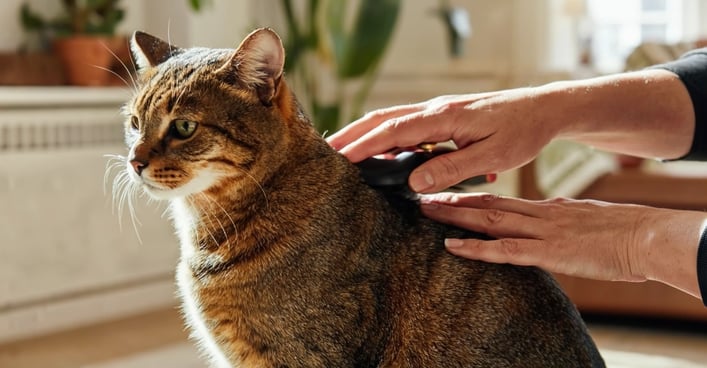
Complete Guide to Grooming Your Cat: Brushing, Bathing, and Beyond
Master essential cat grooming techniques for a healthy, happy feline. Learn brushing, bathing, nail trimming, and preventive care to strengthen your bond and spot health issues early.
Share this page
Complete Guide to Grooming Your Cat: Brushing, Bathing, and Beyond
While cats are renowned for their self-grooming abilities, a consistent human-assisted grooming routine is vital for their well-being. Beyond aesthetics, regular grooming strengthens your bond, allows for early health detection, and prevents common issues like matting and hairballs. This comprehensive guide provides professional techniques for maintaining your cat's coat, skin, nails, ears, and dental health.
Why Regular Grooming Is Essential
Health Benefits
Early Problem Detection:
Regular handling lets you identify issues before they escalate:
Skin abnormalities, lumps, or parasites
Coat changes signaling nutritional deficiencies
Early signs of ear infections or dental disease
Subtle weight fluctuations
Physical Health:
Significantly reduces hairballs by removing loose fur
Prevents painful matting, especially in long-haired breeds
Head tilting, loss of balance, or circling (could indicate a deep infection).
Continuous, frantic scratching.
Dental Care
The Critical Importance of Feline Dental Health
Dental disease is a silent epidemic, affecting most cats by age three. Proactive care:
Prevents painful periodontal disease and tooth loss.
Reduces systemic risks to the heart, kidneys, and liver.
Eliminates chronic bad breath (halitosis).
Saves significant money on veterinary dental procedures.
At-Home Dental Care Options
Method
Effectiveness
Best For
Tooth Brushing
Gold Standard (Most Effective)
Cats who can be acclimated; ideal for daily prevention.
Dental Treats & Chews
Moderate (Look for VOHC Seal)
Supplemental care; cats resistant to brushing.
Dental Wipes
Fair
An introductory step or alternative to brushing.
Water Additives
Mild
Easy addition to routine; works best combined with other methods.
Prescription Dental Diets
Good
Cats who "chew" their food; requires veterinary recommendation for prescription formulas.
Acclimating Your Cat to Tooth Brushing: A 4-Week Plan
Week 1: Introduce the Taste
Let your cat lick a tiny amount of cat-specific toothpaste (never human toothpaste, which contains xylitol) from your finger. Praise and reward.
Week 2: Touch the Teeth
Gently lift the lip and touch your finger to the gums and teeth. Keep sessions under 30 seconds. Reward heavily.
Week 3: Introduce the Brush
Let your cat lick paste from a cat toothbrush or finger brush. Gently rub the brush against a few front teeth.
Week 4: Begin Brushing
Brush for just 5-10 seconds, focusing on the outer surfaces of the cheek teeth. Gradually increase time and coverage over weeks. Always end on a positive note.
Eye Care
Routine Maintenance
Most cats self-clean, but some need assistance:
Brachycephalic breeds (Persians, Himalayans) often have tear overflow that stains fur.
Senior cats may have reduced flexibility.
Cats with respiratory issues or allergies might have more discharge.
Gentle Eye Cleaning Procedure
Supplies: Soft cloth or cotton ball, warm water or sterile saline eye wash.
Method:
Dampen the cloth with warm water.
Gently wipe from the inner corner of the eye outward.
Use a different part of the cloth or a new cotton ball for each eye to prevent cross-contamination.
Never touch the eyeball directly or use soap.
Signs Requiring Veterinary Attention
Yellow or green discharge (sign of infection).
Persistent squinting or holding the eye closed.
Redness, swelling, or visible third eyelid.
Cloudiness or sudden change in eye color.
Pawing incessantly at the eye.
Grooming Schedule by Task
Frequency
Tasks
Daily
Check for mats (long-haired cats); quick coat feel.
Weekly
Brushing (short-haired); ear check; dental care (brushing/wiping); full body check.
Bi-Weekly
Brushing (medium-haired); nail trimming; thorough coat inspection.
Bathing; professional grooming; mat removal; anal gland expression (by vet/groomer).
Professional Grooming Services
When to Hire a Professional
Your cat has severe, pelt-like matting.
Your cat becomes dangerously stressed or aggressive during home grooming.
You need a specialized haircut (e.g., lion cut for a matted Persian).
You have physical limitations.
Your cat requires a medicated bath for a skin condition.
Choosing a Qualified Cat Groomer
Specialization: Seek a groomer who explicitly advertises cat services or is "fear-free" certified.
Facility Tour: Ensure it's clean, secure, and separate from noisy dog areas.
Handling Philosophy: Ask about their techniques for anxious cats. Sedation should only be administered by a veterinarian.
Products: Confirm they use high-quality, cat-specific shampoos and tools.
Grooming Costs: What to Expect
Initial Setup Investment
Item
Estimated Cost
Quality Brush & Comb Set
$20–60
Nail Clippers & Styptic
$10–25
Cat Shampoo & Ear Cleaner
$15–25
Dental Kit (toothbrush & paste)
$10–15
Total Initial Investment
$55–125
Annual Maintenance Costs
Item
Estimated Annual Cost
Consumables (shampoo, paste, etc.)
$50–100
2-4 Professional Grooming Sessions
$120–480
Total Annual Cost
$170–580
Note: These costs are far less than treating medical issues prevented by grooming.
Troubleshooting Common Grooming Challenges
Challenge
Practical Solutions
Hates Brushing
Start with 1-minute sessions; use grooming gloves; brush during nap time; pair with treats.
Fights Nail Trims
Try the "burrito" method; trim one nail per day; use a nail grinder; apply synthetic nail caps.
Terrified of Baths
Use waterless shampoo or wipes; ensure water is lukewarm; use pheromone spray (Feliway) beforehand.
Excessive Shedding
Increase brushing frequency with a de-shedding tool; evaluate diet for omega-3s; rule out allergies with a vet.
Frequently Asked Questions (FAQs)
Q: How often should I really groom my cat?A: It depends entirely on coat length. Short-haired: 1-2x/week. Medium-haired: 2-3x/week. Long-haired: Daily. All cats need weekly nail checks and ear inspections.
Q: Can I use baby shampoo on my cat?A: No. Baby shampoo is formulated for human skin pH. Always use a shampoo specifically labeled for cats to avoid drying out their skin and damaging their protective coat oils.
Q: My cat grooms itself constantly. Is that normal?A: Cats spend 30-50% of their awake time grooming. However, excessive grooming that creates bald spots, sores, or "barbered" fur is often a sign of stress, pain, or allergies and requires a vet visit.
Q: Should I shave my long-haired cat in summer?A: Generally, no. A cat's coat provides insulation against both heat and cold. Shaving can lead to sunburn and skin issues. Regular brushing to remove the undercoat is more effective. Consult a groomer or vet first.
Q: What if I cut the nail quick and it bleeds?A: Don't panic. Apply styptic powder (or in a pinch, cornstarch or flour) with gentle pressure for 1-2 minutes. The bleeding will stop. Comfort your cat and offer a treat.
Conclusion
Establishing a consistent cat grooming routine is a profound act of care that pays dividends in your cat's health, comfort, and your mutual bond. It transforms routine maintenance into an opportunity for connection and early health surveillance.
Start with patience, celebrate small successes, and always prioritize positive associations with treats and calm praise. Adapt your approach as your cat ages—kittens need gentle introductions, adults require steady maintenance, and seniors often need more compassionate assistance.
Whether you manage all grooming at home or partner with a professional, the key is consistency and observation. Your hands are your best diagnostic tool. If you notice anything unusual during grooming—a new lump, persistent odor, or change in behavior—consult your veterinarian promptly. A well-groomed cat is a visible sign of a deeply cared-for companion.
Get expert advice about cat care, behavior, nutrition, grooming, and training. Ask our AI cat care expert anything about your cat and receive professional guidance.