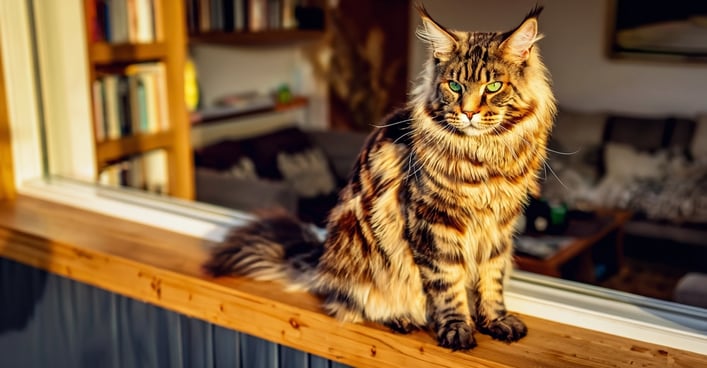
Master the art of capturing stunning feline portraits. Learn essential techniques for lighting, composition, and behavior to turn your cat into a photography superstar.
Share this page
The Complete Guide to Cat Photography in 2026
Cats are the ultimate photography subjects: graceful, expressive, and endlessly fascinating, yet famously independent. Whether you're aiming for professional-grade portraits or simply want to capture your companion's personality for social media, this guide provides the essential techniques, from foundational skills to creative approaches, to elevate your cat photography.
Captures stunning detail in eyes, whiskers, and paws
Lighting Equipment
Natural Light (The Best & Free):
Window Light: Soft, directional light; north-facing is most consistent.
Open Shade: Even lighting outdoors without harsh shadows.
Golden Hour: The hour after sunrise or before sunset for warm, soft light.
Artificial Light:
Ring Light: Provides even, shadowless illumination perfect for eye catchlights.
Softbox: Mimics window light for professional, soft results.
Continuous LED Panels: Adjustable and great for seeing the light effect in real-time.
Flash: Use bounced or diffused to fill shadows, never direct.
Essential Accessories:
Reflector ($15-30): Bounces light to fill in shadows on your cat's face.
Tripod: Essential for stability in low light and for hands-free interaction.
Props: Favorite toys, textured blankets, or simple backgrounds to add interest.
Understanding Feline Behavior for Better Shots
Optimal Shooting Times
The Golden Hours: Early morning or late afternoon for beautiful, soft light.
Post-Nap: Your cat is often relaxed and cooperative.
Pre-Meal or Playtime: Heightened alertness and engagement are perfect for action shots.
Respect the Mood: If your cat shows signs of stress (ears back, tail twitching, hiding), postpone the session.
Reading Your Cat's Cues
Go for it: Relaxed posture, slow blinking, purring, or curiosity toward the camera.
Try again later: Avoidant behavior, intense grooming, or clear signs of agitation.
Golden Rule: Patience is your most important tool. Never force a photo; the best images come from a calm, happy subject.
Mastering Lighting Techniques
Harnessing Natural Light
Window Light: Position your cat facing or beside a large window. Use a sheer curtain to diffuse harsh, direct sunlight.
Open Shade: Shoot under a tree or in the shadow of a building for flattering, even light.
Backlighting: Place the light source behind your cat to create a beautiful glowing rim around their fur. Expose for their face to avoid a silhouette.
Using Artificial Light Effectively
Soft is Key: Always diffuse artificial light. Bounce flash off a ceiling or wall, or use a softbox.
Catchlights: Position your light source to create small reflections in your cat's eyes, bringing them to life.
LED Advantages: Continuous LEDs allow you to see the exact lighting effect before you shoot, ideal for beginners.
Composition Techniques That Captivate
Rule of Thirds: Place your cat's eyes or body at the intersection points of a 3x3 grid for a dynamic composition.
Eye-Level Perspective: Get down on your cat's level. This creates an intimate and engaging viewpoint, making the viewer feel part of their world.
Focus on the Eyes: A sharp focus on the nearest eye is non-negotiable. Use a wide aperture (e.g., f/1.8-f/2.8) to make them pop.
Use Negative Space: Allow empty space around your cat to create a minimalist, focused aesthetic and emphasize your subject.
Framing: Use doorways, windows, or foliage to naturally frame your cat within the shot, adding depth and interest.
Essential Camera Settings
Shooting Modes
Aperture Priority (A/Av): The go-to mode. You control depth of field (aperture), and the camera sets shutter speed. Perfect for controlling background blur.
Shutter Priority (S/Tv): Use for action shots. Set a fast shutter speed (1/500s or faster) to freeze motion.
Manual (M): Provides full control, best for consistent lighting conditions or when you want to master exposure.
Posing: Let your cat settle naturally. Use a toy or treat held near the lens to get that perfect, alert look.
Action Photography
Technique: Use Shutter Priority or Manual mode with a fast shutter speed (1/1000s+). Pre-focus on a play area and use burst mode.
Detail & Macro Shots
Subjects: Eyes, whiskers, paw pads, and nose texture.
Gear: A macro lens is ideal. Use a very shallow depth of field and precise manual focus.
Creative Concepts
Silhouettes: Shoot against a bright window or sunset.
Black & White: Emphasizes texture, form, and emotion; excellent for simplifying busy scenes.
Lifestyle: Document their daily life—sleeping, watching birds, playing—to tell a story.
Post-Processing Essentials
Basic Edits (Using Lightroom, Snapseed, etc.):
Exposure & Contrast: Correct brightness and add subtle contrast to make details pop.
White Balance: Ensure fur colors look natural.
Sharpening: Apply subtle sharpening, especially to the eyes.
Color Grading: Enhance tones creatively while maintaining a natural look for your cat's fur.
Troubleshooting Common Problems
Problem
Likely Cause
Solution
Blurry Photos
Slow shutter speed, camera shake, missed focus
Increase shutter speed, use higher ISO, ensure focus is on the eyes.
Harsh Shadows
Direct, hard light source
Move to shade, diffuse light with a curtain, or use a reflector to fill shadows.
Red-Eye
Direct camera flash
Avoid direct flash; use bounced flash or natural light.
Busy Background
Cluttered environment
Use a wider aperture to blur background, change your angle, or move your cat.
Uninterested Cat
Wrong time, overhandling
Schedule shoots for their active periods, use enticing sounds/toys, be patient.
Sharing and Preserving Your Work
Social Media: For platforms like Instagram, export images at 1080px on the long edge. Use consistent editing for a cohesive feed.
Printing: For high-quality prints, ensure your file is at 300 DPI at the print size. Professional labs yield the best results for canvases or photo books.
Getting Started at Any Budget
Budget ($0-100): Your smartphone, natural light, and free editing apps are a powerful combination.
Enthusiast ($300-800): An entry-level mirrorless camera with a 50mm f/1.8 lens and a basic reflector.
Professional ($2,000+): A full-frame camera, multiple prime lenses, off-camera lighting, and professional editing software.
Final Thoughts
The heart of great cat photography lies not in the gear, but in the connection. It combines technical knowledge with patience, observation, and respect for your feline subject. The most cherished images are those that capture their unique spirit and your shared bond. Remember, the best camera is the one you have ready to capture that perfect, fleeting moment. Happy shooting!
Related Articles:
Creating a Cat-Friendly Home Photo Studio
Building a Following: Social Media for Cat Owners
From Hobby to Career: Starting a Pet Photography Business
Preserving Memories: Creating Photo Books and Art
Guide updated for 2026.
pet care
beginner photography
Cat's Doctor
Get AI-powered advice about your cat's health and care. Enter your cat's information and start a conversation with our veterinary assistant.
Get expert advice about cat care, behavior, nutrition, grooming, and training. Ask our AI cat care expert anything about your cat and receive professional guidance.