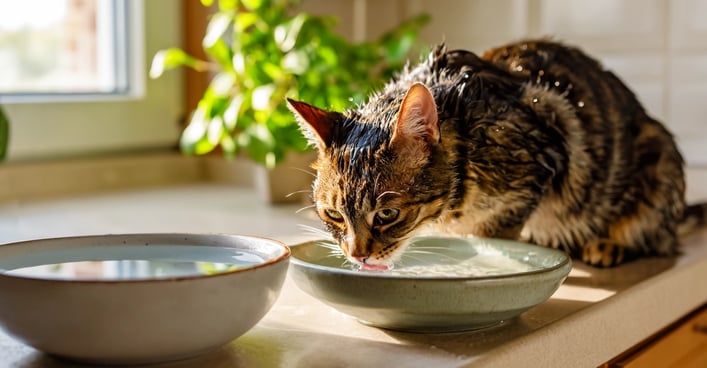
The Complete Guide to Cat Hydration: How to Ensure Your Cat Drinks Enough Water
Learn why proper hydration is vital for your cat's health and discover proven strategies to increase water intake, prevent dehydration, and support long-term wellness.
Share this page
The Complete Guide to Cat Hydration: How to Ensure Your Cat Drinks Enough Water
Meta Description: Discover why cat hydration is critical for health and longevity. This comprehensive guide covers daily water needs, signs of dehydration, and actionable strategies to encourage your cat to drink more water.
Water is the foundation of life, yet many cats fail to consume enough. Proper cat hydration is essential for kidney function, urinary tract health, digestion, temperature regulation, and overall vitality. This guide explains the unique hydration challenges cats face, how to spot dehydration, and effective, vet-approved methods to ensure your feline stays optimally hydrated.
Why Cat Hydration Is Non-Negotiable
The Critical Role of Water
Water supports nearly every bodily function:
Kidney & Urinary Health: Flushes toxins and prevents painful crystals, stones, and infections.
Digestion & Nutrient Absorption: Aids in breaking down food and eliminating waste.
Tags
cat hydrationcat water intakedehydration in catscat water fountainwet food for catscat health
Temperature Regulation: Facilitates cooling through panting and evaporation.
Joint & Organ Function: Lubricates joints and cushions vital organs.
Circulation: Maintains healthy blood volume and pressure.
Cellular Health: Every cell in the body requires water to function.
The Feline Hydration Paradox
Cats have a naturally low thirst drive due to their evolution:
Desert Ancestry: Evolved from ancestors who derived most moisture from prey.
Efficient Physiology: Their kidneys are highly efficient at concentrating urine.
Delayed Thirst Response: They often don't feel thirsty until already mildly dehydrated.
Modern life exacerbates this paradox:
Dry Food Diets: Kibble contains only 6-10% moisture.
Indoor Living: Eliminates the moisture once obtained from hunting.
Water Quality Issues: Sensitivity to chlorine, minerals, or stale water.
How Much Water Does Your Cat Actually Need?
Daily Water Requirements
General Guideline: A cat needs approximately 3.5–4.5 ounces of water per 5 pounds of body weight daily.
10-pound cat: 7–9 ounces
15-pound cat: 10.5–13.5 ounces
Factors Influencing Needs: Diet (wet vs. dry), activity level, ambient temperature, health status, and age.
Water from Food: The Game Changer
Moisture Content Comparison:
Food Type
Moisture Content
Approx. Water per 5 oz Serving
Dry Kibble
6–10%
0.3–0.5 oz
Canned Wet Food
75–78%
3.75–3.9 oz
Raw Food
70–75%
3.5–3.75 oz
Fresh Prey (Natural)
70–75%
3.5–3.75 oz
Practical Example:
Dry Food Diet: A 10-pound cat gets only ~0.5 oz from food and must drink 6.5–8.5 oz.
Wet Food Diet: The same cat gets 7–8 oz from food, requiring minimal additional drinking.
Recognizing Dehydration: Signs and Tests
Physical Symptoms
Mild to Moderate Dehydration:
Dry, sticky gums
Loss of skin elasticity ("skin tenting")
Sunken eyes
Lethargy or depression
Decreased urination with dark yellow urine
Panting
Severe Dehydration (Veterinary Emergency):
Collapse
Rapid heart rate with a weak pulse
Cold extremities
Loss of consciousness
Simple At-Home Checks
1. The Skin Tent Test:
Gently pinch and lift the skin at the scruff of the neck.
Release it.
Normal: Skin snaps back instantly.
Dehydrated: Skin returns slowly, forming a "tent."
2. The Gum Check:
Lift your cat's lip to examine the gums.
Press gently with a finger; the color should return in under 2 seconds.
Normal: Pink, moist gums.
Dehydrated: Pale, dry, or sticky gums with slow capillary refill.
When to Call Your Vet Immediately:
Skin tenting lasts >2 seconds.
Signs of severe dehydration are present.
Accompanied by vomiting, diarrhea, or refusal to drink.
Any sudden, unexplained change in water consumption.
Why Cats Are Finicky Drinkers
Instinctual Preferences
Moving Water Preference: In nature, running water is safer and fresher.
Separation from Food: Avoids potential contamination of water by prey.
Bowl Cleanliness: Highly sensitive to bacteria and scents.
Whisker Stress: Deep or narrow bowls can irritate sensitive whiskers.
Common Modern Barriers
Stagnant water in a single bowl
Bowl placed too close to food or the litter box
Unappealing bowl material (e.g., certain plastics)
Poor water taste due to chlorine or minerals
Insufficient number of water stations in the home
8 Proven Strategies to Increase Water Intake
1. Incorporate Wet Food into the Diet
Why it Works: This is the single most effective strategy. Wet food provides 75–78% moisture, closely mimicking a cat's natural prey.
How to Implement:
Gradually replace a portion of dry food with wet food.
If budget is a concern, mix wet and dry or offer one wet meal per day.
Warming the food slightly can enhance its aroma and appeal.
2. Invest in a Cat Water Fountain
Why it Works: The sight and sound of moving water trigger a cat's drinking instinct and often encourage more frequent visits.
Choosing the Right Fountain:
Look for multiple flow settings (stream, waterfall).
Prioritize quiet operation and easy disassembly for cleaning.
Ensure it has a good filter system.
Popular Models: PetSafe Drinkwell Platinum, Catit Flower Fountain, Pioneer Pet Raindrop.
3. Optimize Water Bowl Placement
Strategic Principles:
Provide multiple stations in quiet, low-traffic areas.
Keep bowls several feet away from food bowls and litter boxes.
Q: How can I tell if my cat is drinking enough?A: Monitor bowl levels, ensure urine clumps in the litter box are adequate and light in color, and perform occasional gum and skin checks. A well-hydrated cat is active with a healthy appetite.
Q: Is tap water safe for cats?A: Generally, yes. However, if your cat is hesitant, try filtered water or let tap water sit out for a few hours to allow chlorine to dissipate.
Q: Can a cat drink too much water?A: Yes. Polydipsia (excessive drinking) is often a symptom of an underlying condition like diabetes, kidney disease, or hyperthyroidism and requires veterinary investigation.
Q: Should I add water to my cat's dry food?A: Absolutely. Adding warm water not only increases moisture intake but can also make the food more palatable. Let it soak for a few minutes to soften.
Q: My cat only drinks from the tap. What should I do?A: This is a common preference. A cat water fountain is the perfect solution, providing continuously filtered, moving water without wasting resources.
Conclusion
Ensuring proper cat hydration is one of the most impactful things you can do for your feline companion's long-term health and quality of life. By understanding their unique physiological needs and implementing strategic changes—primarily through diet (wet food), environment (multiple fresh water sources, fountains), and diligent monitoring—you can overcome their natural low-thirst drive.
Start with one or two strategies, such as introducing a water fountain or adding a daily wet meal, and observe your cat's response. The investment in these proactive measures pales in comparison to the cost and heartache of treating preventable, hydration-related illnesses. Your commitment to their hydration is a direct investment in their vitality, longevity, and happiness.
cat care tips
feline urinary health
Cat's Doctor
Get AI-powered advice about your cat's health and care. Enter your cat's information and start a conversation with our veterinary assistant.
Get expert advice about cat care, behavior, nutrition, grooming, and training. Ask our AI cat care expert anything about your cat and receive professional guidance.