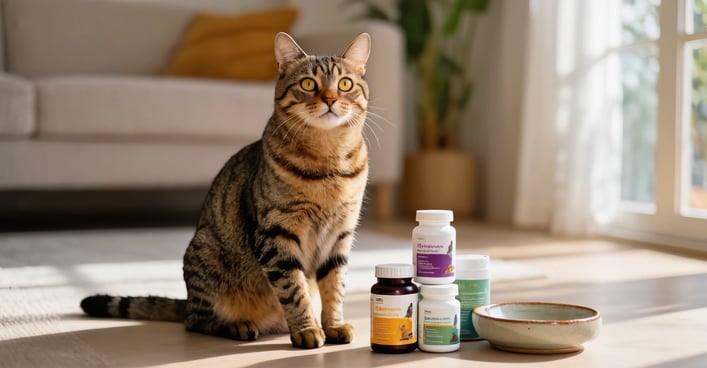
The Complete Cat Supplements Guide: Vitamins, Probiotics & Health Support for 2026
A veterinarian-backed guide to essential cat supplements. Learn which vitamins, probiotics, and joint supports are beneficial, which to avoid, and how to create a safe wellness plan for your feline.
Share this page
The Complete Cat Supplements Guide: Vitamins, Probiotics & Health Support for 2026
As cat owners increasingly prioritize preventive healthcare, supplements have become a popular addition to feline wellness routines. Navigating this market, however, requires discerning what your cat genuinely needs from clever marketing claims. This comprehensive, veterinarian-informed guide examines common cat supplements, detailing their benefits, risks, and appropriate applications.
Do Cats Need Supplements?
The Complete Diet Principle
High-quality commercial cat foods are formulated to meet all nutritional requirements established by the Association of American Feed Control Officials (AAFCO). If your cat consumes a balanced, complete diet:
Most supplements are unnecessary.
Some can be harmful in excess.
Your budget is better allocated toward premium food.
Precautions: High in calories (adjust food portions), may cause fishy breath, and can increase bleeding risk at very high doses. Refrigerate after opening.
Probiotics
Benefits:
Digestive Health: Restores beneficial gut bacteria balance.
Immune Support: 70% of the immune system resides in the gut.
Diarrhea Management: Helps prevent antibiotic-associated and stress-related diarrhea.
Allergy Modulation: May reduce inflammatory and allergic responses.
Types:
Single-Strain: (e.g., Saccharomyces boulardii) ideal for post-antibiotic recovery.
Multi-Strain: Contains various bacteria for broader, daily digestive support.
CFU Guidance: Look for products with 1-10 billion CFU (colony-forming units) per dose.
Top Brands: Purina Pro Plan FortiFlora (veterinary-recommended), Nutramax Proviable-DC, VetriScience Vetri Mega Probiotic.
Cost: $15 - $35 per month.
Ideal For Use: After antibiotics, during food transitions, or for cats with chronic digestive or stress-related issues.
Joint Supplements
Benefits: Supports arthritis management, reduces inflammation and pain, improves mobility, and may delay condition onset.
Key Ingredients:
Ingredient
Primary Function
Typical Dosage (per 10 lbs)
Glucosamine
Builds and repairs cartilage
100-200 mg
Chondroitin Sulfate
Prevents cartilage breakdown
50-100 mg
MSM
Reduces inflammation and pain
200-400 mg
Green-Lipped Mussel
Natural source of glucosamine, chondroitin & Omega-3s
50-100 mg extract
Top Brands: Nutramax Cosequin (veterinary standard), Nutramax Dasuquin, VetriScience GlycoFlex.
Cost: $20 - $50 per month.
Timeline for Results: Initial improvement in 4-6 weeks; maximum benefit observed after 2-3 months of consistent use.
Hairball Remedies
Understanding Hairballs: Occasional hairballs (weekly or less) are normal. Frequent hairballs may indicate over-grooming, skin issues, or digestive problems.
Types of Remedies:
Lubricants (e.g., Laxatone): Coat hair for easier passage through the digestive tract.
Fiber Supplements (e.g., plain pumpkin, psyllium): Help move hair through the intestines.
Digestive Enzymes: Aid in breaking down hair in the stomach.
Top Brands: Tomlyn Laxatone, Vet's Best Hairball Relief, Greenies Feline Hairball Control.
Cost: $8 - $20 per month.
When to See a Vet: If hairballs occur more than once a week, or are accompanied by vomiting, constipation, loss of appetite, or lethargy.
Vitamins and Minerals
General Rule: Cats eating complete commercial diets rarely need extra vitamins. Excess can be harmful.
When Supplementation May Be Necessary:
Vitamin B Complex: For cats with kidney disease or during illness/stress.
Vitamin E: Often paired with fish oil as an antioxidant; dosage 10-50 IU daily.
Taurine: An essential amino acid; deficiency is rare except in unbalanced homemade diets.
Calcium:Critical Warning: Only supplement for homemade diets under direct veterinary guidance to avoid severe imbalances.
Top Multivitamin Brands: Tomlyn Felovite II, Vetoquinol Felo-Form.
Cost: $10 - $25 per month.
⚠️ Critical Warning: Never give human vitamins to cats, as many contain ingredients toxic to felines (like iron, vitamin D, or xylitol).
Urinary Support Supplements
For Cats with a History of Urinary Issues:
Cranberry/D-Mannose: May help prevent bacteria from adhering to the bladder wall.
Glucosamine: Supports the bladder lining (GAG layer) and may help with feline idiopathic cystitis.
Top Brands: Crananidin, Zesty Paws Cranberry Bladder Bites, Nutramax Cosequin.
Cost: $15 - $30 per month.
Important Note: These are supportive and preventive; they do not replace urgent veterinary treatment for active infections or blockages.
Immune Support
Lysine: An amino acid traditionally used for feline herpesvirus (FHV-1) symptoms, though recent studies question its efficacy.
Beta-Glucans: Supports immune cell function, derived from mushrooms or yeast.
Colostrum: Contains antibodies and growth factors for immune modulation.
Cost: $15 - $35 per month. Always discuss immune support needs with your veterinarian.
Supplements to Avoid
Dangerous or Ineffective Products
Garlic, Onion, & Chives: Toxic in any form; can cause life-threatening Heinz body anemia.
Essential Oils (e.g., tea tree, eucalyptus, peppermint): Many are highly toxic; cats lack the enzymes to metabolize them.
Human Medications (Acetaminophen, Ibuprofen, Aspirin): Extremely deadly to cats.
Excess Calcium or Vitamin D: Can lead to urinary stones, skeletal problems, and toxicity.
Unproven Products: Be wary of homeopathic remedies with no scientific backing and CBD products with limited feline research and quality control issues.
How to Choose Quality Supplements
Label Reading & Quality Certifications
Look For:
NASC (National Animal Supplement Council) Seal: Indicates adherence to industry quality standards.
Transparent Labeling: Specific ingredient amounts listed (not just "proprietary blend").
Lot Numbers & Expiration Dates: For quality tracking and freshness.
Third-Party Testing: Verification from organizations like USP or ConsumerLab.
Avoid: Vague ingredient lists, unrealistic claims ("cures cancer"), and brands with no verifiable contact information.
Form Considerations
Form
Pros
Cons
Chews/Soft Treats
Easy to administer; palatable
May contain extra calories/artificial ingredients
Powders
Easy to mix with food; precise dosing
May alter food texture; some cats detect it
Liquids
Easy dose adjustment; can be given directly
Some cats resist; may require refrigeration
Capsules
Precise dosing; protects ingredients
May need to be opened and sprinkled on food
Working with Your Veterinarian
Essential Consultation Points
Always consult your vet before starting supplements if your cat:
Has any pre-existing health condition.
Is on medication (risk of interactions).
Is pregnant, nursing, or a kitten under 6 months.
Questions to Ask Your Vet:
Is this supplement necessary for my cat's specific situation?
What is the appropriate dose and formulation?
What is the expected timeline for seeing results?
Are there any potential side effects or drug interactions?
How should we monitor for efficacy or adverse effects?
Cost-Benefit Analysis: Sample Monthly Budgets
Basic Wellness (Omega-3 only): ~$20
Senior Cat Support (Omega-3 + Joint + Probiotic): ~$70
Medical Condition Support (Multiple targeted supplements): ~$100+
Consider comparing this to the cost of upgrading to a premium, veterinary-recommended diet, which may provide more comprehensive nutritional benefits.
Creating a Tailored Supplement Plan
For the Healthy Adult Cat
Focus Foundation: A high-quality, complete diet, preventive vet care, and environmental enrichment.
Optional Consideration: An Omega-3 supplement for optimal skin and coat health (~$20/month).
For the Senior Cat (12+ Years)
Consider: Omega-3s (anti-inflammatory/cognitive), a joint supplement (preventive), and a probiotic (digestive/immune support).
Estimated Cost: $50 - $90/month.
For Cats with Medical Conditions
Collaborate closely with your veterinarian to determine condition-specific supplements, precise dosages, monitoring parameters, and reassessment schedules.
Conclusion
Supplements can be a valuable component of feline healthcare when used judiciously and appropriately. They are not, however, magic solutions. For most healthy cats, a premium commercial diet provides complete and balanced nutrition.
When supplements are indicated—for aging, specific conditions, or dietary gaps—prioritize quality products from reputable manufacturers with transparent labeling and third-party verification. Your veterinarian is your most crucial partner in this process.
Remember: Supplements complement but never replace essential veterinary care, species-appropriate nutrition, and a loving, stimulating environment. They should be the finishing touch on a solid foundation of feline wellness.
Related Articles:
Best Cat Food for Senior Cats: 2026 Nutritional Guide
How to Read Cat Food Labels: A Complete Breakdown
Homemade Cat Food: Essential Supplements and Safe Recipes
Senior Cat Health: Managing Common Age-Related Conditions
Get expert advice about cat care, behavior, nutrition, grooming, and training. Ask our AI cat care expert anything about your cat and receive professional guidance.