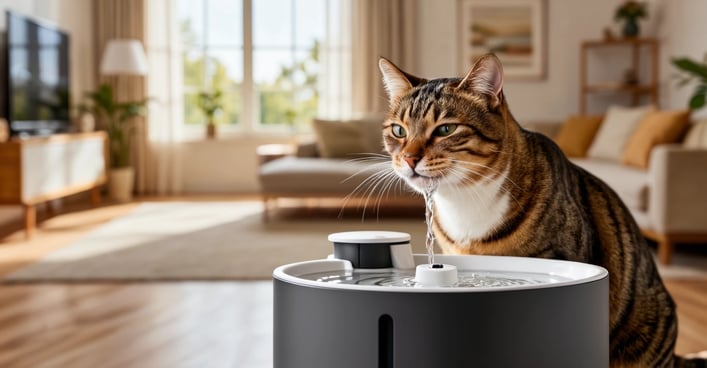
Cat Water Fountains: The 2026 Guide to Better Hydration & Health
Discover how cat water fountains can boost your cat's hydration, prevent health issues, and learn how to choose the best model for your home in 2026.
Share this page
Cat Water Fountains: The 2026 Guide to Better Hydration & Health
Cats possess a naturally low thirst drive, often neglecting stagnant water bowls. Water fountains solve this by providing moving, filtered, and fresh water, mimicking natural sources. This guide will help you select the perfect fountain to significantly increase your cat's water intake and support their long-term health.
Why Cat Water Fountains Are Essential
Understanding the Feline Hydration Challenge
Evolutionary Roots:
Descended from desert ancestors, cats evolved to get most of their moisture from prey. This legacy means modern felines often:
Have an underdeveloped thirst drive
Produce highly concentrated urine
May instinctively avoid still water in bowls
Health Risks of Chronic Dehydration:
Chronic Kidney Disease (CKD): A leading cause of mortality in senior cats.
Urinary Tract Infections (UTIs): More common in concentrated urine.
Urinary Crystals & Stones: Painful and potentially life-threatening blockages.
Best For: Homes with cord-chewing cats, needing flexible placement, or modern minimalist decor.
5. iPettie Tritone Ceramic Fountain
Price: $60-75
Capacity: 71 oz
Material: High-glaze ceramic
Key Features:
Beautiful, artisanal ceramic design
Dual filtration (foam pre-filter and carbon filter)
Ultra-quiet submersible pump
Two drinking levels (stream and basin)
Pros:
Elegant, home-decor friendly appearance
Hygienic and easy-to-clean ceramic
Dual water sources cater to different preferences
Very quiet operation
Cons:
Heavy weight
Fragile if dropped
Premium price tag
Best For: Owners where design is a priority and for health-conscious pet parents.
6. Veken Pet Fountain
Price: $20-30
Capacity: 95 oz
Material: BPA-free plastic
Key Features:
Triple filtration system (pre-filter, activated carbon, ion-exchange resin)
LED water level indicator (some models)
Three interchangeable flow spouts
Extremely affordable
Pros:
Outstanding value for money
Good capacity for the price
Multiple flow styles to try
Pump is surprisingly quiet
Cons:
Plastic construction
Basic, utilitarian design
Filters may need frequent replacement
Best For: First-time fountain buyers, tight budgets, or as a secondary fountain.
2026 Fountain Comparison Table
Fountain
Price
Capacity
Material
Best Feature
Best For
PetSafe Drinkwell Platinum
$40-50
168 oz
Plastic
Huge capacity & adjustable flow
Multi-cat homes, stream lovers
Catit Flower Fountain
$25-35
100 oz
Plastic
Adjustable flow & cute design
Single cats, aesthetics, gentle flow
Pioneer Raindrop
$35-50
60-96 oz
Steel/Ceramic
Hygienic materials, sleek design
Health-conscious, modern homes
Petlibro Dockstream
$60-80
84 oz
Steel/Plastic
Wireless/battery operation
Cord safety, flexible placement
iPettie Tritone Ceramic
$60-75
71 oz
Ceramic
Beautiful design, dual streams
Design priority, ceramic fans
How to Choose the Right Fountain
Assess Your Cat's Personality & Preferences
Observe Current Behavior:
Faucet Drinker? → Choose a fountain with a pronounced flowing stream.
Water Padder/Paw Player? → A bubbling or fountain with a wide basin is ideal.
Whisker Fatigue Sufferer? → Opt for wide, shallow bowls or surfaces.
Noise-Sensitive? → Research "ultra-quiet" or "silent" pump models.
Evaluate Your Household Needs
For Multi-Cat Households:
Large Capacity (100+ oz) to reduce refills.
Multiple Drinking Stations (streams, basins) to prevent competition.
Sturdy, Tip-Resistant construction.
Easy-Clean Design for frequent maintenance.
For Small Spaces/Apartments:
Compact Footprint that fits on a counter or in a corner.
Vertical or Tiered Designs to save floor space.
Good Cord Management for safety and neatness.
For Aesthetic Integration:
Ceramic fountains blend with most decors.
Stainless Steel offers a modern, minimalist look.
Various colors and styles are available to match your home.
Understand the Maintenance Commitment
Regular Cleaning Schedule:
Weekly: Disassemble, wash all parts with mild soap, and rinse thoroughly.
Every 2-4 Weeks: Replace the carbon filter (or as manufacturer recommends).
Monthly: Perform a deep clean, including scrubbing the pump intake.
Annually: Consider replacing the water pump for optimal performance.
Ongoing Filter Costs:
Carbon Filters: $2 - $5 each
Foam/Pre-Filters: $3 - $6 each
Estimated Monthly Cost: $5 - $15
Strategies to Maximize Your Cat's Water Intake
Strategic Fountain Placement
Optimal Locations:
Place multiple fountains in different, quiet areas of the home.
Away from food bowls and litter boxes (cats instinctively avoid drinking near these).
On an elevated surface if your cat prefers it (e.g., a low bench).
In quiet, low-traffic areas where your cat feels safe drinking.
General Rule: Provide one fountain per cat, plus one extra.
Complementary Hydration Boosters
1. Prioritize Wet Food:
Contains 75-80% moisture vs. only ~10% in dry kibble.
The single most effective way to increase total water consumption.
Highly recommended for urinary and kidney health.
2. Use Flavor Enhancers (Sparingly):
Add a teaspoon of low-sodium chicken broth or tuna water to the fountain.
Freeze broth into ice cubes for a cool, interesting summer treat.
Use commercial cat water enhancers designed for feline consumption.
3. Offer Water Variety:
Provide water in different materials (ceramic bowl, glass, steel).
Use wide, shallow dishes to prevent whisker fatigue.
Ensure all water sources are refreshed at least twice daily.
How to Monitor Hydration Status
Signs of a Well-Hydrated Cat:
Elastic skin that snaps back immediately when gently pinched.
Moist, pink gums.
Regular urination (2-4 clumps in the litter box per day).
Normal energy levels and appetite.
Warning Signs of Dehydration:
Lethargy or depression.
Dry, sticky gums.
"Skin tenting" (skin stays up when pinched).
Sunken eyes.
Noticeably decreased urination.
The Skin Turgor Test:
Gently lift the skin at the scruff of the neck.
Release it.
Well-hydrated skin will snap back within 1-2 seconds. A slower return suggests dehydration.
Cost Analysis: Investment vs. Savings
Initial Purchase Costs
Fountain Tier
Typical Cost Range
Budget / Basic
$20 - $35
Mid-Range / Featured
$40 - $60
Premium / Specialty
$60 - $100+
Multi-Fountain Setup (2-3)
$60 - $250+
Estimated Annual Operating Costs
Expense Category
Estimated Annual Cost
Replacement Filters
$60 - $180
Replacement Pump (every 1-2 years)
$15 - $30
Electricity (for electric models)
$5 - $15
Cleaning Supplies (vinegar, brushes)
$20 - $40
Total Annual Cost
$100 - $265
Cost-Benefit: Prevention vs. Treatment
Annual Fountain System Cost: ~$100 - $265
Potential Veterinary Costs for Hydration-Related Issues:
UTI Treatment: $150 - $400+
Urinary Blockage (Emergency): $1,500 - $4,000+
Chronic Kidney Disease Management: $1,000 - $5,000+ per year
The Bottom Line: The relatively small investment in a fountain and its maintenance is profoundly cost-effective compared to treating preventable, hydration-related illnesses.
Troubleshooting Common Fountain Issues
My Cat Ignores the New Fountain
Gradual Introduction Protocol:
Place the new fountain next to the old, familiar water bowl.
Let your cat investigate it freely—you can turn it off at first.
Keep the old bowl available for at least a week.
Sprinkle treats or place a favorite toy near the fountain.
Only remove the old bowl once your cat is drinking reliably from the fountain.
Experiment: Try a different fountain style (bubbling vs. streaming) or material.
The Fountain is Making Noise
Common Causes & Fixes:
Low Water Level: Always keep it above the pump's minimum line.
Dirty/Debris-Clogged Pump: Disassemble and clean the pump impeller weekly.
Worn-Out Pump: Pumps typically last 1-2 years; consider replacement.
Improper Assembly: Double-check that all parts are seated correctly.
My Cat Plays in the Water
Management Strategies:
Place a large, absorbent mat underneath the fountain.
Choose a model with a covered stream or lower splash design.
Provide more engaging playtime with toys to redirect the behavior.
Ensure the fountain isn't their only source of entertainment.
Algae or Biofilm (Slime) Buildup
Prevention is Key:
Adhere to a strict weekly cleaning schedule.
Replace filters before they are saturated.
Keep the fountain out of direct sunlight, which promotes algae growth.
Consider using filtered or distilled water to reduce mineral content.
DIY & Budget-Friendly Alternatives
Build a Simple DIY Fountain
Materials Needed:
Small, quiet aquarium pump ($10-$15)
Large, decorative ceramic bowl or planter ($5-$20)
Smooth decorative stones or pebbles ($5-$10)
Filter sponge (to fit pump intake) ($3-$5)
Basic Assembly:
Place the pump at the bottom of the bowl.
Arrange stones around and over the pump to hide it and create a waterfall effect.
Ensure the water output tube is positioned to create a gentle stream or trickle.
Place the filter sponge over the pump intake.
Fill with water, plug in, and adjust stone placement for desired flow.
Total Estimated Cost: $25 - $50
Optimizing Traditional Water Bowls
Without a Fountain, Maximize Appeal:
Provide multiple bowls in different rooms.
Use wide, shallow ceramic or stainless steel bowls.
Refresh with cold, fresh water 2-3 times daily.
Add ice cubes for visual interest and coolness.
Never place water bowls directly next to food bowls.
Final Conclusion
A cat water fountain is one of the most impactful investments you can make in your feline companion's long-term health. By appealing to their natural instincts, fountains significantly increase water consumption, directly supporting kidney function, urinary tract health, digestion, and overall vitality.
With the variety of styles, materials, and price points available in 2026, there is a perfect fountain for every cat—from the playful multi-cat family to the discerning solo feline. Consider your cat's unique personality, your home's layout, and your maintenance willingness when choosing.
Remember, the combined cost of the fountain and its upkeep is minimal compared to the emotional and financial toll of treating preventable dehydration-related diseases. By strategically placing fountains, maintaining them diligently, and complementing them with wet food, you are providing a cornerstone of preventative healthcare for a happier, healthier cat.
Get expert advice about cat care, behavior, nutrition, grooming, and training. Ask our AI cat care expert anything about your cat and receive professional guidance.