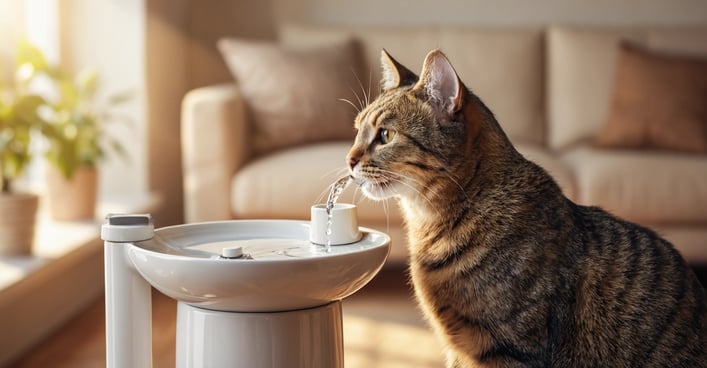
Cat Water Fountains: The 2026 Guide to Better Hydration
Discover the best cat water fountains to encourage healthy hydration. Our 2026 reviews and buying guide help you choose the perfect fountain for your feline's needs.
Share this page
Cat Water Fountains: The 2026 Guide to Better Hydration
By Dr. Sarah Mitchell, DVM | Updated: March 2026 | Reading Time: 15 minutes
Introduction
Cats are notoriously poor water drinkers, a habit that can lead to serious health issues like urinary tract disease and chronic kidney problems. A cat water fountain can be a transformative solution, leveraging a cat's instinctive preference for fresh, moving water to significantly increase their daily intake. This comprehensive 2026 guide reviews the top-performing fountains on the market and provides expert advice to help you select the ideal hydration station for your feline companion.
Why Your Cat Needs a Water Fountain
Instinctive Preferences
Cats are biologically wired to seek out moving water, a trait inherited from their wild ancestors.
Cat Water Fountains: The 2026 Guide to Better Hydration - Articles
Evolutionary Advantages:
Freshness Signal: Flowing water is instinctively perceived as cleaner and safer than stagnant water, which could be contaminated.
Whisker-Friendly: The wider surface area of most fountains prevents "whisker fatigue," a stress cats feel when their sensitive whiskers touch the sides of a narrow bowl.
Better Taste: Circulating water is more oxygenated, which many cats find more appealing.
Proven Health Benefits
Increased Hydration is Key:
Studies show cats drink 2-3 times more from fountains than from static bowls.
Reduces Risk: Significantly lowers the likelihood of Feline Lower Urinary Tract Disease (FLUTD) and urinary crystals.
Supports Organs: Promotes healthy kidney function and helps prevent dehydration, especially critical for cats on dry food diets or living in arid climates.
Types of Cat Water Fountains: Material Matters
Plastic Fountains
Advantages:
Most affordable and widely available.
Lightweight and easy to move.
Come in the greatest variety of designs and colors.
Replacement parts and filters are typically easy to source.
Disadvantages:
Can develop micro-scratches that harbor bacteria.
Some cats are sensitive to the taste or smell of plastic.
May retain odors over time.
Generally less durable than other materials.
Stainless Steel Fountains
Advantages:
Most Hygienic: Non-porous surface resists bacterial growth.
Easy Cleanup: Most are top-rack dishwasher safe.
Extremely durable and long-lasting.
Does not retain odors or flavors.
Disadvantages:
Higher initial cost.
Heavier than plastic models.
Design options are often more minimalist.
Water dripping can be slightly noisier.
Ceramic Fountains
Advantages:
Excellent Stability: Heavy weight prevents tipping by playful cats.
Naturally keeps water cooler.
Easy to clean with a non-porous glaze.
Aesthetically pleasing, often resembling home decor.
Disadvantages:
Fragile: Can chip or crack if dropped.
Heaviest option, making refilling a task.
Commands a premium price.
Capacities are often smaller.
Top Cat Water Fountain Reviews for 2026
1. PetSafe Drinkwell Platinum Pet Fountain
Price Range: $40 – $55
A workhorse fountain renowned for its high capacity, ideal for multi-cat families or pet parents who travel occasionally.
Key Features:
168 oz (5L) Capacity: One of the largest reservoirs available.
Adjustable Flow Control: Customize the stream from a trickle to a waterfall.
Free-Falling Water Stream: Entices cats with sight and sound.
Includes Carbon Filter: Removes odors and impurities.
LED Water Level Indicator: Glows when water is low.
Pros:
Exceptionally quiet, great for noise-sensitive environments.
Excellent multi-stage water purification.
Sleek, contemporary design.
Simple, tool-free assembly.
Transparent tank allows for easy water level checks.
Cons:
Capacity is on the smaller side for multiple cats.
The LED indicator cannot be disabled.
The pump still needs regular weekly cleaning.
Replacement filters are proprietary to the brand.
Best For: Single-cat homes, use in bedrooms or quiet spaces, design-conscious owners.
Estimated Monthly Filter Cost: $6 – $10
3. Catit Flower Fountain
Price Range: $25 – $35
A uniquely designed fountain featuring a removable "flower" that creates three different drinking options: a gentle ripple, bubbling center, or flowing petals.
Key Features:
100 oz (3L) Capacity: Good capacity for its compact footprint.
A stylish dual-level ceramic fountain that accommodates cats of different sizes and ages.
Key Features:
70 oz (2L) Capacity.
Porcelain Ceramic Construction.
Dual-Level Design: Features an upper bowl and a lower basin.
Circulating Filtration.
Attractive, modern design.
Pros:
Two drinking heights suit kittens, adults, and seniors or cats with arthritis.
Ceramic is easy to clean and hygienic.
Very stylish appearance.
Heavy and stable base.
Good for households with cats of varying sizes.
Cons:
Risk of breakage if dropped.
Premium pricing.
Heavy when filled.
Capacity is modest for the price.
Best For: Households with multiple cat sizes, style-conscious homes, and those who prioritize easy cleaning.
Estimated Monthly Filter Cost: $6 – $9
2026 Cat Water Fountain Comparison Chart
Fountain Model
Primary Material
Capacity
Price Range
Noise Level
Best Suited For
PetSafe Drinkwell Platinum
Plastic
168 oz
$40-55
Quiet
Multi-cat homes, high capacity needs
PETLIBRO
Plastic
71 oz
$30-45
Very Quiet
Single cats, bedrooms, quiet spaces
Catit Flower Fountain
Plastic
100 oz
$25-35
Quiet
Picky drinkers, small spaces
Pioneer Raindrop
Stainless Steel
60 oz
$50-70
Quiet
Hygiene-first owners, modern decor
Veken 95oz
Plastic
95 oz
$25-35
Very Quiet
Budget + capacity balance
iPettie Tritone
Ceramic
71 oz
How to Choose the Perfect Fountain for Your Cat
Based on Household Size
Single Cat: A 60-85 oz capacity is usually sufficient. Focus on your cat's personality and your aesthetic preferences.
Two Cats: Opt for 85-100+ oz capacity. Consider models with dual drinking areas or wider basins to prevent squabbles.
Three or More Cats: Choose a 120+ oz capacity fountain. The PetSafe 360 or Drinkwell Platinum are excellent choices. In very large households, consider placing two separate fountains in different locations.
Based on Cat Personality & Age
Playful/Kitten: Choose a fountain with a heavy, stable base (ceramic, weighted stainless steel) and a covered or protected stream to prevent playful splashing and tipping.
Shy/Nervous: Prioritize ultra-quiet pumps (look for <30dB), gentle water flow (like a ripple), and stable designs that don't make sudden noises.
Senior Cat or Arthritic Cat: Look for wide, shallow basins that don't require uncomfortable bending. The dual-level Avalon or the shallow Pioneer Raindrop are great options.
Picky Drinker: Engage their curiosity with multiple flow options like the Catit Flower Fountain or a model with an adjustable stream.
Essential Maintenance Guide
Proper maintenance is critical for your cat's health and the fountain's longevity.
Daily
Top up the water level if low.
Quickly wipe the drinking surface to remove food debris or cat hair.
Weekly (Non-Negotiable)
Unplug the fountain.
Completely disassemble all parts.
Wash the basin, lid, and any accessories with mild soap and warm water.
Clean the pump impeller: This is the most crucial step. Remove the pump cover and clear any hair or debris wrapped around the impeller shaft.
Rinse all parts thoroughly to remove soap residue.
Refill with fresh water and reassemble.
Monthly
Replace the carbon filter according to the manufacturer's schedule (typically every 2-4 weeks).
Perform a deep clean by soaking the pump and plastic parts in a 50/50 vinegar-water solution to dissolve mineral deposits, then rinse thoroughly.
Filter Replacement & Cost Overview
Fountain Category
Typical Filter Life
Estimated Annual Filter Cost
Budget Plastic
Every 2-3 weeks
$40 – $80
Mid-Range / Premium Plastic
Every 3-4 weeks
$60 – $100
Stainless Steel
Every 3-4 weeks
$60 – $100
Ceramic
Every 3-4 weeks
$70 – $110
Smart Fountains
Every 4-6 weeks
$80 – $140+
Cost Analysis: Initial & Ongoing
Initial Investment
Tier
Price Range
What to Expect
Budget
$20 – $35
Basic plastic, includes 1-2 filters, smaller capacity.
Mid-Range
$35 – $55
Better plastic construction, more features (adjustable flow, quiet pumps).
Premium
$55 – $80
High-quality materials (stainless steel, ceramic), superior design and durability.
Potential Replacement Parts (pump, etc.): $10 – $30
Electricity: Negligible, typically $5 – $15 per year.
Total Estimated Annual Cost:$80 – $200
Troubleshooting Common Problems
Problem: My cat ignores the new fountain.
Solutions:
Transition Gradually: Place the new fountain next to the old water bowl for several days. Let them explore it without pressure.
Make it Appealing: Try different flow settings. Some cats prefer a gentle ripple, others a bubbling stream.
Ensure Cleanliness: A new plastic smell or dirty water will deter them. Wash it thoroughly before first use.
Location is Key: Place it in a quiet, low-traffic area away from their food bowl and litter box.
Add Enticement: Sprinkle a little catnip on the mat around it or place a favorite treat nearby.
Problem: The pump is noisy or has stopped.
Likely Causes & Fixes:
Mineral Buildup: Soak the pump in white vinegar to dissolve limescale.
Hair/Debris Clog: Disassemble the pump and clean the impeller shaft thoroughly—this is the #1 cause of pump failure.
Ran Dry: Never let the fountain run out of water, as this can burn out the pump motor.
Air Lock: After refilling, tip the fountain slightly to help water flow back into the pump.
Problem: Water splashes out of the fountain.
Solutions:
Reduce the Flow Setting to its lowest level.
Place the fountain on a large, absorbent silicone mat.
Check that all spouts and lids are aligned correctly after cleaning.
Consider a design with a covered stream or a recessed drinking basin.
Health & Safety Considerations
When a Fountain is Highly Recommended
Cats with Chronic Kidney Disease (CKD): Increased water intake is a cornerstone of management.
History of Urinary Crystals or FLUTD: Flushing the system with more water helps prevent recurrence.
Diabetic Cats: They often have increased thirst; a fountain makes drinking easier.
Exclusively Dry-Fed Cats: They get very little moisture from their food and need to drink more water.
Senior Cats: Their thirst drive can diminish; a fountain provides constant encouragement.
Hygiene Best Practices
Always wash your hands before and after handling fountain parts.
Use only pet-safe, unscented dish soap or vinegar for cleaning. Avoid harsh chemicals.
Rinse all components exhaustively after cleaning to remove any soap or vinegar residue.
If a cat is sick, sanitize their fountain separately and do not share it with other pets until they are well.
Conclusion & Final Recommendations
Investing in a quality cat water fountain is one of the most impactful steps you can take for your cat's long-term health and hydration. For most households, the PetSafe Drinkwell Platinum remains the top overall pick for its unbeatable combination of massive capacity, reliability, and value.
If hygiene and ease of cleaning are your top priorities, the Pioneer Pet Raindrop Stainless Steel Fountain is worth the premium for its durable, bacteria-resistant construction.
For single cats in quiet homes or for picky drinkers, the PETLIBRO and Catit Flower Fountain, respectively, are exceptional choices that cater to specific needs.
The ultimate "best" fountain is the one your cat will consistently use. Be patient during the introduction phase, maintain a rigorous cleaning schedule, and enjoy the peace of mind that comes from knowing you're supporting your feline friend's health and well-being every day.
Get expert advice about cat care, behavior, nutrition, grooming, and training. Ask our AI cat care expert anything about your cat and receive professional guidance.