catscare.xyz Your comprehensive guide to cat breeds, care, and everything feline.
Language & Social Links Connect © 2026 catscare.xyz. All rights reserved.
Cat Trees for Small Apartments: Space-Saving Solutions for 2026 Discover compact, vertical, and wall-mounted cat trees to enrich your feline's life without sacrificing precious floor space in your apartment.
Cat Trees for Small Apartments: Space-Saving Solutions for 2026
Living in a compact apartment doesn't mean your cat has to miss out on essential vertical territory. Modern cat furniture design has evolved to offer innovative, space-conscious solutions that maximize climbing, scratching, and perching opportunities while minimizing floor footprint. This guide provides urban cat owners with everything needed to create a stimulating environment for their feline companions.
Understanding the Challenges of Small Spaces
Space Limitations and Their Impact
Cat Trees for Small Apartments: Space-Saving Solutions for 2026 - Articles Limited floor space Reduced territorial range No outdoor access Decreased environmental stimulation Shared walls Potential noise restrictions Smaller windows Limited bird-watching and sunbathing spots Minimal storage Difficulty rotating toys and accessories
Essential Cat Needs in Compact Homes
Vertical Territory: Becomes the primary domain for exploration and security.Controlled Exercise: Requires creative solutions for running, jumping, and climbing.Mental Stimulation: Crucial to prevent boredom and associated behavioral issues.Private Retreats: Designated hiding and sleeping spots are necessary for stress reduction.Scratching Surfaces: Non-negotiable for claw health and territorial marking.
Space-Saving Cat Tree Solutions
1. Wall-Mounted Systems
Zero floor space consumption
Fully customizable and modular
Sleek, modern aesthetic that blends with décor
Expandable as your needs or budget grow
Creates stimulating vertical "highways"
Element Primary Purpose Space Impact Floating Shelves Perching, observing, jumping points Minimal Wall-Mounted Steps Creating climbing paths between zones Minimal Wall-Mounted Beds Secure resting spots Minimal Scratching Panels Claw maintenance and stretching Minimal Bridges & Walkways Connecting different areas None
Popular Systems & Brands:
Catastrophic Creations
Trixie Pet Products Wall Units
Hauspanther Collection
IKEA Hacks (DIY using Kallax, Lack shelves)
Installation Best Practices:
Locate Wall Studs: Essential for safety and weight support.Use Appropriate Anchors: Heavy-duty toggle bolts for drywall if studs aren't available.Consider Renter-Friendly Options: Explore tension poles and freestanding units if drilling isn't permitted.Plan the Layout First: Map your cat's potential path from floor to ceiling before installing.Start Low: Begin with lower elements and expand upward as your cat gains confidence.
2. Corner Cat Trees
Utilizes often-wasted corner space efficiently.
Enhanced stability from two-wall contact.
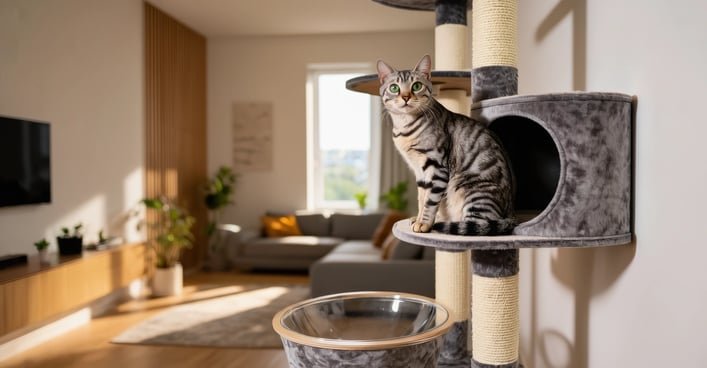
Tall, vertical design with a small base footprint.
Often more affordable than full wall systems.
Triangular or pie-shaped base for corner fitting.
Height of 5 to 7 feet to maximize vertical space.
Multiple staggered platforms or condos.
Integrated sisal rope or carpet scratching posts.
Compact platforms that don't protrude far into the room.
Best Placement: Corners adjacent to windows or in main living areas where the family gathers.
3. Over-Door & Hanging Options
Mount directly onto the top of a door frame.
No floor or wall footprint required.
Typically easy to install and relocate.
Note: Check weight capacity and ensure your door can support it.
Use suction cups or window bracket mounts.
Provide excellent bird-watching entertainment.
Can be combined with a wall system to create a complete vertical circuit.
Extremely space-efficient.
4. Narrow & Tall Freestanding Towers
Feature base diameters of 12-16 inches.
Reach heights of 6+ feet.
Utilize multiple small platforms, condos, and perches stacked vertically.
Perfect for placing beside a bookcase or in a narrow hallway.
Frisco 52-inch Cat Tree & Condo
Amazon Basics Tall Cat Tower
Go Pet Club Slim Cat Tree Designs
5. Multi-Functional Furniture Dual-Purpose Cat & Human Furniture:
Item Human Function Cat Function Storage Ottoman Footrest, seating, storage Hiding spot, scratching surface (if covered in sisal) Cat-Accessible Bookshelf Book & decor storage Climbing structure, perching shelves Bench with Integrated Cat Cave Seating, entryway furniture Enclosed, private hiding and sleeping nook Side Table with Perch Surface for lamp, drink Elevated observation platform TV Stand with Integrated Shelves Media center Cat highway and lounging area
Eliminates the need for separate, dedicated cat furniture.
Seamlessly blends with your home's aesthetic.
Offers greater stability and often a larger footprint for cats.
Provides excellent value by serving two purposes.
DIY & Renter-Friendly Solutions
Simple DIY Projects 1. Floating Shelves Cat Highway:
Install staggered wooden shelves on a wall.
Cover with indoor/outdoor carpet or felt for traction.
Create a looping or ascending path. Estimated Cost: $30-$60.
2. Window Seat & Cat Bed Combo:
Build or repurpose a window seat with under-seat storage.
Add a removable, washable cushion on top for your cat.
Install complementary wall shelves nearby. Estimated Cost: $50-$150.
Use a sturdy, anchored bookshelf.
Line select shelves with carpet or soft mats.
Wrap sisal rope around vertical supports for scratching. Estimated Cost: $40-$100.
Solutions for Renters
Freestanding narrow towers.
Over-door perches and scratchers.
Tension-pole cat trees (floor-to-ceiling).
Furniture-top perches with non-slip bases.
Removable/Non-Permanent Options:
3M Command™ Strips & Hooks (for very lightweight shelves).
Tension-mounted wall shelves (no screws).
Collapsible or foldable cat trees.
Maximizing Your Small Space
Strategic Placement Guide Optimal Location Why It Works Next to a Window Provides natural light, warmth, and entertainment. In a Corner Out of main traffic flow, uses dead space. Beside the Sofa Integrates cat into shared family space. In the Bedroom Offers a private retreat for your cat. In a Hallway Utilizes narrow, pass-through spaces effectively.
Blocking doorways or narrow walkways.
In high-traffic areas where the tree could be constantly bumped.
Directly next to fragile items like televisions or decor.
Creating a Home-Wide Vertical Territory Implement a "zoning" strategy to spread vertical enrichment throughout your home:
Living Area: Main cat tree or wall system.Bedroom: A wall shelf or compact perch.Kitchen: A small, wall-mounted step or perch (away from stove).Hallway: A tall, narrow scratching post.Windows: Suction-cup perches in multiple rooms.
Accommodating Multiple Cats In a small apartment with more than one cat:
Wall systems are ideal for creating separate vertical paths.
Ensure multiple entry/exit points for platforms to prevent trapping.
Provide separate, spaced-out hiding spots and feeding stations.
Consider scheduled time-sharing of favorite spots if tension arises.
Budget Considerations for 2026
Cost Comparison by Solution Type Type Price Range (2026) Space Efficiency Wall-Mounted (DIY) $50 - $150 Excellent Wall-Mounted (Commercial Kit) $100 - $400+ Excellent Narrow Freestanding Tower $50 - $150 Good Corner Cat Tree $60 - $150 Good Over-Door Perch/Scratcher $30 - $80 Excellent Multi-Functional Furniture $80 - $200+ Excellent
Best Value for Small Apartments
DIY Wall Shelves: Highly customizable, expandable, and cost-effective.Narrow Tall Towers: Affordable, readily available, and functionally solid.Corner Units: Excellent space efficiency for the price.Multi-Functional Pieces: Dual-purpose nature offers the best "space saved" value.
Safety First in Compact Living
Ensuring Stability Risk Prevention Solution Tree Tipping Secure to wall with a safety bracket, use a weighted base. Wall Mount Failure Always anchor into wall studs; use appropriate hardware for wall type. Falling Decor Secure any lightweight toys or bells attached to the tree. Panic & Falls Ensure clear jumping paths and provide hiding spots at both high and low levels.
Material & Construction Safety
Verify all materials are non-toxic and pet-safe.
Ensure carpet or fabric is securely attached with no loose threads.
Check for solid construction, sturdy platforms, and tightly wound sisal rope.
Sand any rough edges on DIY wood projects.
Top Picks by Budget (2026 Guide)
Under $50
DIY basic wall shelves
Narrow sisal scratching posts
Over-door perch/scratcher combos
Compact single-level window perches
$50 - $100
Frisco basic narrow towers
Trixie starter wall-mounted steps
Small, stable corner trees
IKEA hack kits with added sisal and pads
$100 - $200
Starter kits from Catastrophic Creations
Multi-level narrow towers with condos
High-quality corner units with plush perches
Converted multi-functional furniture pieces
$200+
Comprehensive, custom wall installations
Premium multi-functional furniture (e.g., cat-stair bookcases)
Professionally installed wall systems
High-design pieces from brands like Hauspanther
Frequently Asked Questions Q: How much vertical space does my cat actually need?
A: While even one perch at 4+ feet high is beneficial, more is generally better. Aim for multiple levels and pathways to truly satisfy their territorial instincts and provide exercise.
Q: Can I have a cat tree in a studio apartment without it looking cluttered?
A: Absolutely. The key is integration. Choose wall-mounted systems that act as art, narrow towers that tuck away, or multi-functional furniture that serves both you and your cat, blending seamlessly into your décor.
Q: Are wall-mounted cat trees safe for apartment walls?
A: Yes, when installed correctly. You must anchor into wall studs or use heavy-duty drywall anchors rated for the weight. For complex or heavy systems, consider professional installation.
Q: What are my options if my lease forbids wall mounting?
A: You have several great alternatives: tension-pole systems that brace between floor and ceiling, freestanding narrow trees, over-door options, and sturdy furniture-top perches.
Q: How do I prevent a cat tree from developing odors in a small space?
A: Choose trees with removable, washable covers. Vacuum fur and debris weekly. Use enzymatic cleaners on any accidents immediately. Ensure good air circulation in the room.
Vertical space isn't a luxury for cats—it's a necessity. In a small apartment, thinking upward is the ultimate solution for a happy, healthy, and stimulated feline companion.
Cat's Doctor Get AI-powered advice about your cat's health and care. Enter your cat's information and start a conversation with our veterinary assistant.
Start Chat with AI Cat's Expert Get expert advice about cat care, behavior, nutrition, grooming, and training. Ask our AI cat care expert anything about your cat and receive professional guidance.
Start Chat with Expert