Cat Sleeping Habits: Understanding Your Cat's Sleep Patterns
Discover why cats sleep so much, decode their sleeping positions, and learn to spot when changes in sleep signal a health issue. Your guide to feline rest.
Share this page
Cat Sleeping Habits: Understanding Your Cat's Sleep Patterns
Cats are the undisputed champions of slumber, dedicating a significant portion of their lives to rest. Understanding the nuances of your cat's sleep is more than just a curiosity—it's a window into their well-being, mood, and health. This comprehensive guide will help you interpret their sleep patterns, positions, and behaviors, empowering you to provide the best care for your feline friend.
How Much Sleep is Normal for a Cat?
Feline sleep needs are not one-size-fits-all; they evolve throughout a cat's life and are influenced by various factors.
Cats are polyphasic sleepers, meaning they sleep in multiple short bursts throughout a 24-hour period rather than in one long stretch. This is closely tied to their crepuscular nature—they are naturally most active during the dawn and dusk hours, aligning with the hunting patterns of their wild ancestors.
Key Factors Influencing Sleep Duration
Sleep May Increase Due To:
Sleep May Decrease Due To:
Boredom or lack of stimulation
High activity levels and play
Cold, rainy, or winter weather
An exciting or stimulating environment
Recovery from illness or surgery
Safe outdoor access
Senior age or certain medical conditions
Stress or anxiety
A large meal
Youthful energy (kittenhood)
Decoding Cat Sleep Positions: What They Reveal
Your cat's sleeping posture is a direct reflection of their comfort, trust, and physical state.
The Loaf
Description: Paws tucked neatly underneath, body upright like a loaf of bread.
Meaning: A light, restful nap. Your cat is comfortable but remains alert and ready to move quickly.
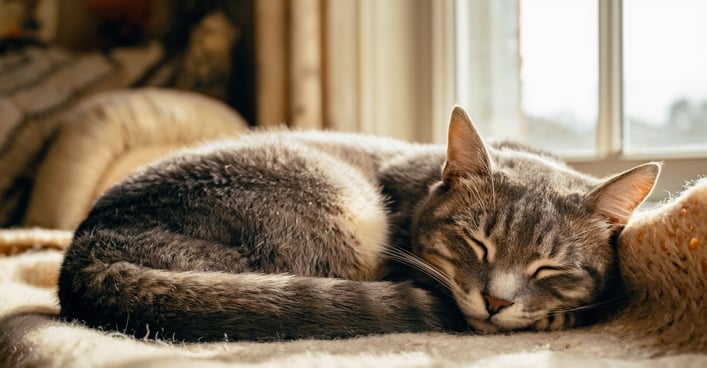
The Curled Ball
Description: Body curled into a tight circle, nose to tail, paws tucked in.
Meaning: Conserving body heat and protecting vital organs. Indicates a deeper, more secure sleep.
The Side Sleeper
Description: Lying on one side with legs extended, belly partially exposed.
Meaning: A state of deep relaxation and trust in their environment. Your cat feels very safe.
The Belly-Up Expose
Description: Lying flat on their back, belly fully exposed, limbs relaxed.
Meaning: The ultimate sign of trust and security. This vulnerable position signifies very deep sleep and complete comfort.
The Superman
Description: Belly on the floor with front legs stretched forward and back legs stretched back.
Meaning: Often a way to cool down on a hard surface. Shows a relaxed, playful, or comfortable mood.
The Contortionist
Description: Twisted, seemingly awkward positions, often with limbs or head dangling.
Meaning: Your cat is so deeply relaxed and at ease that comfort trumps dignity. Highlights their incredible flexibility.
The High Perch
Description: Sleeping on elevated surfaces like cat trees, shelves, or cabinets.
Meaning: Driven by instinct for safety, security, and a good vantage point to observe their territory.
The Face Plant
Description: Head tucked down or buried under a paw.
Meaning: Blocking out light and drafts to create a cozy, dark space for uninterrupted deep sleep.
Understanding Sleep Behaviors: Twitches, Sounds, and More
Twitching & Movement: Small jerks, paw paddles, whisker twitches, and quiet chirps are normal during REM (dream) sleep. Your cat is likely processing the day's events or "practicing" hunting skills.
Sleeping with Eyes Partially Open: You may see a pale third eyelid (nictitating membrane). This is normal and helps keep the eye moist. Concern is warranted only if eyes are fully open, unblinking, and the cat is unresponsive.
Crafting the Ideal Sleep Sanctuary for Your Cat
Bed Variety: Offer choices like enclosed beds for security, heated pads for seniors, and window perches for sunbathing. Don't be surprised if a simple cardboard box or your own bed wins out!
Strategic Placement: Position beds in quiet, low-traffic areas, sunny spots, and at varying elevations. Provide multiple options throughout your home.
Climate Control: Maintain an ambient temperature between 65-75°F (18-24°C). Ensure access to cooler spots in summer and offer warm, cozy bedding in winter.
When Sleep Changes Signal a Health Problem
Monitor your cat's sleep habits closely, as significant changes can be an early warning sign.
Red Flags to Watch For
Sudden Increase in Sleep: Could indicate pain, infection, anemia, hypothyroidism, or kidney disease.
Sudden Decrease in Sleep/Restlessness: May point to hyperthyroidism, pain, anxiety, or cognitive dysfunction in seniors.
Poor Sleep Quality: Restlessness, frequent repositioning, or labored breathing can signal pain, arthritis, or respiratory issues.
Disrupted Cycle: A cat that is awake all night and asleep all day may have cognitive issues, vision loss, or a disrupted routine.
When to Contact Your Veterinarian
Schedule a Check-up For:
Any sudden, unexplained change in sleep duration or pattern.
Restless sleep or apparent insomnia.
Excessive vocalization during sleep.
Sleeping in unusual places, like the litter box (a significant red flag).
Seek Emergency Care If:
Your cat cannot be roused from sleep.
You observe seizure activity.
There is collapse or labored breathing while at rest.
The Sleep-Health Connection: Common Conditions
Condition
Typical Sleep-Related Signs
Arthritis
Difficulty getting comfortable, restlessness, avoiding favorite high perches.
Establish a Routine: Consistent feeding, play, and quiet time help regulate your cat's internal clock.
Enrich Their Day: Provide interactive play, puzzle feeders, and window access to mentally and physically stimulate your cat, preventing nighttime boredom.
Support Senior Cats: Offer orthopedic or heated beds, ensure easy access, maintain a familiar routine, and discuss pain management with your vet.
Fascinating Feline Sleep Facts
About 75% of a cat's sleep is light dozing, where they can spring to full alertness in an instant.
Only 25% is deep, REM sleep—the true restorative phase where dreaming occurs.
This sleep pattern is an evolutionary adaptation to conserve energy for hunting.
Sleep needs and styles can vary significantly by individual personality and breed.
Frequently Asked Questions
Q: Why does my cat sleep on me?A: It's a supreme compliment! They seek your warmth, scent, and the security of your presence. It's a sign of deep trust and affection.
Q: Is sleeping all day normal?A: Yes, sleeping 12-16 hours daily is typical. Be concerned only if this amount increases suddenly or is paired with lethargy when awake.
Q: Should I wake my sleeping cat?A: Avoid it whenever possible. If necessary, wake them gently with your voice, not touch, to avoid a startled reaction.
Q: Why does my cat twitch and chirp in their sleep?A: This is almost always harmless dreaming during REM sleep. It becomes a concern only if the movements are violent or the cat seems distressed.
Conclusion
Understanding your cat's sleep is a fundamental part of responsible pet ownership. By recognizing normal patterns, decoding their quirky positions, and vigilantly monitoring for changes, you become an active partner in safeguarding their health. Create a peaceful environment, respect their need for ample rest, and always consult your veterinarian with any concerns. Here's to many years of peaceful, healthy slumber for your feline companion.
Disclaimer: This guide is for informational purposes. Any significant or sudden change in your cat's sleep habits warrants a consultation with a veterinarian to rule out underlying medical conditions.
Get expert advice about cat care, behavior, nutrition, grooming, and training. Ask our AI cat care expert anything about your cat and receive professional guidance.