Cat Skin Allergies and Conditions: Your Complete 2026 Guide
A veterinarian's guide to identifying, diagnosing, and treating common feline skin allergies and conditions, from flea dermatitis to food allergies and autoimmune disorders.
Share this page
Cat Skin Allergies and Conditions: Your Complete 2026 Guide
By Dr. Sarah Mitchell, DVM | Updated: 2026 | Reading Time: 16 minutes
Introduction
Skin disorders rank among the top reasons cats require veterinary care. These conditions, ranging from persistent itching to unexplained rashes, can cause significant distress for both pets and their owners. Early symptom recognition, accurate diagnosis, and a collaborative approach with your veterinarian are essential for restoring your cat's comfort.
This definitive guide explores the most prevalent feline skin allergies and conditions, detailing modern treatment options and effective long-term management strategies.
Common Feline Skin Conditions
Allergic Skin Disease
Allergies are a leading cause of skin irritation in cats, typically manifesting as intense itching (pruritus).
Indolent Ulcer (Rodent Ulcer): A sore on the upper lip.
Eosinophilic Granuloma: Linear plaques or nodules, often on the thighs or in the mouth.
Recognizing Skin Problems in Your Cat
Clinical Signs of Skin Disease
Pruritus (Itching):
Excessive grooming, licking, or chewing.
Frequent scratching with hind legs.
Rubbing face or body against furniture.
Overgrooming leading to symmetrical hair loss, often on the belly and inner thighs.
Physical Signs:
Alopecia: Hair loss, which can be patchy or symmetrical.
Erythema: Redness or inflammation of the skin.
Papules/Crusts: Small bumps or scabs.
Scale: Flaky or dandruff-like skin.
Changes in coat texture (oily or dry).
Secondary Changes from Chronic Disease:
Lichenification: Thickened, leathery skin.
Hyperpigmentation: Darkening of the skin.
Scarring and permanent hair loss.
Behavioral changes due to chronic discomfort.
Pattern Recognition: Clues from Location
Face and Head:
Common in food allergies and ear mite infestations.
Also seen with autoimmune diseases like pemphigus.
Base of Tail and Lower Back:
The classic "flea triangle" for Flea Allergy Dermatitis.
Also associated with "stud tail" (tail gland hyperplasia).
Belly and Inner Thighs:
A common pattern for atopic dermatitis and food allergies.
The primary site for psychogenic alopecia (stress-related overgrooming).
Ears:
Ear mites, yeast, and bacterial infections.
Allergies often cause itchy ears and recurrent infections.
Polyps or other growths.
The Veterinary Diagnosis Process
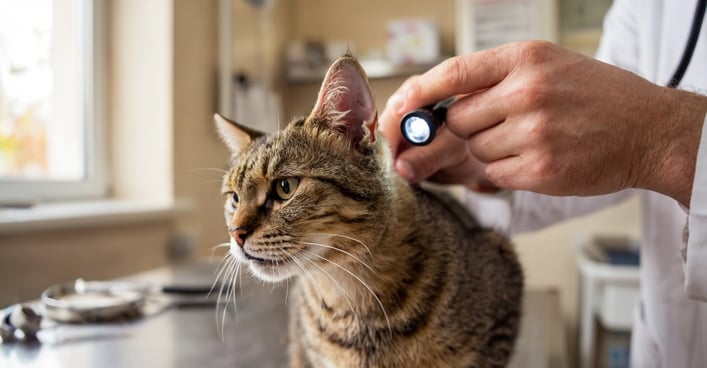
Step 1: Physical Examination
Your veterinarian will perform a thorough exam, assessing:
The pattern and distribution of lesions.
The presence of parasites (with a flea comb).
Evidence of secondary infections.
Your cat's overall health.
Typical Cost: $50 - $100
Step 2: Diagnostic Testing
1. Skin Scrapings:
Purpose: To detect mange mites (Demodex, Notoedres).
Process: Gently scraping the skin surface to collect cells and debris for microscopic examination.
Cost: $20 - $40
2. Fungal Culture:
Purpose: The gold standard for diagnosing ringworm.
Process: Hair and scale are placed on a special culture medium; results take 10-14 days.
Cost: $30 - $60
3. Cytology (Skin Impression Smears):
Purpose: To identify bacterial or yeast overgrowth.
Process: Pressing a microscope slide against the skin or swabbing an ear to stain and examine cells.
Cost: $20 - $40
4. Skin Biopsy:
Purpose: For a definitive diagnosis of unusual, severe, or non-responsive conditions (e.g., autoimmune disease, cancer).
Process: A small sample of skin is taken under sedation or anesthesia and sent to a pathologist.
Cost: $300 - $600
5. Allergy Testing:
Intradermal Skin Testing: Small amounts of allergens are injected into the skin to observe reactions. Considered very accurate for environmental allergies. Cost: $300 - $500
Serum IgE Blood Testing: Measures antibody levels to various allergens in the blood. Convenient but may have more false results. Cost: $200 - $400
6. Food Elimination Diet Trial:
Purpose: The only reliable way to diagnose a food allergy.
Process: Feeding a strict diet with a single novel protein (e.g., duck, rabbit) or a hydrolyzed protein diet for 8-12 weeks, with absolutely no other foods or flavored medications.
Parasite Prevention: Use veterinarian-recommended flea, tick, and mite control year-round.
Optimal Nutrition: Feed a high-quality, balanced diet appropriate for your cat's life stage. Consider omega-3 supplements for skin health.
Regular Grooming: Brushing helps distribute natural oils, removes allergens, and allows you to spot problems early.
Environmental Management: Use low-dust, unscented litter. Wash bedding regularly. Minimize exposure to strong chemicals or perfumes.
When to Seek a Specialist
Consider a referral to a Veterinary Dermatologist if:
The diagnosis is unclear after initial testing.
Your cat is not responding to standard treatments.
The condition is severe, rare, or suspected to be autoimmune.
Your cat requires complex long-term management like immunotherapy.
Specialist Consultation Cost: $200 - $400
Conclusion
While feline skin conditions can be complex and frustrating, most are manageable with a systematic approach. Success hinges on an accurate diagnosis to address the root cause, not just the symptoms. Partner closely with your veterinarian, be patient with the diagnostic process (especially food trials), and commit to the prescribed long-term management plan.
The investment in your cat's skin health is an investment in their overall comfort, well-being, and quality of life. With proper care, even cats with chronic conditions can live happy, itch-free lives.
Get expert advice about cat care, behavior, nutrition, grooming, and training. Ask our AI cat care expert anything about your cat and receive professional guidance.