Cat Scratching Solutions: Your Complete Guide to Protecting Furniture in 2026
Stop destructive cat scratching for good. Learn proven strategies to redirect this natural behavior, choose the best scratching posts, and protect your furniture—all without declawing.
Share this page
Cat Scratching Solutions: Your Complete Guide to Protecting Furniture in 2026
If you're a cat owner, you've likely experienced the frustration of finding your furniture, carpets, or curtains damaged by your cat's claws. Understanding that scratching is a natural, necessary feline behavior is the first step toward finding solutions that work for both you and your cat. This comprehensive guide provides everything you need to know about managing scratching behavior while keeping your home intact.
Why Cats Scratch: The Science Behind the Behavior
Natural Instincts
Scratching is hardwired into feline DNA. In the wild, big cats scratch trees for the same reasons your domestic cat scratches your sofa.
Cat Scratching Solutions: Your Complete Guide to Protecting Furniture in 2026 - Articles
Physical Exercise:
Provides a full-body stretch
Tones muscles in shoulders, back, and legs
Releases tension and energy
Often marks the end of a nap cycle
Territory Marking:
Visual marks signal territory to other cats
Scent glands in paws deposit pheromones
Communicates presence and status
Establishes familiar, safe spaces
Emotional Expression:
Releases stress and excitement
Expresses confidence and contentment
Can indicate anxiety if excessive
Acts as a self-soothing behavior
Understanding Your Cat's Scratching Preferences
Scratching Styles
Vertical Scratchers:
Prefer upright surfaces
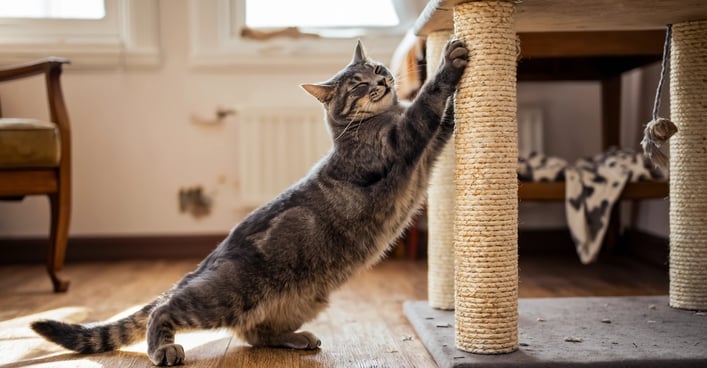
Scratch with front paws extended upward
Like tall posts they can stretch fully on
Often scratch upon waking
Horizontal Scratchers:
Prefer flat or angled surfaces
Scratch while lying down or crouching
Favor rugs, carpets, or cardboard scratchers
May scratch in open areas
Combination Scratchers:
Use both vertical and horizontal surfaces
May have different preferences by location
Need a variety of scratching options
Material Preferences
Cats develop individual preferences through experience. Observe what textures your cat gravitates toward.
Material
Texture
Best For
Sisal rope/fabric
Rough, fibrous
Most popular choice; durable
Carpet
Looped pile
Cats who already scratch furniture
Cardboard
Corrugated
Budget-friendly, disposable option
Wood
Solid grain
Natural preference for some cats
Burlap/rough fabric
Woven texture
Heavy, enthusiastic scratchers
Observation Tips:
What item does your cat currently scratch?
What texture does that item have?
Is your cat a vertical or horizontal scratcher?
When does scratching occur? (e.g., after naps, when excited)
Choosing the Right Scratching Posts for 2026
Essential Features
Height Requirements:
Minimum: 30 inches for an average cat
Large cats: 36+ inches needed
Must allow for a full vertical stretch
Taller is generally better
Stability:
Must not wobble or tip when scratched
A heavy, weighted base is crucial
Wall-mounted options offer excellent stability
Always test stability before final purchase
Surface Area:
Wide enough for your cat to get a good grip
Multiple scratching sides are preferred
Varied textures are ideal for combination posts
Types of Scratching Posts
Type
Description
Ideal For
Cost Range
Basic Posts
Simple vertical design, single material (usually sisal)
First-time owners, single-cat homes
$20-50
Cat Trees with Scratching
Multiple levels, combines climbing, perching, and scratching
Active cats, multi-cat households, small spaces
$100-500+
Wall-Mounted Scratchers
Space-saving, customizable heights, must secure to studs
Apartments, modern décor, saving floor space
$30-150
Floor Scratchers
Horizontal cardboard or sisal pads
Horizontal scratchers, budget-conscious owners
$10-30
Combination Units
Vertical and horizontal options with multiple materials
Multi-cat homes, cats with varied preferences
$50-200
Top Recommendations by Category
Best Overall: SmartCat Ultimate Scratching Post (32" tall, durable sisal, stable base) ~$50
Best Budget: Frisco 21-in Sisal Cat Scratching Post (affordable, compact, replaceable parts) ~$20
Best Cat Tree: Frisco 72-in Cat Tree (multiple surfaces, tall, good value) ~$80
Best Wall-Mounted: Catastrophic Creations Systems (customizable, space-efficient, stylish) $100-300+
Best Horizontal: Catit Scratching Board (corrugated cardboard, includes catnip) ~$10
Placement Strategy for Maximum Success
Strategic Locations
Place scratching posts in these high-priority areas:
Near Sleeping Areas: Cats love to stretch and scratch upon waking. Place a post near their favorite nap spot.
Entry Points: Doors and windows are key territory-marking locations, especially if outdoor cats are visible.
Current Problem Areas: Place a post directly in front of damaged furniture to block access and offer a better alternative.
Central Living Spaces: Where the family spends time. Scratching can be a social behavior.
Perimeter of Rooms: Cats naturally scratch along room edges to mark territory boundaries.
Multi-Cat Considerations
Resource Distribution: Provide multiple posts of different types throughout the home to prevent resource guarding.
Rule of Thumb: One scratching post per cat, plus one extra, in various locations.
Training Your Cat to Use Scratching Posts
Positive Introduction Techniques
Attract to the Post: Sprinkle catnip, hang toys, or place treats on or near the post.
Demonstrate Use: Gently place your cat's paws on the post or scratch it yourself—cats are often attracted to the sound.
Perfect Timing & Reinforcement: Guide your cat to the post after naps. Praise and treat for any interest.
Redirect Undesired Scratching: Calmly interrupt furniture scratching and immediately guide your cat to the appropriate post. Always praise the correct behavior.
Making Furniture Less Appealing
Method
Application
Effectiveness
Double-sided tape
Apply to furniture edges
High - cats dislike sticky surfaces
Aluminum foil
Wrap furniture surfaces
Moderate - noisy and strange texture
Plastic corner protectors
Install on furniture corners
High - provides a physical barrier
Furniture throws/slipcovers
Cover entire piece
Moderate - protects but may not deter
Motion-activated deterrent
Place near furniture
Moderate - startles cat away
Scent Deterrents: Use citrus scents or commercial deterrent sprays on furniture (never on the cat). Reapply regularly.
Furniture Covers: Washable slipcovers that protect entire pieces. ($30-150)
Scratch Shields: Specifically designed adhesive deterrents for problem areas. ($20-40)
Repairing Existing Damage
Fabric Furniture: Use a fabric shaver, apply matching patches, or consider professional reupholstery.
Leather Furniture: Leather repair kits or professional services can help. Regular conditioning prevents future damage.
Wood Furniture: Use wood filler for gouges, then refinish or touch up with furniture markers.
Nail Care: An Essential Part of the Solution
Regular Nail Trimming
Benefits: Reduces potential damage, part of essential health care, makes accidental scratches less severe.
Schedule: Trim every 2-3 weeks for indoor cats.
Tools: Use cat-specific nail clippers, styptic powder for accidents, and plenty of treats.
Nail Caps (Soft Paws®)
How They Work: Soft plastic caps are glued over the nails, blunting them for 4-6 weeks.
Considerations: A safe, humane alternative to declawing. Must be replaced regularly as nails grow.
Cost: Initial kit $15-20; refills $10-15.
Why Declawing Is Never the Answer
Declawing (onychectomy) is the amputation of the last bone of each toe, not a simple nail trim.
Consequences Include:
Chronic pain, arthritis, and altered gait
Litter box aversion due to paw pain
Increased biting and behavioral problems
Banned or restricted in many regions as inhumane
Humane Alternatives: Regular nail trims, nail caps, multiple scratching posts, training, and patience.
Troubleshooting Common Problems
"My Cat Won't Use the Scratching Post!"
Solutions: Try different materials (sisal, cardboard, carpet) and orientations (vertical/horizontal). Ensure the post is tall and stable enough. Place it in a better location (near where they sleep) and use catnip or treats to attract them.
"My Cat Prefers the Furniture!"
Solutions: Make the furniture less appealing with tape or protectors. Make the post more appealing. Place the post directly in front of the favored furniture piece. Reward any use of the post enthusiastically.
"The Scratching Seems Excessive or Anxious."
Possible Causes: Stress, boredom, or medical issues.
Solutions: Increase environmental enrichment (puzzles, play), consider calming pheromone diffusers (Feliway), and schedule a veterinary checkup to rule out pain or illness.
Conclusion: Investing in appropriate scratching solutions is significantly more cost-effective than replacing damaged furniture.
Frequently Asked Questions (2026 Edition)
Will my cat eventually stop scratching?
No. Scratching is a lifelong, necessary behavior for cats. The goal is to provide appropriate outlets, not to stop the behavior entirely.
How many scratching posts do I need?
The general rule is one per cat, plus one extra. Strategic placement is as important as quantity.
Can I train an older cat to use a scratching post?
Yes! Cats of any age can learn with patience, positive reinforcement, and finding the right post that suits their preferences.
Why does my cat scratch the walls?
Provide tall, vertical scratching surfaces near the wall-scratching area. Wall-mounted scratchers are an excellent solution.
Conclusion
Successfully managing your cat's scratching instinct requires understanding, not elimination. By providing appealing alternatives, protecting your furniture, and using consistent, positive training, you can create a harmonious home that satisfies your cat's natural needs and preserves your belongings.
Key Takeaways for 2026:
Scratching is non-negotiable for feline health and well-being.
The right post in the right location is 90% of the solution.
Never consider declawing—humane and effective alternatives exist.
Patience, consistency, and positive reinforcement are your most powerful tools.
With the strategies in this guide, you can protect your furniture and ensure your cat leads a happy, healthy, and enriched life.
Get expert advice about cat care, behavior, nutrition, grooming, and training. Ask our AI cat care expert anything about your cat and receive professional guidance.