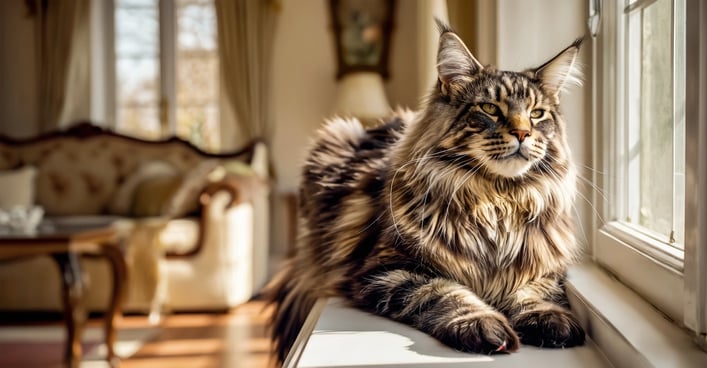
Cat Photography Mastery: The 2026 Guide to Capturing Your Feline's Essence
Transform your cat photos from blurry snaps to stunning portraits. This definitive 2026 guide covers lighting, gear, behavior, and editing for every skill level.
Share this page
Cat Photography Mastery: The 2026 Guide to Capturing Your Feline's Essence
Cats are famously challenging subjects—unpredictable, swift, and often indifferent to your creative vision. Yet, with the right blend of technique, patience, and an understanding of feline psychology, you can consistently capture breathtaking photographs that reveal your cat's true personality. This comprehensive guide bridges the gap from smartphone snapshots to professional-grade portraits, equipping you for success in 2026.
Understanding Your Feline Subject
Decoding Cat Behavior for Better Shots
Master the Timing:
Align your shoots with your cat's natural rhythms for more cooperative sessions.
Golden Hours: Leverage the soft, warm light of early morning and late afternoon when cats are often most active.
Post-Meal Serenity: Shoot within 30 minutes after feeding for a calm, content subject.
Post-Play Lull: A tired cat after an intense play session is a wonderfully stationary model.
Nap Transitions: Capture charming stretches and sleepy blinks as they wake up.
Cat Photography Mastery: The 2026 Guide to Capturing Your Feline's Essence - Articles
Body Language
Photo Opportunity?
Notes
Slow Blinks
✅ Excellent
Sign of trust and contentment; perfect for intimate portraits.
Ears Forward
✅ Good
Indicates curiosity and alertness; great for engaged shots.
Tail Upright
✅ Good
A happy, confident greeting; ideal for full-body shots.
Dilated Pupils
⚠️ Contextual
Can mean playfulness or overstimulation; assess the situation.
Flattened Ears
❌ Avoid
Sign of fear or annoyance; give your cat space.
Twitching Tail
❌ Avoid
Indicates growing irritation; it's time for a break.
Direct, Unblinking Stare
⚠️ Contextual
Can be a challenge or intense focus; may work for dramatic shots.
The Photographer's Mindset: Patience & Preparation
Set the Stage for Success:
Minimize Distractions: Clear the shooting area of clutter and noisy items.
Arm Yourself with Motivators: Have high-value treats and favorite toys on hand.
Scout the Location: Choose a spot with excellent, flattering light in advance.
Embrace Patience: Cats sense frustration. Stay calm, and let the session unfold naturally.
Essential Equipment Guide
Smartphone Photography: Power in Your Pocket
Modern smartphones are capable of phenomenal cat photography with the right approach.
Pro Tips for iPhone & Android:
Use Portrait Mode to create a beautiful, blurred background (bokeh).
Tap to Focus directly on your cat's eyes for critical sharpness.
Engage Burst Mode by holding the shutter to never miss a split-second action.
Enable the Grid overlay to help compose using the Rule of Thirds.
Always Clean Your Lens before you start shooting.
Recommended Editing Apps:
Adobe Lightroom Mobile: For professional-level color grading and editing.
Snapseed: A powerful, free editor with selective adjustment tools.
VSCO: For beautiful, consistent film-like presets and subtle edits.
Dedicated Camera Systems
Entry-Level DSLR/Mirrorless Kit (2026):
Component
Recommendation
Approximate Budget
Camera Body
Canon EOS R50, Sony ZV-E10
$600 - $800
Lens
50mm f/1.8 STM ("Nifty Fifty")
$125 - $200
Memory Card
UHS-I or UHS-II SD Card (64GB+)
$20 - $50
Total Starter Investment
$745 - $1,050
Intermediate/Enthusiast Setup:
Component
Recommendation
Approximate Budget
Camera Body
Canon EOS R7, Sony A7 IV
$1,400 - $2,500
Lens
85mm f/1.8 or 24-70mm f/2.8
$400 - $900
Lighting
LED Video Light with Softbox
$100 - $300
Total Investment
$1,900 - $3,700
Must-Have Accessories
Essential:
Tripod: Crucial for low-light stability and self-portraits with your cat.
5-in-1 Reflector: A budget-friendly tool to bounce light and fill shadows.
Attention-Getters: Wand toys, feather teasers, and treat pouches.
Microfiber Lens Cloth: Keep your optics spotless.
Pro-Enhancers:
External Flash with TTL: For bouncing light off ceilings/walls.
Wireless Shutter Release: Enables hands-off shooting for candid moments.
Portable Backdrop: Creates a clean, studio-style setting anywhere.
Mastering Light: The Photographer's Paintbrush
Natural Light: Your Best and Most Affordable Tool
Window Light Mastery:
North-Facing (Northern Hemisphere): Provides soft, consistent, shadowless light all day—ideal for portraits.
South-Facing: Offers strong, direct light. Use a sheer curtain to diffuse it.
Golden Hour (East/West): Creates warm, directional, and dramatic side lighting.
Quality of Light by Time:
Time of Day
Light Quality
Best For
Golden Hour (Sunrise/Sunset)
Warm, soft, directional
Emotional portraits, silhouettes, atmosphere.
Midday (Diffused)
Bright, even, low-contrast
Detail shots, capturing fur texture and color.
Overcast Day
Nature's softbox; flat & shadowless
Any subject, especially black or white cats.
Indoor Ambient
Warm, moody, often low-light
Candid, cozy moments and environmental storytelling.
Artificial Lighting Techniques
Continuous LED Lights:
Advantage: You see the exact lighting effect in real-time, which is less stressful for cats.
Use: Ideal for controlled portrait sessions. Look for lights with adjustable color temperature.
Flash Photography (Advanced):
Never Use Direct, On-Camera Flash. It creates harsh shadows, red-eye, and will startle your subject.
Bounce It: Point your flash at a white ceiling or wall to create soft, enveloping light.
Go Off-Camera: Using a wireless trigger allows for more natural, directional lighting setups.
Camera Settings Demystified
The Exposure Triangle for Cat Photography
Aperture (f-stop): Controls depth of field & background blur.
f/1.4 - f/2.8: Very shallow depth. Perfect for isolating your cat with a dreamy, blurred background.
f/4 - f/5.6: Moderate depth. Great for group shots of multiple cats, keeping everyone in focus.
f/8 - f/11: Deep depth. Best for environmental portraits where you want the background sharp.
Shutter Speed: Freezes or shows motion.
1/125s minimum: For stationary, sleeping, or very calm cats.
1/250s - 1/500s: For slow movement, walking, or gentle play.
1/1000s or faster: Essential for freezing leaps, pounces, and frantic play sessions.
ISO: Controls the camera's sensitivity to light.
ISO 100-400: Use in bright light for the cleanest, noise-free images.
ISO 800-1600: Standard for well-lit indoor settings. Noise is manageable.
ISO 3200+: For low-light situations. Expect some grain, but a sharp, noisy photo is better than a blurry one.
Recommended Shooting Modes & Settings
Tranquil Portrait Mode:
Mode: Aperture Priority (A/Av) or Manual (M).
Aperture: f/1.8 - f/2.8
Shutter Speed: 1/125s or faster
ISO: Auto, capped at 1600-3200
Focus: Single-point AF, placed on the nearest eye.
High-Speed Action Mode:
Mode: Shutter Priority (S/Tv) or Manual (M).
Shutter Speed: 1/500s - 1/2000s
Aperture: Widest available (e.g., f/2.8 - f/4)
ISO: Auto
Focus: Continuous/Tracking AF (AI Servo for Canon, AF-C for Sony/Nikon).
Composition: The Art of the Frame
Fundamental Techniques
1. The Rule of Thirds:
Imagine your frame divided into a 3x3 grid. Place your cat's eyes at one of the intersecting points for a naturally balanced and engaging composition. Leave "looking room" in the direction your cat's gaze is headed.
2. Shoot at Eye Level:
Get down on the floor! Photographing from your cat's perspective creates an immediate, intimate connection with the viewer and is far more powerful than shooting down from human height.
3. Mind the Background:
A cluttered background distracts from your subject. Seek out simple, clean backdrops or use a wide aperture to blur busy elements into soft colors.
4. Fill the Frame & Use Negative Space:
Two powerful, opposing techniques. "Filling the frame" with your cat's face creates impact. Using "negative space" (like a plain wall) around your cat emphasizes their form and creates a minimalist, artistic feel.
Creative Shot Ideas & Categories
Expressive Portraits:
The Confident Loaf: Capture the serene, compact form with direct eye contact.
The Curious Head Tilt: Use a curious sound or treat just off-camera to elicit this charming expression.
The Regal Profile: Highlights elegant lines, whiskers, and breed characteristics.
Dynamic Action Shots:
The Predatory Pounce: Anticipate the moment before the jump for a coiled, powerful stance.
Mid-Air Acrobatics: Use burst mode and a very fast shutter to freeze a leap for a toy.
Playful Paw Swipe: Capture the grace and focus of a bat at a feather or string.
Intimate Detail Shots:
Whisker Wonder: Get close with a macro lens or macro mode. Use side lighting to make each whisker gleam.
Paws & Toe Beans: A perennial favorite. Capture during stretches or sleepy paw curls.
Windows to the Soul: Ensure absolute sharpness on the eyes. Look for beautiful catchlights from windows.
Advanced Challenges & Solutions
For the Camera-Shy Cat:
Desensitize by leaving your camera out for them to sniff and investigate.
Use a longer zoom lens to shoot from a respectful distance.
Employ silent/electronic shutter mode to eliminate intimidating clicks.
Keep sessions very short (2-3 minutes) and always end with a treat.
For the Hyperactive Cat:
Conduct a vigorous play session before you pick up the camera.
Use interactive toys (like a wand) to guide their movement and focus.
Shoot in continuous high-speed burst mode.
Pre-focus on a spot where you expect action (e.g., the end of a couch).
For Group Shots (Multiple Cats):
Use treats or a toy to get all heads looking in a similar direction.
Stop down your aperture (f/5.6 - f/8) for sufficient depth of field to keep everyone sharp.
Embrace the chaos; sometimes the imperfect, interactive shots are the best.
For a perfect portrait, consider ethical compositing in post (shooting individuals and combining them).
Post-Processing: The Final Polish
A Simple, Effective Workflow:
Global Adjustments: Correct exposure, white balance, and contrast.
Local Enhancements: Use brushes or gradients to brighten shadows under the chin or enhance the catchlights in the eyes.
Sharpening: Apply subtle sharpening, focusing primarily on the eyes and whiskers.
Cropping: Refine your composition to strengthen the final image.
Software Recommendations for 2026:
All-in-One Powerhouse: Adobe Lightroom Classic (for organization, editing, and output).
Pixel-Perfect Editing: Adobe Photoshop (for advanced retouching and compositing).
Excellent Alternatives: Skylum Luminar Neo (AI-powered tools), Capture One (superior color science).
Sharing Your Masterpieces
Instagram: Use a consistent editing style and relevant hashtags like #catphotography, #petportrait, #catsofinstagram, and #[yourcatsname].
Printing: For high-quality prints, ensure your file is at least 300 DPI. Use professional print labs for accurate color reproduction.
Photo Books: Create a yearly album of your best work—a priceless keepsake.
Practice Makes Purr-fect: A 4-Week Plan
Week 1: Light Hunter. Photograph your cat in every light source in your home at different times. Find the "sweet spots."
Week 2: The Eye of the Beholder. Practice achieving tack-sharp focus on your cat's eyes from every angle. Review images at 100% zoom.
Week 3: Action Hero. Dedicate sessions to capturing motion. Master burst mode and fast shutter speeds.
Week 4: Storyteller. Create a mini photo series that captures your cat's unique personality—their favorite nap spot, their quirky habit, their play style.
Final Thoughts
Exceptional cat photography is a rewarding blend of art, science, and empathy. Start with the fundamentals: seek beautiful light, focus sharply on the eyes, and compose with intention. Your most important tools are not in your camera bag but within you: observation, patience, and a deep love for your feline muse. In 2026 and beyond, the best camera is the one that helps you preserve the fleeting, wonderful moments you share.
Practice makes purr-fect. Now, go create something beautiful.
Get expert advice about cat care, behavior, nutrition, grooming, and training. Ask our AI cat care expert anything about your cat and receive professional guidance.