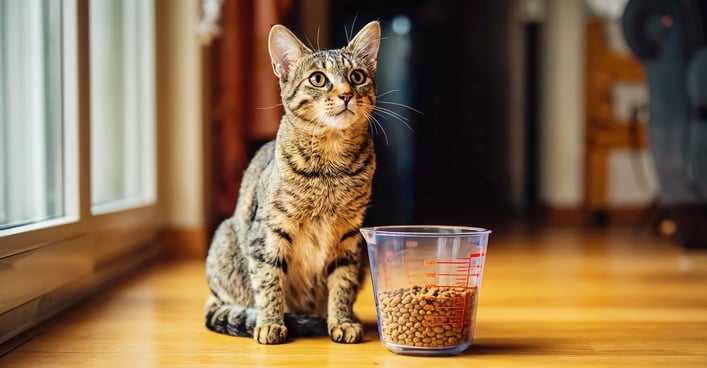
Cat Obesity: Prevention and Weight Management Guide 2026
A comprehensive guide to preventing and managing feline obesity. Learn effective feeding strategies, exercise routines, and when to seek veterinary care for your cat's health.
Share this page
Cat Obesity: Prevention and Weight Management Guide 2026
Feline obesity is the most common preventable disease in cats, affecting an estimated 60% of cats in developed nations. Carrying excess weight significantly shortens a cat's lifespan and increases the risk of diabetes, arthritis, heart disease, and other serious conditions. This comprehensive guide covers prevention, identification, and safe weight management strategies for overweight cats.
Cat Obesity: Prevention and Weight Management Guide 2026 - Articles
Shortened Lifespan:
Overweight cats live, on average, 2+ years less than their healthy-weight counterparts.
Obesity significantly reduces overall quality of life.
Increased Disease Risk:
Condition
Risk Increase
Diabetes mellitus
4x higher
Osteoarthritis
5x higher
Heart disease
2x higher
Hepatic lipidosis
Critical risk during rapid weight loss
Urinary tract disease
2x higher
Cancer
1.5x higher
Skin problems
3x higher
Anesthetic complications
Significantly higher
Quality of Life Impact:
Decreased mobility and playfulness
Difficulty grooming, leading to skin problems
Heat and exercise intolerance
Chronic joint pain
Causes of Feline Obesity
Dietary Factors
Overfeeding:
Free-feeding (constant food availability)
Excessive portion sizes
High-calorie foods and treats exceeding 10% of daily calories
Multiple family members feeding without coordination
Food Type Issues:
High-carbohydrate dry foods
Calorie-dense premium foods
Frequent human food supplementation
High-fat diets
Lifestyle Factors
Lack of Exercise:
Indoor-only lifestyle without adequate enrichment
Sedentary household environment
Insufficient vertical space for climbing
Inadequate daily playtime
Single-cat households (less social activity)
Environmental Factors:
Limited living space
Lack of interactive toys
Boredom-induced eating
Stress-related eating
Medical Causes
Hypothyroidism: Rare in cats (unlike dogs)
Cushing's disease: An uncommon cause
Medications: Certain drugs can promote weight gain
Neutering/Spaying: Increases appetite and can decrease metabolism by 10-20%, requiring adjusted calorie intake.
Identifying an Overweight Cat
Physical Assessment
Visual Checks:
From above: Look for a visible waist indentation behind the ribs.
From the side: The abdomen should tuck upward behind the ribs.
Rib Check: Ribs should feel like the knuckles on the back of your hand—not visible but easily felt with light pressure.
Weekly Weigh-Ins:
Use a digital scale (remember to subtract the weight of the carrier).
Track weight trends over time.
For small kittens, a kitchen scale is effective.
Proportional Perspective: A 1 lb (0.45 kg) gain on a cat is equivalent to a 15+ lb (6.8+ kg) gain on an average human.
When to Consult a Veterinarian
Schedule an Appointment If Your Cat:
Has gained more than 10% of its body weight.
Experiences sudden weight gain without a dietary change.
Gains weight despite an increased appetite.
Has ribs that are difficult to feel.
Shows no visible waist from above.
A Veterinary Evaluation Typically Includes:
A thorough physical examination and BCS assessment.
Blood work to rule out underlying medical conditions.
Urinalysis.
A detailed discussion of feeding history.
Development of a customized, safe weight loss plan.
Weight Management Strategies
Calorie Calculation
Resting Energy Requirement (RER):
Formula: 70 × (body weight in kg)^0.75
Example: A 5 kg cat: 70 × 5^0.75 = approximately 234 calories/day
Daily Energy Requirement (DER):
Neutered adult: RER × 1.2
Intact adult: RER × 1.4
Weight loss: RER × 0.8 (or less, under veterinary guidance)
Weight Loss Goals:
Target 1-2% of body weight loss per week.
Never exceed 3% per week due to the risk of hepatic lipidosis.
Example: A 15 lb (6.8 kg) cat should lose 0.15-0.3 lbs (0.07-0.14 kg) per week.
Feeding Strategies
Meal Feeding vs. Free Feeding:
Method
Pros
Cons
Meal feeding
Precise portion control, monitors intake
Requires a consistent schedule
Free feeding
Convenient
High risk of overeating
Puzzle feeders
Provides mental stimulation, slows eating
Requires initial training
Automatic feeders
Ensures consistent portion sizes
Can be expensive
Recommended Approach for Weight Loss:
Implement meal feeding only.
Use measured portions (a kitchen scale is most accurate).
Offer 2-3 meals daily.
Remove any uneaten food after 30 minutes.
Food Selection for Weight Loss
Veterinary and Commercial Weight Management Foods:
Hill's Prescription Diet r/d or w/d: Veterinary therapeutic diets.
Royal Canin Satiety Support: Formulated with high fiber to promote fullness.
Purina Pro Plan Veterinary Diets OM: Designed for overweight management.
Science Diet Perfect Weight: An over-the-counter option.
Key Nutritional Features:
Lower calorie density
Higher protein content to maintain lean muscle mass
Increased fiber for satiety
Added L-carnitine to support healthy fat metabolism
Wet Food vs. Dry Food for Weight Loss:
Factor
Wet Food
Dry Food
Calorie density
Lower
Higher
Volume per calorie
Larger
Smaller
Satiety
Promotes better fullness
Less filling
Hydration
Provides added moisture
Lower moisture content
Cost
Typically higher
Often more affordable
Recommendation: Wet food is often superior for weight loss due to its lower calorie density and higher satiety, which helps cats feel fuller on fewer calories.
Portion Control Tips
Accurate Measuring Methods:
Kitchen scale: The gold standard for accuracy (weigh in grams).
Measuring cup: Use a standard cup and level it off—no heaping.
Automatic feeder: Program for precise, timed portions.
Common Mistakes to Avoid:
Using the "cup" provided in the food bag (it's often not a standard measure).
Heaping measurements.
Forgetting to account for treat calories.
The "just a little extra" mentality.
Lack of communication in multi-person households.
Treat Management:
Limit treats to a maximum of 10% of daily calories.
Opt for low-calorie options.
Break treats into tiny pieces.
Use a portion of the daily kibble ration as treats.
Consider cat-safe vegetable treats like green beans or cucumber.
Exercise and Environmental Enrichment
Daily Exercise Requirements
Weight Loss Goal:
Aim for 20-30 minutes of active play daily.
Split into 2-3 shorter sessions.
Monitor your cat for signs of fatigue.
Gradually increase play intensity over time.
Engaging Play Ideas:
Interactive wand toys with feathers or strings.
Laser pointer chasing (always end with a tangible treat or toy).
Treat-dispensing puzzles (using part of the daily meal).
Cat exercise wheels (ideal for high-energy breeds).
Encouraging climbing on cat trees and shelves.
Environmental Enrichment
Increase Activity Through Your Home Setup:
Vertical Space:
Multi-level cat trees and condos.
Wall-mounted shelves and walkways.
Secure window perches for bird watching.
Safe outdoor enclosures (catios).
Interactive Toys:
Food puzzle toys and mazes.
Automated motion-activated toys.
Regularly rotating toys to prevent boredom.
Cat-safe balls and chase toys.
Feeding Enrichment:
Puzzle feeders to make mealtime engaging.
Scatter feeding (for dry food only).
Hiding small portions of food around the house for "hunting."
Using elevated feeding stations that require light jumping.
Weight Loss Timeline and Monitoring
Safe Weight Loss Expectations
Healthy Rate:
1-2% of body weight per week.
Example: A 16 lb (7.3 kg) cat should lose 0.16-0.32 lbs (0.07-0.15 kg) weekly.
Reaching a goal of 12 lbs (5.4 kg) from 16 lbs could take 12-25 weeks.
Essential Monitoring:
Conduct weekly weigh-ins.
Adjust calorie intake if weight loss is too rapid or stalls.
Schedule monthly check-ins with your veterinarian.
Prioritize high-quality protein to preserve muscle mass.
Consider joint supplements to support mobility.
More frequent veterinary monitoring is crucial.
Multi-Cat Households
Effective Feeding Strategies:
Establish separate feeding stations in different rooms.
Invest in microchip-activated feeders (e.g., SureFeed).
Implement supervised meal times.
Feed cats with different dietary needs in separate areas.
Utilize vertical space (e.g., feeding one cat on a stable perch another can't reach).
Managing Food Obsession and Begging
Behavioral Strategies:
Completely ignore begging behavior to avoid reinforcing it.
Use puzzle feeders to extend eating time and provide mental work.
Feed wet food to enhance satiety.
Maintain a strict, consistent feeding schedule.
Provide ample environmental enrichment to combat boredom.
Medical and Surgical Interventions
When Diet and Exercise Aren't Enough
Prescription Options (Used Under Strict Veterinary Supervision):
Dirlotapide (Slentrol): An appetite suppressant (availability may be limited).
Mirataz: Primarily an appetite stimulant (used for underweight cats).
Important Note: As of 2026, there are no FDA-approved weight loss drugs for cats in widespread use. Diet and lifestyle modification remain the cornerstone of management.
Surgical Options
Surgical interventions like gastric restriction are rarely considered for cats due to significant risks and are not commonly performed.
Cost Analysis of Weight Management
Initial Investment
Item
Estimated Cost
Veterinary consultation
$100 - $200
Diagnostic blood work
$150 - $300
Quality digital pet scale
$30 - $50
Measuring cups/kitchen scale
$10 - $20
Food puzzle toys
$20 - $50
Ongoing Monthly Costs
Expense
Monthly Cost
Weight management food
$40 - $80
Low-calorie treats
$10 - $20
Toys & enrichment items
$10 - $30
Veterinary follow-up visits
$25 - $50
Estimated Monthly Total
$85 - $180
Cost-Benefit Perspective:
Weight management program: $85-$180/month
Diabetes treatment: $100-$300+/month
Arthritis management: $50-$150+/month
Preventing obesity through proactive weight management is far more affordable than treating its related chronic diseases.
Keys to Success and Safety
Essential Tips for Success
Consistency: Adhere to a daily routine of measured feeding and play.
Patience: Healthy, sustainable weight loss takes several months.
Monitoring: Track progress with regular weigh-ins and body condition scoring.
Veterinary Partnership: Professional guidance is non-negotiable for a safe plan.
Environmental Support: Create a home that encourages natural activity.
Household Unity: Ensure all family members understand and follow the plan.
Warning Signs to Stop the Diet
Contact your veterinarian immediately if you observe:
Lethargy or significant weakness
Vomiting
Complete loss of appetite
Rapid weight loss exceeding 3% of body weight per week
Any concerning behavioral changes
Conclusion
Feline obesity is a preventable and manageable condition that requires commitment, knowledge, and professional guidance. Prevention—maintaining a healthy weight throughout your cat's life—is always easier and safer than weight loss.
Collaborate closely with your veterinarian to develop a personalized, safe, and effective weight management plan. Remember that even modest weight loss (e.g., a 15 lb cat losing just 2 lbs) yields profound health and quality-of-life benefits.
Your cat relies on you for proper nutrition and portion control. The investment in their healthy weight pays invaluable dividends in more years of an active, joyful life together.
Related Articles:
Cat Nutrition: A Complete Feeding Guide for 2026
How Much Should I Feed My Cat? A Calorie Calculator Guide
Cat Exercise: Innovative Ways to Keep Indoor Cats Active
Diabetes in Cats: Modern Prevention and Management Strategies
Get expert advice about cat care, behavior, nutrition, grooming, and training. Ask our AI cat care expert anything about your cat and receive professional guidance.