Cat Obesity: A Complete Guide to Prevention, Risks, and Healthy Weight Loss in 2026
Learn how to prevent and manage feline obesity, a leading health issue affecting 60% of cats. Our guide covers safe weight loss, health risks, and vet-approved strategies.
Share this page
Cat Obesity: A Complete Guide to Prevention, Risks, and Healthy Weight Loss in 2026
By Dr. Patricia Williams, Veterinary Nutritionist | Updated: 2026 | Reading Time: 17 minutes
Introduction
Obesity is the most common preventable disease in domestic cats, affecting approximately 60% of the feline population in developed countries. Carrying excess weight significantly diminishes a cat's quality of life, can reduce lifespan by 2-4 years, and predisposes them to numerous serious health conditions. The encouraging news is that with proper nutrition, lifestyle adjustments, and veterinary guidance, obesity is both preventable and manageable.
This comprehensive guide provides everything you need to know—from recognizing unhealthy weight to implementing a safe, effective weight loss program for your feline companion.
Cat Obesity: A Complete Guide to Prevention, Risks, and Healthy Weight Loss in 2026 - Articles
Body Condition Scoring (BCS):
Veterinary Standard Scale: 1-9
Ideal: 4-5/9
Overweight: 6-7/9
Obese: 8-9/9
General Weight Guidelines:
Ideal weight varies significantly by breed and individual frame.
Domestic Shorthair: 8-10 lbs average
Large Breeds (e.g., Maine Coon): 13-18 lbs normal
Small Breeds (e.g., Singapura): 4-8 lbs normal
Primary Causes of Obesity
1. Overfeeding:
Free-feeding dry food
High-calorie diets
Excessive treats and table scraps
Multiple household members feeding without coordination
Feeding in response to begging behavior
2. Inadequate Exercise:
Indoor-only lifestyle without enrichment
Lack of interactive play
Sedentary household
Age-related decrease in natural activity
3. Medical & Biological Factors:
Hypothyroidism (rare in cats)
Cushing's disease
Steroid medications
Neutering/Spaying: Reduces metabolism by 25-30%
Natural slowing of metabolism with age
4. Genetic Predisposition:
Certain breeds are more prone (e.g., British Shorthair)
Individual metabolic differences
Health Risks of Obesity
Serious Medical Consequences
Diabetes Mellitus: Obese cats are 4x more likely to develop insulin-dependent diabetes, a costly and lifelong condition to manage.
Osteoarthritis: Excess weight places severe stress on joints, leading to chronic pain, stiffness, and reduced mobility.
Hepatic Lipidosis (Fatty Liver Disease): A life-threatening condition often triggered by rapid weight loss or starvation.
Urinary Tract Disease: Increased risk of painful blockages (especially in males), crystals, and Feline Lower Urinary Tract Disease (FLUTD).
Cardiovascular & Respiratory Issues: Heart disease, hypertension, and breathing difficulties.
Increased Cancer Risk: Higher incidence and complications during diagnosis and treatment.
Skin & Grooming Problems: Inability to groom properly leads to matting, skin infections, and urine scald.
Anesthetic & Surgical Risks: Higher complication rates during procedures due to reduced drug metabolism and breathing challenges.
Reduced Lifespan and Quality of Life
Studies consistently show that obese cats live 2-4 years less than their healthy-weight counterparts. They also experience more illness, earlier onset of age-related diseases, and a significantly reduced quality of life.
Assessing Your Cat's Weight
At-Home Body Condition Score (BCS) Assessment
Ideal (BCS 4-5/9):
Ribs are easily felt with a slight fat covering.
A visible waist is apparent when viewed from above.
A clear abdominal tuck is visible from the side.
Minimal fat pad on the belly.
Overweight (BCS 6-7/9):
Ribs are difficult to feel under a layer of fat.
Waist is barely visible or absent.
Belly appears rounded.
Noticeable fat deposits over the back and tail base.
Obese (BCS 8-9/9):
Ribs cannot be felt under a thick fat layer.
No waist visible; back appears broad.
Pronounced abdominal sagging (belly drag).
Obvious difficulty moving and grooming.
The Importance of Veterinary Assessment
An annual veterinary exam should always include:
Precise weight measurement
Official Body Condition Scoring
Detailed discussion of diet, treats, and exercise
Blood work if underlying conditions are suspected
Customized dietary and lifestyle recommendations
Prevention Strategies
Start Early: Kitten and Young Adult Cats
Establishing good habits from the beginning is the most effective strategy.
Implement measured feeding with scheduled mealtimes (avoid free-feeding).
Provide age-appropriate portions.
Incorporate daily interactive play and environmental enrichment.
Begin regular weight monitoring.
Special Note on Neutering/Spaying: Metabolism decreases by 25-30% after the procedure. Proactively reduce food portions by this amount and monitor weight closely, considering a switch to a weight management formula.
Environmental Management for All Cats
Smart Feeding Strategies:
Use scheduled mealtimes instead of an always-full bowl.
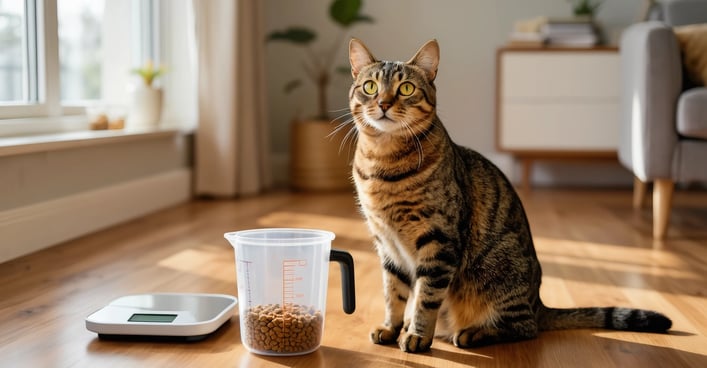
Measure all portions using a kitchen scale for accuracy.
Introduce feeding puzzles and slow-feeders to extend mealtime.
Consider elevated feeding stations for comfort.
Exercise & Enrichment:
Provide ample vertical space (cat trees, shelves).
Schedule 2-3 short, interactive play sessions daily.
Rotate toys to maintain interest.
Use food puzzle toys to combine mental stimulation with eating.
Implementing a Weight Loss Program
Veterinary Supervision is Non-Negotiable
A vet must:
Rule out underlying medical causes of weight gain.
Calculate a safe, individualized calorie target.
Monitor for dangerous complications like hepatic lipidosis.
Ensure the diet remains nutritionally complete.
Adjust the plan based on progress.
Safe Rate of Weight Loss
Target: 1-2% of current body weight per week.
Maximum: 3% per week to avoid liver disease.
Example: A 15 lb cat should lose 0.15–0.3 lbs per week, reaching goal weight safely over 6-12 months.
Diet Selection for Weight Loss
Prescription Weight Loss Diets (Veterinary Recommended):
Brand
Key Features
Estimated Monthly Cost
Hill's Prescription Diet Metabolic
Formulated to increase metabolism
$60 - $80
Royal Canin Veterinary Diet Satiety Support
High fiber for increased satiety
$70 - $90
Purina Pro Plan Veterinary Diets OM
High protein, low fat formula
$60 - $80
Hill's Prescription Diet r/d
Reduced calorie density
$55 - $75
Over-the-Counter Options:
Look for reputable weight management or healthy weight formulas.
Prioritize diets with higher protein and lower carbohydrates.
Be cautious with "light" foods—they may simply be less dense, not lower in calories.
Key Nutritional Features: High protein (to preserve muscle mass), moderate fat, added L-carnitine to support fat metabolism, and full nutrient profile despite lower calories.
Feeding Strategies for Weight Loss
Portion Calculation:
Calories are based on target weight, not current weight.
Calculate Resting Energy Requirement (RER): 70 x (Target Weight in kg)^0.75.
For weight loss, feed approximately 60-80% of the RER.
Example: For a cat with a target weight of 10 lbs (4.54 kg):
RER = 70 x (4.54)^0.75 ≈ 216 kcal/day
Weight Loss Calories = 216 x 0.8 ≈ 173 kcal/day
Feeding Schedule:
Divide the daily allotment into 2-3 meals.
Maintain consistent timing.
Remove uneaten food after 20-30 minutes.
Always use a kitchen scale for accuracy.
The Exercise Component
Daily Play: Aim for 2-3 sessions of 10-15 minutes each using wand toys, laser pointers (always end with a tangible toy), and chase games.
Weekly Home Weigh-Ins: Use a baby or luggage scale. Weigh at the same time each week and record it.
Regular Veterinary Check-ins: Monthly initially, then every 2-3 months once weight loss is steady.
Adjusting the Program
If No Weight Loss After 2-4 Weeks: Reduce daily calories by 10%, increase exercise, and verify no other food sources (e.g., treats, stolen food).
If Losing Too Fast (>3% per week): Slightly increase calories to prevent hepatic lipidosis.
Plateaus Are Normal: Continue the program faithfully. Body composition may be changing (losing fat, gaining muscle).
Overcoming Common Challenges
Multi-Cat Households
Feed cats in separate rooms or use microchip-activated feeders.
Implement supervised mealtimes.
Prevent food stealing by monitoring closely.
Begging and Food-Obsessed Behavior
Do not give in—it reinforces the behavior.
Ignore begging and redirect attention with play.
If using treats, deduct them from the daily calorie budget.
Utilize puzzle feeders and slow-feed bowls to prolong satisfaction.
Special Considerations
Senior Cats: Prioritize high-protein diets to prevent muscle loss; aim for slower weight loss with more frequent vet monitoring.
Diabetic Cats: Weight loss can dramatically improve diabetes control. Work very closely with your vet to coordinate diet changes with insulin adjustments.
Cats with Other Medical Issues (Kidney, Urinary, GI): Always use veterinary therapeutic diets and follow a fully individualized plan.
6-12 Months: Healthy weight achieved and maintained.
When to Seek Professional Help
Contact Your Veterinarian Immediately If You Notice:
No weight loss after one month on a vet-approved plan.
Lethargy, weakness, or vomiting.
Loss of appetite or refusal to eat.
Rapid weight loss (more than 3% per week).
Additional Resources: Veterinary nutritionists, certified pet nutritionists, and feline weight management clinics can provide specialized support.
Conclusion
Feline obesity is a serious but manageable condition. The path to a healthier cat is built on:
Prevention through good habits established early.
Accurate Recognition via regular body condition scoring.
Professional Guidance from your veterinarian for any weight loss plan.
Patience & Consistency—slow, steady progress is safe and sustainable.
Environmental Support with enrichment that encourages activity.
The investment in your cat's healthy weight pays profound dividends in reduced veterinary costs, a longer lifespan, and vastly improved daily joy and vitality. With dedication and proper support, every cat can achieve a healthier weight and a fuller life.
Remember: The ultimate goal is not just a number on a scale, but a healthier, happier, and more active feline companion.
Related Articles:
Cat Nutrition: The 2026 Complete Guide
Feeding Your Cat: Guidelines for Every Life Stage
Cat Exercise & Environmental Enrichment Ideas
How to Perform a Cat Body Condition Score (BCS) Check
Get expert advice about cat care, behavior, nutrition, grooming, and training. Ask our AI cat care expert anything about your cat and receive professional guidance.