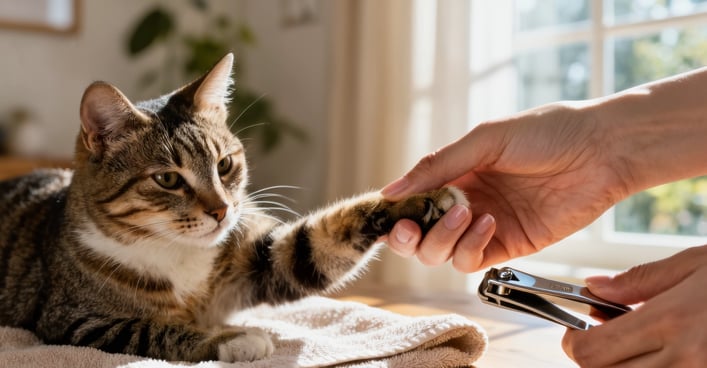
Cat Nail Trimming: The Complete Guide for Safe, Stress-Free Claw Care
Master cat nail trimming at home with our step-by-step guide. Learn safe techniques, tool selection, and how to handle anxious cats for a stress-free grooming routine.
Share this page
Cat Nail Trimming: The Complete Guide for Safe, Stress-Free Claw Care
Cat nail trimming is a fundamental grooming task that safeguards your furniture, prevents painful overgrowth, and minimizes accidental scratches. While outdoor cats and avid scratchers may wear down their claws naturally, indoor cats and seniors often need regular human assistance to maintain healthy nail length.
Many owners avoid this task due to fear of injury or causing stress. However, with the right technique, tools, and patient training, nail care can become a calm, routine part of your cat's life. This guide provides everything from understanding claw anatomy to advanced methods for difficult felines.
Cat Nail Trimming: The Complete Guide for Safe, Stress-Free Claw Care - Articles
Grows continuously
Sheds naturally through scratching
Quick:
The pink, triangular area visible in light-colored nails
Contains blood vessels and nerves
Lengthens as the nail grows
Cutting into it causes pain and bleeding
Digital Cushion:
The soft pad beneath the claw
Provides cushioning and protects the underlying bone
Claw Function
Natural Purposes:
Hunting: For capturing and holding prey
Climbing: Provides traction and grip
Defense: Protection from threats
Marking: Scent marking via scratching
Stretching: Facilitates full-body stretches
Retractable Mechanism:
Unlike dogs, cats have retractable claws. They extend when needed for function and retract when at rest, keeping them sharp and allowing for silent movement.
Nail Growth Patterns
Indoor Cats:
Nails grow continuously with less natural wear
Typically require trimming every 2-3 weeks
More prone to overgrowth
Outdoor Cats:
Experience natural wear from trees and rough surfaces
May need less frequent trimming
Still benefit from occasional check-ups
Senior Cats:
Often less active, leading to reduced scratching
Nails can become thicker and more brittle
May not shed sheaths properly
Usually require more frequent, gentle care
When and Why to Trim Cat Nails
Signs Your Cat's Nails Need Trimming
Visual Indicators:
Nails extending beyond the paw pad when retracted
A pronounced, hook-like curve
Thickened, discolored, split, or cracked nails
Behavioral Indicators:
Nails catching on carpets, fabrics, or blankets
Frequent accidental scratches during play or petting
Visible difficulty retracting claws
Excessive, frantic scratching at posts
Health Indicators:
Ingrown nails (growing into the paw pad)
Obvious pain when walking or bearing weight
Reluctance to use scratching posts
Limping or favoring a paw
Consequences of Overgrown Nails
Ingrown Nails:
Can grow in a circular pattern and pierce the paw pad
Cause severe pain, infection, and require veterinary treatment
Mobility Issues:
Altered gait and added stress on joints
Reluctance to jump, climb, or play
Behavioral Problems:
Increased destructive scratching
Aggression due to discomfort
Avoidance of handling
Essential Tools for Cat Nail Trimming
Nail Clipper Types
Scissor-Type Clippers:
Two crossing blades for precision and control
Ideal for most cats
Examples: Safari, JW Pet, Millers Forge
Cost: $8 - $20
Guillotine-Type Clippers:
A single blade slices through the nail inserted in a hole
Provides a quick, clean cut but requires precise positioning
Examples: Resco, Miracle Care
Cost: $10 - $25
Nail Grinders/Dremels:
Rotary tool files the nail down gradually
Lower risk of cutting the quick
Requires acclimation for cat acceptance (noise/vibration)
Examples: Dremel Pet, Casfuy
Cost: $20 - $40
Note: Human nail clippers are not recommended. They can split the nail and lack the proper design for feline claws.
Additional Supplies
Item
Purpose
Notes
Styptic Powder/Pencil
Stops bleeding if the quick is cut
A must-have for safety
Cornstarch or Flour
Emergency styptic substitute
Use if commercial styptic is unavailable
High-Value Treats
For positive reinforcement
Use small, special treats reserved for grooming
Towel or Blanket
For gentle restraint if needed
The "burrito" method can help with anxious cats
Nail File (Emery Board)
To smooth rough edges after clipping
Optional but improves finish
Preparing Your Cat for Nail Trimming
Creating Positive Associations
Weeks 1-2: Paw Handling & Desensitization
Gently touch and massage your cat's paws during calm, relaxed moments.
Progress to gently pressing the paw pad to extend the claws, then immediately release and offer a treat.
Gradually increase holding time to 2-3 seconds.
Practice daily in short, 5-minute sessions.
Ideal Timing:
After a meal when your cat is content
During or after a calm petting session
When your cat is sleepy but not in a deep sleep
Avoid:
When your cat is hungry, hyper, or stressed
During household changes or disruptions
Step-by-Step Nail Trimming Technique
Positioning Your Cat
Method 1: Lap Position (Best for Cooperative Cats)
Sit comfortably with your cat in your lap, facing away from you.
Use one arm to support their chest gently.
This provides a calm, secure hold with easy paw access.
Method 2: "Burrito" or Towel Wrap (For Anxious Cats)
Swaddle your cat snugly in a towel, exposing only one paw at a time.
This prevents scratching and can make a nervous cat feel more secure.
Method 3: Elevated Surface
Place your cat on a non-slip mat on a table or counter.
Stand behind them to gently prevent backing up.
Ensures good lighting and control.
The Trimming Process
Step-by-Step:
Examine the Nail:
Hold the paw gently but firmly.
Press the pad to extend the claw fully.
Identify the quick (the pink area). In dark nails, it will not be visible.
Position the Clipper:
Place the clipper perpendicular to the nail (avoid a top-down angle).
Aim to cut about 2mm (1/8 inch) below the quick. If the quick isn't visible, trim only the sharp, hook-like tip (1-2mm).
Make the Cut:
Use a quick, confident squeeze. Hesitation can cause crushing or splitting.
When in doubt, cut less. You can always trim more later.
Check and Reward:
Ensure the cut is clean.
Immediately praise your cat and give a high-value treat.
Take a short break or move to the next paw.
Identifying the Quick: Light vs. Dark Nails
Light-Colored Nails:
The pink quick is easily visible.
Cut approximately 2mm below this pink area.
Dark-Colored Nails:
The quick is not visible.
Strategy: Trim only the sharp tip (1-2mm).
Look at the cross-section after a cut: a whitish/pale center means you're safe; a darkish or grayish dot in the center means you're approaching the quick and should stop.
Frequent, small trims are safer than infrequent, large cuts.
Troubleshooting Common Problems
Problem: Cat Resists Handling
Solutions:
Go Back to Basics: Spend more days on desensitization with higher-value rewards.
Change the Variables: Try a different time of day, location, or handler.
Use a Towel: The "burrito" method provides security and prevents scratching.
Seek Professional Help: A groomer or vet tech can do the trim, demonstrating techniques or taking over entirely. Don't force it to the point of trauma.
Problem: Cutting the Quick (Bleeding)
If Bleeding Occurs:
Stay Calm. Your cat will mirror your anxiety. The bleeding often looks worse than it is.
Apply Pressure. Use styptic powder, a styptic pencil, or a dab of cornstarch/flour. Press gently with a cotton swab or your finger for 30-60 seconds.
Comfort Your Cat. Once bleeding stops, offer comfort and a treat. Skip trimming that specific nail for the next session.
Prevention: Ensure good lighting, trim smaller amounts, and stop if you feel rushed or frustrated.
Problem: Split or Cracked Nails
Causes: Dull clippers, cutting too much at once, brittle nails (common in seniors), or applying side-to-side pressure.
Solutions: Use sharp, cat-specific clippers, cut smaller amounts, file edges smooth, and consult your vet if brittleness is severe, as it can indicate dietary or health issues.
Special Situations
Senior Cats
Considerations: Potential arthritis, thicker/brittle nails, less mobility.
Adaptations: Be extra gentle, support their joints, trim more frequently in smaller amounts, and consider a warm compress to soften nails beforehand.
Kittens
Start Early! Begin handling paws and doing mock trims immediately.
Use tiny, positive sessions to build lifelong acceptance.
Use smaller clippers designed for kittens or small breeds.
Alternative & Supplemental Solutions
Scratching Posts
Role: Essential for shedding outer sheaths, stretching, and marking, but rarely sufficient for full nail maintenance in indoor cats.
Recommendation: Provide multiple types (sisal, cardboard, vertical, horizontal) in key locations.
Nail Caps (e.g., Soft Paws®)
What they are: Vinyl caps glued over the natural nail.
Pros: Prevent scratching damage; last 4-6 weeks.
Cons: Require proper application and monitoring; some cats find them stressful; nails still need trimming underneath as they grow.
Professional Nail Trimming
When to Consider: If you're uncomfortable, your cat is highly stressed, or there are medical complications.
Options: Veterinary clinics, professional groomers, or mobile services.
Cost: Typically $15 - $40 per session.
Building a Sustainable Nail Care Routine
Frequency Guidelines
Cat Type
Recommended Trimming Frequency
Indoor-Only Adult
Every 2-3 weeks
Indoor/Outdoor or Active Scratcher
Every 3-4 weeks (check monthly)
Senior Cat
Every 1-2 weeks
Kitten
Every 1-2 weeks (for training)
Maintenance Tip: Make a weekly "paw check" part of your petting routine to monitor length and condition.
Cost Analysis: DIY vs. Professional
DIY Initial Investment: ~$30 - $60 for quality clippers, styptic, and treats. This lasts for years, making it highly cost-effective.
Professional Ongoing Cost: $15 - $40 per session. If done monthly, this can cost $180 - $480 annually.
The Verdict: Learning to trim at home offers significant long-term savings and strengthens your bond with your cat.
Conclusion
Mastering cat nail trimming is a rewarding skill that ensures your cat's comfort and protects your home. Success hinges on patience, proper technique, and positive reinforcement. Start slowly, celebrate small victories, and never hesitate to seek help from a professional if needed.
Regular nail care is a cornerstone of proactive pet ownership. By incorporating it into your routine, you prevent painful conditions, reduce household damage, and contribute to your feline friend's overall well-being and quality of life.
Get expert advice about cat care, behavior, nutrition, grooming, and training. Ask our AI cat care expert anything about your cat and receive professional guidance.