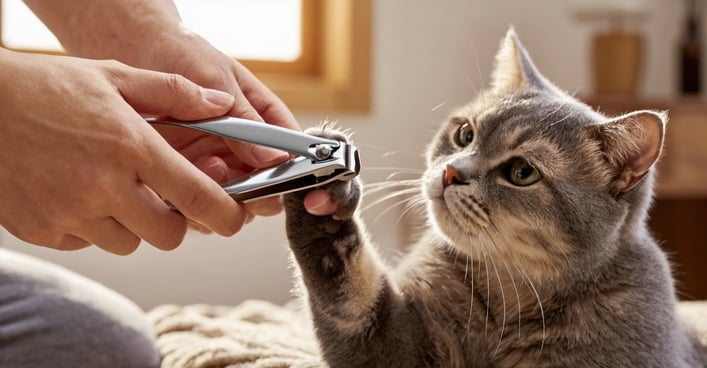
Cat Nail Clippers Guide 2026: How to Choose & Use the Best Tools Safely
A complete 2026 guide to selecting the right cat nail clippers, mastering safe trimming techniques, and turning nail care into a stress-free routine for you and your feline friend.
Share this page
Cat Nail Clippers Guide 2026: How to Choose & Use the Best Tools Safely
Regular nail care is a cornerstone of responsible cat ownership, crucial for your pet's comfort, health, and the preservation of your home. With the correct tools and a calm approach, trimming your cat's nails can transform from a dreaded chore into a simple, routine task. This definitive 2026 guide reviews the best cat nail clippers on the market and provides expert, step-by-step instructions for safe and effective trimming.
Understanding Cat Nail Anatomy
The Quick: The Vital Area to Avoid
The quick is the living, pink core of the nail containing blood vessels and nerves. Cutting into it is painful for your cat and will cause bleeding. It's clearly visible in light-colored nails but requires extra caution in dark nails.
Nail Structure Breakdown
Claw: The hard, outer protective shell.
Sheath: The outer layer that naturally sheds during scratching.
Quick: The sensitive inner tissue (blood supply and nerves).
Base: Where the nail emerges from the toe.
Growth Patterns & Trimming Needs
Indoor Cats: Require trimming every 2-4 weeks as nails don't wear down naturally.
Outdoor Cats: Often maintain nails through scratching and climbing.
Senior Cats: May need more frequent care due to reduced activity.
Design: A single blade slides through a stationary ring when the handle is squeezed.
Best For: Small cats with thin nails and experienced users.
Pros:
Provides very clean cuts.
Allows for precise nail positioning.
Cons:
Obstructed visibility of the cutting point.
Not suitable for thick nails.
Has a learning curve and requires blade replacements.
Top Recommendation:Resco Original Cat Nail Clippers
Price: $10 - $15
Key Features: Professional-grade, replaceable blade, chrome-plated for durability.
Our Rating: 4.3/5
3. Plier-Style Clippers
Design: Heavy-duty, spring-loaded tool with two handles to squeeze, similar to pliers.
Best For: Large cats, thick nails, professional groomers, and multi-cat households.
Pros:
Extremely strong and durable.
Excellent leverage for tough nails.
Built to last for years.
Cons:
Can be heavy and less precise for tiny nails.
Often more expensive.
May intimidate some cats and owners.
Top Recommendation:Millers Forge Stainless Steel Dog/Cat Nail Clipper
Price: $12 - $18
Key Features: Professional quality, exceptionally sharp, renowned durability.
Our Rating: 4.7/5
4. Electric Nail Grinders
Design: Motor-powered tool with a rotating abrasive tip that gradually files the nail down.
Best For: Cats fearful of clipping sounds, thick nails, smoothing rough edges, and patient pets.
Pros:
Eliminates risk of a sharp "cut."
Creates a smooth finish; hard to quick the nail.
Often features variable speed settings.
Cons:
Noise and vibration can scare cats.
Process takes longer.
Risk of heat buildup with improper use.
Higher initial cost.
Top Recommendation:Dremel 7300-PT Pet Nail Grooming Tool
Price: $25 - $35
Key Features: Cordless, two speed settings, designed specifically for pet safety.
Our Rating: 4.2/5
Detailed 2026 Product Reviews
Professional-Grade Choices
1. Shiny Pet Nail Clippers
Price: $15 - $20
Key Features: Professional stainless steel, angled blade for visibility, anti-slip handles, safety guard.
Best For: Owners seeking salon-quality results at home.
Rating: 4.5/5
2. Epica Professional Pet Nail Clipper
Price: $12 - $16
Key Features: Semi-circular blades, safety stop guard, versatile for all pet sizes.
Best For: Multi-pet households needing one reliable tool.
Rating: 4.4/5
Budget-Friendly Picks
1. Pet Republique Cat Nail Clippers
Price: $5 - $8
Key Features: Sharp stainless steel, comfortable grip, solid durability for the price.
Best For: Budget-conscious owners.
Rating: 4.3/5
2. Hertzko Nail Scissors
Price: $6 - $9
Key Features: Sharp, precise blades with an ergonomic design.
Best For: First-time cat owners or those with small cats.
Rating: 4.2/5
Specialty & Innovative Tools
1. Boshel Cat Nail Clipper with LED Light
Price: $15 - $20
Key Features: Built-in LED light illuminates the quick, ideal for dark nails, includes safety guard.
Best For: Cats with black or dark-colored nails.
Rating: 4.4/5
2. FURminator Nail Grinder
Price: $20 - $30
Key Features: Gentle grinding action, two speeds, relatively quiet operation, LED light.
Best For: Cats resistant to traditional clipping.
Rating: 4.1/5
2026 Clipper Comparison Chart
Clipper
Type
Price Range
Best For
Rating
JW Pet Gripsoft
Scissor
$6-$10
Beginners
4.5/5
Safari Professional
Scissor
$8-$12
General Use
4.6/5
Resco Original
Guillotine
$10-$15
Small Cats
4.3/5
Millers Forge
Plier
$12-$18
Large/Thick Nails
4.7/5
Dremel 7300-PT
Grinder
$25-$35
Nervous Cats
4.2/5
Boshel with LED
Scissor (LED)
$15-$20
Dark Nails
4.4/5
Essential Nail Trimming Accessories
Styptic Powder: Your Safety Net
Purpose: Instantly stops bleeding if the quick is accidentally nicked.
Top Choices:
Kwik Stop: Contains benzocaine for pain relief.
Household Alternatives: Cornstarch or flour in a pinch.
How to Use:
Apply powder directly to the bleeding nail tip.
Apply gentle, firm pressure with a clean cloth for 30-60 seconds.
Reapply if necessary.
Contact your veterinarian if bleeding persists for more than 5 minutes.
Nail Files & Buffers
Purpose: Smooth any sharp or rough edges left after clipping.
Options: Glass nail files, emery boards, or files included with some clipper sets.
Treats & Positive Reinforcement
Have high-value treats ready before you start.
Reward immediately after each paw or even each nail.
Consistently pair the experience with positivity to build tolerance.
Master the Proper Trimming Technique
Preparation is Key
Set the Scene:
Choose a quiet, calm time (e.g., after a meal or nap).
Ensure excellent lighting.
Gather all supplies: clippers, styptic powder, treats.
Consider enlisting a helper for your first few sessions.
Find the Right Position:
Lap Hold: Cat facing away from you on your lap.
Tabletop: Place cat on a non-slip surface at your side.
Towel Wrap ("Purrito"): Gently wrap a squirmy cat for safety and calm.
Step-by-Step Trimming Process
Step 1: Inspect the Nail
Gently press the toe pad to extend the claw fully.
Identify the quick's location (pink area in light nails).
Plan your cut well ahead of the quick.
Step 2: Position the Clipper
Hold the paw firmly but gently.
Isolate one nail at a time.
Position the clipper perpendicular to the nail to avoid splitting.
Step 3: Make the Cut
Cut only the sharp, translucent tip.
Stay at least 2mm away from the quick.
Use a quick, confident motion—don't crush or squeeze.
Step 4: Reward and Release
Immediately offer a treat and calm praise.
Release the paw gently.
Proceed to the next nail, or end the session on a positive note.
How Much to Trim: A Visual Guide
Clear/White Nails: Cut 2mm above the visible pink quick. When unsure, trim less.
Dark Nails: Trim tiny slivers at a time. Stop when you see a dark, chalky circle in the center of the nail—this is the start of the quick.
Recommended Trimming Frequency
Cat Type
Recommended Frequency
Indoor Only
Every 2-3 weeks
Indoor/Outdoor
Every 4-6 weeks
Senior Cats
Every 2-3 weeks
Kittens
Every 3-4 weeks
Rear Claws
Every 4-6 weeks
Troubleshooting Common Nail Trimming Problems
My Cat Resists or Fights Trimming
Solutions:
Start by trimming just one nail per session.
Use multiple short, positive sessions.
Always follow with a high-value treat.
Try trimming when your cat is sleepy or relaxed.
Practice gradual desensitization (see below).
Don't hesitate to seek help from a vet or groomer.
Desensitization Protocol (4-Week Plan):
Week 1: Gently touch and massage paws, give treats.
Week 2: Gently press pads to extend claws, give treats.
Week 3: Touch the clipper (turned off if a grinder) to the nail, give treats.
Week 4: Trim one nail, lavish with treats and praise. Gradually increase.
I Accidentally Cut the Quick
Immediate Action:
Stay calm; your cat will react to your energy.
Apply styptic powder or cornstarch directly to the nail.
Apply gentle pressure with a clean cloth or gauze for 30-60 seconds.
Comfort your cat and end the grooming session immediately.
Aftercare: Monitor the nail for signs of infection (redness, swelling, discharge). Keep it clean. The nail bed may be tender for a few days.
Dealing with Thick or Deformed Nails
Possible Causes: Age (senior cats), health issues (like hyperthyroidism), lack of scratching, or prior injury.
What to Do: Consult your veterinarian first to rule out medical causes. They can demonstrate proper trimming techniques or may recommend professional grooming for maintenance.
Cost Analysis: DIY vs. Professional
Initial DIY Setup Cost
Item
Cost Range
Quality Nail Clippers
$8 - $20
Styptic Powder
$5 - $10
Training Treats
$5 - $15
Nail File
$3 - $8
Total Initial Investment
~$21 - $53
Professional Trimming Costs (2026 Estimates)
Service Provider
Cost Per Session
Veterinary Clinic
$15 - $25
Professional Groomer
$10 - $20
Mobile Groomer Visit
$40 - $60+
Annual Cost (Monthly Trims)
~$120 - $300
DIY Advantages: Saves $100-$250+ annually, offers ultimate convenience, strengthens the human-animal bond, and eliminates travel stress for your cat.
Where to Buy in 2026
Recommended Retailers:
Amazon: Vastest selection and customer reviews.
Chewy.com: Competitive prices and excellent customer service.
PetSmart / Petco: Opportunity to handle tools in-store.
Local Pet Stores: Support local businesses and get personalized advice.
Veterinary Offices: Often carry high-quality, trusted brands.
Smart Shopping Tips:
Look for clipper/styptic powder bundles.
Invest in quality—a good pair can last your cat's lifetime.
Read recent reviews to gauge current product quality.
Final 2026 Recommendations
Best Overall Clipper:Safari Professional Nail Trimmer. Offers the perfect balance of sharpness, durability, comfort, and value for most cats and owners.
Best for Beginners:JW Pet Gripsoft. Affordable, easy to control, and forgiving, making it ideal for building confidence.
Best for Large Cats & Thick Nails:Millers Forge. Unmatched strength and leverage for challenging nails.
Best for Dark Nails:Boshel Clipper with LED. The built-in light significantly reduces guesswork and risk.
Best Alternative Method:Dremel 7300-PT Grinder. The optimal solution for cats who are terrified of clippers, requiring patience but offering excellent results.
Frequently Asked Questions (FAQ)
Q: How often should I really trim my indoor cat's nails?A: Every 2-3 weeks is standard. Check weekly—if you hear clicking on hard floors or they get caught in fabrics, it's time for a trim.
Q: What if my cat is completely uncooperative?A: First, try the desensitization protocol. If that fails, consult your vet or a professional groomer for a demonstration. Some cats simply do best with professional handling. The "burrito" towel wrap method can also provide safe restraint.
Q: Can I use human nail clippers or scissors?A: Not recommended. Human tools are designed for flat nails and can splinter or crush a cat's curved claw, causing pain and potential injury. Always use purpose-built pet nail clippers.
Q: Do I need to trim the back claws as well?A: Yes, but less frequently. Rear claws wear down more and grow slower. Inspect them monthly and trim if they become sharp or hooked.
Q: Any final pro-tip for a stress-free experience?A: End every session on a positive note, even if you only trim one nail. Pairing the experience with play, cuddles, or treats afterward builds a positive long-term association.
Guide Updated: 2026 | Consistent, gentle nail care prevents painful overgrowth, protects your home, and contributes to your cat's overall well-being. Patience and positive reinforcement are your most important tools.
Get expert advice about cat care, behavior, nutrition, grooming, and training. Ask our AI cat care expert anything about your cat and receive professional guidance.