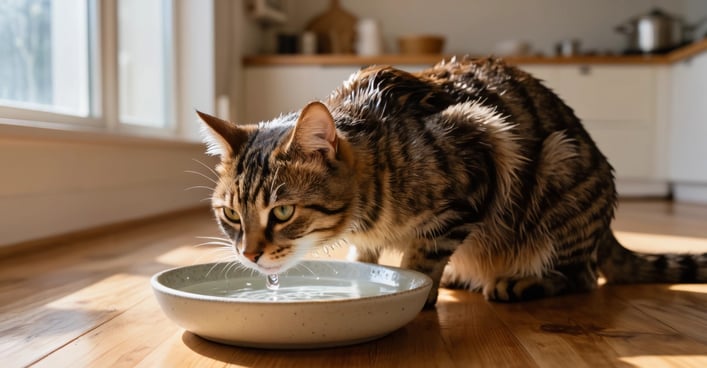
Cat Hydration Guide 2026: How to Ensure Your Cat Drinks Enough Water
A complete guide to feline hydration. Learn why water is vital, how much your cat needs, and practical strategies to encourage drinking for lifelong health.
Share this page
Cat Hydration Guide 2026: How to Ensure Your Cat Drinks Enough Water
Proper hydration is a cornerstone of feline health, yet many cats naturally drink too little. Descended from desert-dwelling ancestors, cats have a low thirst drive and are prone to chronic, mild dehydration. This comprehensive guide explains why hydration matters, how to assess your cat's needs, and actionable strategies to significantly increase their water intake.
Why Hydration Is Critical for Cats
The Physiological Role of Water
Water is essential for nearly every bodily function:
Regulates body temperature
Lubricates joints and cushions organs
Transports nutrients and oxygen
Flushes waste products via the kidneys
Supports healthy digestion and prevents constipation
Maintains electrolyte balance
The Feline Evolutionary Quirk
Cats evolved from African wildcats in arid environments. Their natural survival strategy:
Obtaining most moisture from prey (which is ~70% water).
Having a naturally low thirst drive compared to dogs or humans.
Concentrating urine highly to conserve water.
This evolutionary background is why the modern cat eating dry food is at a hydration disadvantage.
Dull coat, dry skin, lethargy, and impaired healing.
How Much Water Does Your Cat Need?
Daily Water Requirements
A general guideline is 3.5-4.5 ounces of water per 5 pounds of body weight daily.
A 10-pound cat needs approximately 7-9 ounces (about 1 cup) of total water per day.
Crucial Factor: Diet. What your cat eats dramatically changes how much they need to drink.
Diet Type
Approximate Water Content
Additional Water a Cat Must Drink (for a 10 lb cat)
Dry Food (Kibble) Only
6-10%
Nearly all 7-9 oz from the bowl
Wet (Canned) Food Only
75-80%
Minimal (1-2 oz) from the bowl
Mixed Feeding (50/50)
Variable
Approximately 3-6 oz from the bowl
Other factors that increase needs: Hot weather, high activity, nursing mothers, illness (fever, vomiting, diarrhea), certain medications, and senior age.
How to Check Your Cat's Hydration Status
The Skin Turgor Test:
Gently pinch the loose skin at the scruff of the neck.
Feed Wet Food: This is the single most impactful change you can make.
A 5.5oz can of wet food provides ~4+ ounces of water.
Aim for a diet of at least 50% wet food; 100% is ideal for hydration.
Even adding one small wet meal daily helps significantly.
Enhance the Food You Offer:
Create a "Soup": Add warm water or low-sodium broth to wet food.
Soak Kibble: Add water to dry food and let it soak for 10-15 minutes before serving.
Use Flavored Liquids: Add a teaspoon of water from a water-packed tuna can, or a cat-safe, onion-free chicken broth.
2. Optimize the Water Bowl Experience
Location & Number:
Place multiple water stations in quiet, accessible spots around your home.
Keep bowls separate from food bowls and litter boxes (cats instinctively avoid drinking near where they eat or eliminate).
Have at least one bowl per floor.
Bowl Type Matters:
Material
Pros
Cons
Stainless Steel
Easy to clean, durable, hygienic.
Some cats dislike the reflection.
Ceramic
Heavy (won't tip), stable, often preferred.
Can chip; cracks harbor bacteria.
Glass
Clean, inert surface.
Breakable.
Plastic
Inexpensive, lightweight.
Can cause feline acne, scratches harbor bacteria.
Best Practice: Use wide, shallow bowls to prevent "whisker fatigue." Wash bowls with soap and water daily.
Water Quality: Always provide fresh, clean water. Change it at least once daily. Some cats prefer filtered or room-temperature water.
3. Invest in a Cat Water Fountain
Many cats are instinctively drawn to moving water, which they perceive as fresher.
Benefits of Fountains:
The sound and sight encourage drinking.
Continuous filtration keeps water oxygenated and tasting fresh.
Provides constant access to "new" water.
Choosing a Fountain: Look for features like quiet operation, easy disassembly for cleaning, a capacity suitable for your home, and materials like ceramic or stainless steel (more hygienic than plastic).
Essential Maintenance: Clean the fountain and replace filters according to manufacturer instructions (typically a weekly clean) to prevent bacterial biofilm.
4. Get Creative
Flavored Ice Cubes: Freeze tuna water or broth into cubes for your cat to lick or play with.
Cat-Specific Broths: Offer commercial or homemade bone broth (no onions/garlic) as a hydrating treat.
Running Tap: Allow a supervised drip from the bathroom faucet if your cat is fascinated by it.
Special Considerations
For Senior Cats
They have a higher dehydration risk due to reduced kidney function, decreased thirst sensation, and possible arthritis (making it harder to reach a bowl). Solutions: Ensure bowls are easily accessible, use elevated bowls if needed, and prioritize wet food.
For Cats with Medical Conditions
Chronic Kidney Disease (CKD) & Urinary Issues: Maximizing hydration is a critical part of management. Wet food is non-negotiable. Your vet may recommend subcutaneous fluids.
Diabetes & Hyperthyroidism: These conditions often cause increased thirst (polydipsia). Monitor intake closely and report sudden changes to your vet.
Monitoring and When to See the Vet
Track Intake: For a week, measure how much water you add to bowls and how much is left. Include the water content from wet food in your total.
Contact Your Veterinarian If You Notice:
A sudden increase in drinking and urination (potential sign of diabetes, kidney disease, or hyperthyroidism).
A noticeable decrease in water intake.
Changes in urination (straining, going outside the box, bloody urine).
Any signs of dehydration (leathery gums, skin tenting, lethargy).
Seek Emergency Care If: Your cat is straining to urinate but producing no urine (a blockage), is vomiting and can't keep water down, or is extremely lethargic.
The Bottom Line: Key Takeaways for 2026
Diet is Destiny:Incorporate wet food into your cat's diet. It's the most effective way to increase their total water intake.
Offer Choice & Freshness: Provide multiple fresh water sources in quiet locations, using preferred bowl materials.
Embrace Technology: Consider a cat water fountain to appeal to their instincts.
Be Observant:Monitor your cat's normal drinking and urination habits so you can spot changes early.
Enhance and Entice: Don't hesitate to add flavor (broths, tuna water) to water or food to encourage drinking.
Prioritizing hydration is a proactive, powerful step in preventing urinary and kidney diseases, supporting overall organ function, and ensuring your cat's long-term health and vitality.
Last Updated: 2026 Disclaimer: This guide is for informational purposes. Always consult your veterinarian for advice specific to your cat's health, especially regarding dietary changes or signs of illness.
Get expert advice about cat care, behavior, nutrition, grooming, and training. Ask our AI cat care expert anything about your cat and receive professional guidance.