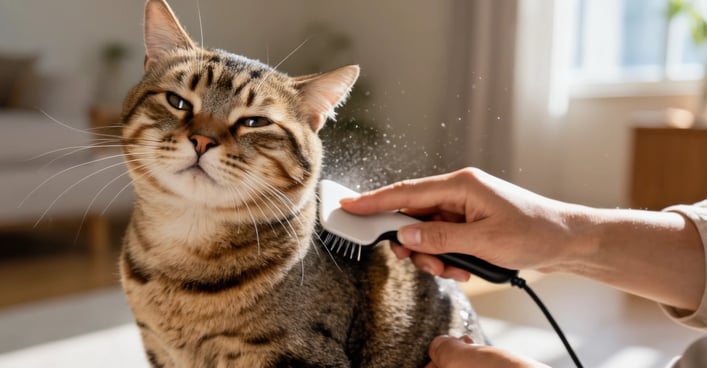
Cat Grooming at Home: Your Complete Guide to Brushing, Bathing, and Coat Care in 2026
Master safe and effective cat grooming at home. Our 2026 guide covers brushing, bathing, nail trimming, and coat care for all breeds and temperaments.
Share this page
Cat Grooming at Home: Your Complete Guide to Brushing, Bathing, and Coat Care in 2026
Regular grooming is a cornerstone of your cat's health, comfort, and well-being. While cats are meticulous self-groomers, they benefit immensely from human assistance—especially long-haired breeds, seniors, and cats with special needs. This comprehensive 2026 guide provides everything you need to know to groom your cat effectively and safely at home, strengthening your bond in the process.
Understanding Your Cat's Grooming Needs
Why Your Cat Needs Your Help
Natural Limitations:
Cannot effectively reach all areas of their body
Long hair often exceeds their tongue's grooming capacity
Age-related loss of flexibility and mobility
Obesity can severely limit reach
Dental pain or disease can prevent proper self-grooming
Health Benefits of Regular Grooming:
Prevents painful matting and skin irritation
Significantly reduces hairballs
Evenly distributes natural skin oils for a healthy coat
Stimulates blood circulation and skin health
Allows for early detection of parasites, lumps, or skin issues
Reduces shedding and loose hair around your home
Creates a valuable bonding and trust-building opportunity
Cat Grooming at Home: Your Complete Guide to Brushing, Bathing, and Coat Care in 2026 - Articles
Grooming by Coat Type
Short-Haired Cats:
Grooming Needs: Minimal
Brushing Frequency: Weekly is typically sufficient
Matting Risk: Low
Examples: Siamese, American Shorthair, Bengal
Medium-Haired Cats:
Grooming Needs: Moderate
Brushing Frequency: 2-3 times per week; extra attention during shedding seasons
Examples: Abyssinian, Russian Blue, Turkish Van
Long-Haired Cats:
Grooming Needs: High, daily grooming is essential
Matting Risk: Very high without consistent care
Professional Help: Often recommended for complex tasks
Examples: Persian, Maine Coon, Ragdoll, Norwegian Forest Cat
Hairless Cats:
Special Needs: Require dedicated skin care, not coat care
Bathing: Regular bathing is necessary to manage oil accumulation
Examples: Sphynx, Devon Rex, Peterbald
Essential Grooming Toolkit for 2026
Brushes and Combs
Tool
Best For
Key Benefit
Top Picks
Slicker Brush
Most coat types; removes loose hair & small mats
Fine, short wires penetrate the topcoat
Hertzko Self-Cleaning, JW Pet GripSoft
Bristle Brush
Short to medium coats; finishing
Distributes oils and adds shine
Natural boar bristle brushes
Pin Brush
Long, delicate coats; detangling
Widely spaced pins with protective tips are gentle on skin
Chris Christensen, Safari
Metal Comb
All cats, essential for long-hairs
Detects small mats early; removes debris. Use a greyhound-style comb.
Undercoat Rake
Double-coated breeds (e.g., Maine Coon)
Removes loose undercoat to reduce shedding
Use carefully to avoid over-thinning the coat
Dematting Tool
Established mats (use as a last resort)
Sharp blades cut through tough mats
Use with extreme caution; consider a pro for large mats
Rubber Grooming Mitt
Short-haired or nervous cats
Other Must-Have Tools
Nail Clippers: Scissor or guillotine style, cat-specific (e.g., JW Pet, Safari). Keep styptic powder on hand.
Grooming Wipes: For waterless cleaning between baths (Earthbath, Burt's Bees).
Detangling Spray: Conditions the coat and eases brushing (Chris Christensen, The Stuff).
Mat Breaker: A safer alternative to dematting tools for home use; works through mats gradually.
Mastering Brushing Techniques
General Principles for Success
Preparation: Choose a quiet, comfortable spot. Have treats ready and start when your cat is relaxed.
Approach: Let your cat sniff the tools first. Start with areas they enjoy (often cheeks/chins). Always brush in the direction of hair growth with minimal pressure.
Pacing: Keep initial sessions short (3-5 minutes). Always stop if your cat becomes stressed, ending on a positive note with a treat.
Brushing by Coat Type
Short-Haired Cats:
Frequency: Weekly
Technique: Use a rubber mitt or bristle brush from head to tail. Finish with a soft cloth for shine.
Time: 5-10 minutes
Medium-Haired Cats:
Frequency: 2-3 times per week
Technique: Start with a slicker brush, work in sections, and use a comb for finishing to check for tangles.
Time: 10-15 minutes
Long-Haired Cats:
Frequency: Daily
Technique:
Start with a wide-tooth comb, working from the ends toward the skin.
Hold the base of the hair to prevent pulling on the skin.
Use a detangling spray if needed, then follow with a slicker brush.
Pay special attention to problem areas: behind the ears, underarms, chest/britches, and the tail.
Time: 15-30 minutes
Managing Mats and Tangles
Prevention is Key
Regular Brushing: The single most effective strategy. Catch tangles when they are small.
Proper Nutrition: Diets rich in Omega-3 and Omega-6 fatty acids promote a healthy, resilient coat.
Environment: Manage humidity to reduce static, which can cause tangling.
Removing Tangles and Mats
For Small Tangles:
Apply a detangling spray and let it sit for 2-3 minutes.
Hold the hair below the tangle to prevent skin pulling.
Gently work from the outer edge inward using your fingers or a metal comb.
For Established Mats:
Assess: Consider the mat's size, proximity to skin, and your cat's tolerance.
Small Mats (DIY): Use a mat breaker or blunt-tipped scissors. Hold the skin taut and work slowly. Cornstarch can help dry out oily mats for easier separation.
Large/Difficult Mats (Professional): Seek a professional groomer or veterinarian. They have the tools and expertise, and sedation may be the safest option.
⚠️ Never: Use sharp scissors blindly, pull or yank on mats, force a stressed cat to continue, or ignore a mat that appears painful.
Bathing Your Cat: A Step-by-Step Guide
When is a Bath Necessary?
Medical Reasons: Skin conditions, flea treatment, contact with toxic substances.
Lifestyle/Breed: Hairless breeds (weekly), show cats, obese or senior cats who cannot groom themselves, or after a serious mess.
Most Cats: Rarely require a full bath if regularly brushed.
Preparation & Technique
Supplies: Cat-specific shampoo, non-slip mat, pitcher or handheld sprayer, several towels, cotton balls (for ears), and high-value treats.
The Bathing Process:
Prep (5 min): Trim nails, brush thoroughly, place cotton balls in ears, and have a damp washcloth ready for the face.
Wetting (3-5 min): Use lukewarm water. Wet from the shoulders down, avoiding the face and ears.
Shampooing (5 min): Dilute shampoo as directed. Gently massage from neck to tail, following hair growth.
Rinsing (5+ min): Rinse thoroughly until water runs completely clear. Residual shampoo causes skin irritation.
Drying (20-30 min): Squeeze out excess water, wrap in a towel, and pat dry. Use a hair dryer on the lowest, coolest setting only if your cat tolerates it.
Face: Clean only with a damp washcloth—no soap near eyes.
Nail Trimming Essentials
Frequency: Every 2-4 weeks. Check weekly.
Technique:
Gently press the paw pad to extend the nail.
Identify the quick (pink area containing blood vessels).
Clip only the clear, sharp tip perpendicular to the nail, avoiding the quick.
For dark nails, trim tiny amounts and look for a dark oval in the center—this is the quick.
Reward immediately after each nail or paw.
If You Cut the Quick: Don't panic. Apply styptic powder and apply gentle pressure. Comfort your cat—it's a minor injury that heals quickly.
Ear Cleaning & Dental Care
Ear Cleaning (Monthly or as Needed):
Use a vet-recommended ear cleaner on a cotton ball.
Gently wipe only the visible parts of the outer ear. Never insert anything into the ear canal.
See a vet if you notice: Black/brown discharge, redness, swelling, odor, or excessive head shaking.
Dental Care:
Gold Standard: Daily brushing with cat-specific toothpaste and a soft brush.
Alternatives: Dental treats, water additives, prescription dental diets, and dental toys can supplement (but not replace) brushing.
Special Considerations
Senior Cats: Be gentler. Sessions may need to be shorter and more frequent. Consider a raised, padded surface to ease joint stress.
Obese Cats: They often cannot reach their back and hindquarters. Help them by brushing these areas daily and checking skin folds for irritation.
Hairless Cats (e.g., Sphynx): Require weekly bathing to remove oil buildup, regular ear cleaning (they produce more wax), and nail cleaning. They also need sun protection.
Professional Grooming: When to Call a Pro
Seek a Professional For:
Severe matting requiring a "lion cut"
Aggressive or extremely fearful cats
Specialized services like sanitary trims or anal gland expression
Show preparation
Choosing a Groomer: Look for one with specific cat experience, positive references, and a calm handling philosophy. Mobile groomers can reduce stress by coming to you.
Cost Analysis: DIY vs. Professional
DIY Grooming (Initial Investment)
Item
Cost Range
Quality Brush & Comb Set
$20 - $50
Nail Clippers & Styptic
$10 - $25
Cat Shampoo & Supplies
$15 - $40
Total Start-Up
~$45 - $115
Annual Maintenance: ~$50 - $100 for shampoo, tool replacement, and treats.
Professional Grooming (Average Costs)
Service
Cost Range
Frequency
Basic Groom & Brush
$50 - $85
Every 6-8 weeks
Full Groom (Bath & Dry)
$70 - $130
As needed
De-Matting / Lion Cut
$75 - $150+
Every 8-12 weeks
Estimated Annual Cost
$400 - $1,200+
Frequently Asked Questions (FAQ)
Q: My cat hates being brushed. What can I do?
A: Start with ultra-short sessions (30 seconds). Use a rubber mitt for a gentler feel, always pair with treats, and brush when they're sleepy. Patience and positive association are key.
Q: Can I use human or dog shampoo on my cat?
A: No. Cat skin has a different pH balance. Human and dog shampoos can be too harsh, causing dryness and irritation. Always use products formulated for cats.
Q: How do I know if a mat is too bad to handle at home?
A: If the mat is larger than a dime, is tightly against the skin, or causes your cat pain when touched, it's time for a professional. Attempting removal can easily lead to cuts.
Q: Do indoor cats need their nails trimmed?
A: Yes. Without regular wear, nails can overgrow, curl into pads, or get snagged. Trimming protects your cat and your furniture.
Last Updated: 2026 | Consistent, gentle grooming is one of the greatest investments you can make in your cat's long-term health and your shared bond. Start slow, stay positive, and celebrate the small victories.
Get expert advice about cat care, behavior, nutrition, grooming, and training. Ask our AI cat care expert anything about your cat and receive professional guidance.