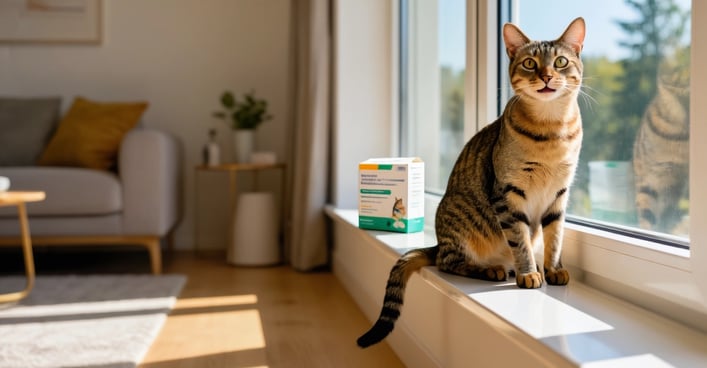
A comprehensive, vet-approved guide to eliminating fleas on your cat and in your home. Learn about modern treatments, effective protocols, and year-round prevention strategies.
Share this page
Cat Flea Treatment: The Complete Guide for 2026
Fleas are the most common external parasite affecting cats, causing intense itching, skin disease, and transmitting serious illnesses. Modern flea control makes elimination possible, but it requires a comprehensive strategy targeting both your pet and your home environment. This guide provides the latest, most effective strategies for flea control and prevention.
Understanding the Flea Problem
Flea Biology Basics
The Flea Lifecycle:
Eggs (50% of Infestation):
Laid on the host but fall off into the environment within hours.
Hatch in 2 to 12 days, depending on temperature and humidity.
Appear as tiny, white, oval specks barely visible to the naked eye.
Larvae (35% of Infestation):
Worm-like, photosensitive stage that avoids light.
Feeds on organic debris and adult flea feces ("flea dirt").
Develops in 5 to 11 days within carpets, bedding, and floor cracks.
Cat Flea Treatment: The Complete Guide for 2026 - Articles
Pupae (10% of Infestation):
Cocoon stage that can last from 1 week to 6 months in dormancy.
Emergence is triggered by vibrations, heat, and carbon dioxide (signs of a host).
This is the most resilient and treatment-resistant stage.
Adults (5% of Infestation):
Live on the host, beginning to feed within seconds of finding one.
Start laying eggs within 24 to 48 hours of their first blood meal.
Typically live for 2 to 3 months.
The Critical 95% Rule:
Only 5% of a flea population exists as adults on your cat. The remaining 95%—eggs, larvae, and pupae—live in your home. This is why treating only your pet is almost always ineffective for long-term control.
Signs Your Cat Has Fleas
Physical Evidence
Visual Signs:
Live Fleas: Dark, fast-moving specks scurrying through the fur.
Flea Dirt: Black, pepper-like specks in the coat (flea feces).
Estimated Cost: $50–$60 per dose; $200–$240 annually.
3. Advantage II (Imidacloprid/Pyriproxyfen)
Coverage: Fleas only.
Frequency: Monthly application.
Age: Safe for kittens 8 weeks and older.
Action: Kills adult fleas on contact and prevents eggs and larvae from maturing.
Pros:
Available over-the-counter without a prescription.
More affordable than many prescription options.
Fast-acting; fleas don't need to bite to be killed.
Cons:
No protection against ticks or heartworm.
Requires strict monthly consistency.
Not waterproof.
Estimated Cost: $12–$18 per dose; $144–$216 annually.
4. Cheristin (Spinetoram)
Coverage: Fleas only.
Frequency: Monthly application.
Age: Safe for kittens 8 weeks and older.
Action: Rapidly kills adult fleas.
Pros:
Extremely effective, killing 98–100% of fleas within 12 hours.
Features an easy-to-use, low-volume applicator.
Cons:
Narrow spectrum of protection (fleas only).
Typically requires purchase through a veterinarian.
Estimated Cost: $15–$20 per dose; $180–$240 annually.
Oral Flea Medications
1. Capstar (Nitenpyram)
Type: Fast-acting tablet.
Duration: Provides 24-hour relief.
Use: Ideal for immediate knockdown during a severe infestation.
Action: Kills adult fleas within 30 minutes.
Best For:
Providing immediate relief at the start of a treatment plan.
Use before applying a long-term preventive.
Safe for kittens as young as 4 weeks and weighing over 2 pounds.
Estimated Cost: $25–$35 for a pack of 6 tablets.
2. Comfortis (Spinosad)
Type: Monthly chewable tablet.
Frequency: Given with a full meal each month.
Age: For cats 14 weeks and older.
Action: Kills adult fleas before they can lay eggs.
Pros:
No topical residue; ideal for cats who dislike spot-ons.
Fast-acting, starting to kill fleas within 30 minutes.
Cons:
Vomiting is a common side effect if not given with food.
Does not protect against ticks.
Estimated Cost: $18–$25 per tablet; $216–$300 annually.
Flea Collars
Seresto (Imidacloprid/Flumethrin)
Duration: Provides up to 8 months of continuous protection.
Coverage: Fleas and ticks.
Age: Safe for kittens 10 weeks and older.
Pros:
Extremely long-lasting, reducing the need for monthly applications.
Excellent for indoor/outdoor cats.
Features a breakaway safety design.
Cons:
Higher upfront cost.
Potential for skin irritation under the collar.
Effectiveness can diminish if it gets wet frequently.
Estimated Cost: $60–$70 per collar; approximately $90–$105 annually.
Flea Sprays and Shampoos
Note on Effectiveness:
These products only kill adult fleas present at the time of application and offer no residual protection. They are most useful for providing immediate relief during a severe infestation but must be combined with a long-term preventive.
Recommended Products:
Adams Plus Flea & Tick Spray: $10–$15
Veterinary Formula Clinical Care Flea & Tick Shampoo: $8–$12
Comprehensive Flea Elimination Protocol
Phase 1: Treat All Pets (Day 1)
All pets in the household must be treated simultaneously to prevent reinfestation.
Administer Capstar to all cats for immediate relief (optional but highly recommended for severe cases).
Apply a long-term preventive (e.g., Revolution Plus, Bravecto, Advantage II) to each pet according to their weight.
Record the application dates for every pet to maintain a consistent schedule.
Phase 2: Environmental Treatment (Days 1–3)
Indoor Treatment:
Step 1: Thorough Cleaning
Vacuum all carpets, rugs, hardwood floors, and furniture meticulously.
Pay special attention to pet sleeping areas, baseboards, and under furniture.
Immediately dispose of the vacuum bag or empty the canister contents into a sealed bag outside your home.
Step 2: Wash All Fabrics
Wash all pet bedding, your bedding (if pets sleep with you), and any throw blankets or pillows in hot water (140°F+).
Dry on the highest heat setting safe for the fabric.
Step 3: Apply Environmental Sprays (For Severe Infestations)
Use sprays containing both an adulticide and an Insect Growth Regulator (IGR) like (S)-methoprene or pyriproxyfen.
Recommended products: Adams Plus Room Spray, Vet-Kem, Precor.
Follow label directions exactly and keep pets out of treated areas until completely dry.
Outdoor Treatment (If Applicable):
Treat shaded areas where your pet rests (under decks, porches).
Use yard sprays specifically labeled as safe for pets once dry.
For severe yard infestations, consider professional pest control services.
Phase 3: Ongoing Prevention
Continue monthly (or as directed) preventive treatment on all pets, year-round.
Why Year-Round Prevention is Non-Negotiable:
Fleas can survive and reproduce indoors during winter, thanks to central heating.
Preventing an infestation is consistently cheaper and easier than eliminating one.
Consistent application completely breaks the flea life cycle.
Flea Treatment Cost Analysis
Severe Infestation: Initial Treatment Costs
Item
Estimated Cost
Capstar for Multiple Pets
$25–$50
3-Month Supply of Preventive
$60–$150
Environmental Spray
$15–$30
Professional Cleaning (Optional)
$100–$200
Total Initial Cost
$100–$430
Annual Prevention Costs (Per Cat)
Product Type
Annual Cost Range
Revolution Plus
$240–$300
Bravecto
$200–$240
Advantage II
$144–$216
Cheristin
$180–$240
Seresto Collar
$90–$105
Generic Fipronil-based Products
$120–$180
Cost Comparison: Prevention vs. Treatment
Annual Prevention:$150–$300
Infestation Treatment (Potential Costs):
Initial Elimination Protocol: $100–$400
Veterinary Visits for Skin Problems: $100–$300
Medications for Secondary Infections: $50–$150
Professional Extermination (Severe Cases): $200–$500+
Total Potential Infestation Cost:$450–$1,350+
Conclusion: Consistent prevention is a clear financial win, saving significant money while preventing your cat's suffering.
Natural Flea Control Approaches
Important Disclaimer: Natural methods are generally less effective than veterinary-recommended products and may not provide adequate protection, especially in high-risk or existing infestation situations. Always consult your veterinarian.
Diatomaceous Earth (Food-Grade)
A fine powder that physically desiccates fleas.
Apply only to the environment (carpets, bedding); avoid direct application to your cat.
Must remain dry to work; vacuum up after 24–48 hours and reapply weekly during an infestation.
Limitations: Does not affect eggs or pupae; can cause respiratory irritation if inhaled.
Cost: $15–$25 for a large bag.
Essential Oils (Use with Extreme Caution)
Many oils are toxic to cats, including tea tree, pennyroyal, citrus, pine, and wintergreen.
Cats lack certain liver enzymes to metabolize these compounds safely.
Recommendation: Avoid using essential oils directly on or around cats due to significant toxicity risks and lack of proven efficacy for flea control.
Method: Comb daily during an infestation, dipping the comb in soapy water between strokes to drown captured fleas.
Limitations: Only removes visible adults (5–10% of the problem). Has no effect on eggs, larvae, or pupae. Must be part of a broader treatment plan.
Cost: $5–$10
Special Considerations
Kittens and Flea Control
Age Restrictions are Critical:
Under 8 Weeks: Manual removal with a flea comb, bathing with warm water and mild dish soap, and Capstar (safe at 4 weeks+).
8–12 Weeks: Many products become safe (always verify the label). Advantage II and Revolution are approved for 8-week-old kittens.
Warning: Kittens are highly susceptible to life-threatening anemia from fleas. Seek immediate veterinary care for any heavy infestation.
Pregnant and Nursing Cats
Safety First:
Generally Safe: Capstar (short-term), Revolution, and Advantage II (under veterinary guidance).
Avoid: Many oral medications and some collars without explicit veterinary approval.
Always consult your veterinarian before using any product on a pregnant or nursing cat.
Multi-Cat Households
The Key is Simultaneity:
Treat all cats on the same day to prevent fleas from jumping between untreated hosts.
Consider oral medications if applying topical products to multiple cats is challenging.
Separate cats until topical products are completely dry to prevent mutual grooming and ingestion.
Outdoor Cats
Higher Risk Requires Robust Protection:
Constant environmental exposure and contact with wildlife increase risk.
Recommendations: Use long-lasting products like Bravecto (12-week) or a Seresto collar. Maintain monthly preventives without fail. Consider keeping cats indoors during peak flea season (late summer/early fall).
When to See a Veterinarian
Schedule an Appointment If:
The flea preventive you're using doesn't seem to be working.
Your cat has developed severe skin irritation, hair loss, or obvious infection.
You observe signs of anemia (pale gums, lethargy).
You see tapeworm segments in the stool or around the anus.
A kitten has fleas.
Seek Emergency Care For:
Severe lethargy, weakness, or collapse.
White or very pale gums.
Difficulty breathing.
Self-trauma from extreme, uncontrollable itching.
Flea Prevention Best Practices for 2026
1. Commit to Year-Round Prevention
Fleas thrive indoors year-round due to modern climate control. Stopping prevention for even one month can allow a full infestation to restart.
2. Maintain Absolute Consistency
Set reminders using phone calendars, pet care apps, or pharmacy auto-refill programs. Apply preventives on the same day each month.
3. Dispel the Product Rotation Myth
Myth: You must rotate flea products to prevent resistance.
Fact: Resistance to modern flea preventives is rare. Consistent, correct use of one effective product is far more successful than an inconsistent rotation schedule, which can leave gaps in protection.
Conclusion
Effective flea control in 2026 is achievable through a comprehensive, three-pronged approach: treating all pets simultaneously, aggressively addressing the home environment, and maintaining consistent, year-round preventive care.
While eliminating a severe infestation requires dedicated effort and investment, modern monthly preventives are a cost-effective solution that safeguards your cat's comfort and health while keeping your home pest-free. Partner with your veterinarian to select the optimal product based on your cat's health, lifestyle, and your household's specific needs. The investment in consistent prevention pays for itself many times over in saved veterinary bills and your cat's well-being.
Get expert advice about cat care, behavior, nutrition, grooming, and training. Ask our AI cat care expert anything about your cat and receive professional guidance.