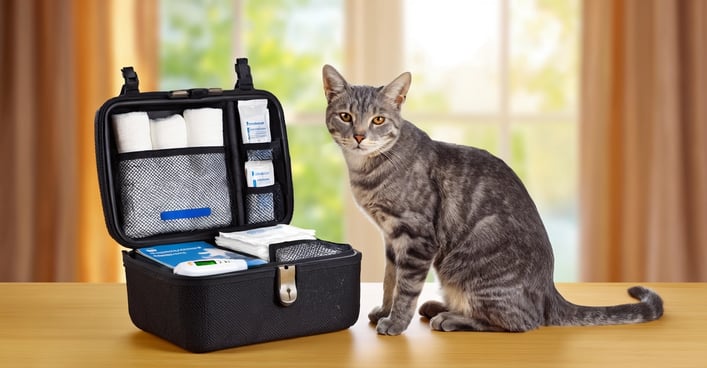
Cat First Aid Kit: Essential Supplies and Emergency Guide for 2026
A complete guide to assembling a cat first aid kit and handling common emergencies. Learn essential supplies, life-saving procedures, and when to seek immediate veterinary care.
Share this page
Cat First Aid Kit: Essential Supplies and Emergency Guide for 2026
Emergencies can strike your feline companion without warning. Being prepared with a well-stocked first aid kit and knowing basic emergency procedures can be the critical difference while you transport your cat to professional veterinary care. This comprehensive guide covers essential supplies, how to recognize emergencies, and immediate response protocols every responsible cat owner should master.
Fall from a significant height (“high-rise syndrome”)
Internal injuries, fractures
Transport for evaluation even if cat seems okay
Suspected Toxicity/Poisoning:
Sign
Possible Toxin
Immediate Action
Vomiting, diarrhea
Many household toxins, plants, foods
Call Poison Control FIRST before any action
Seizures, tremors
Insecticides, certain human medications, chocolate
Emergency vet; note substance if known
Sudden lethargy, collapse
Antifreeze, lilies (extremely toxic to cats), rodenticides
Emergency vet; bring toxin packaging
Neurological Signs:
Sign
Possible Cause
Immediate Action
Seizures (convulsions)
Epilepsy, toxin, metabolic disease, brain tumor
Protect from injury, time seizure, emergency vet if >5 min or cluster
Staggering, circling, head tilt
Vestibular disease, toxin, ear infection
Emergency vet for assessment
Sudden blindness, dilated pupils
Retinal detachment, hypertension, glaucoma
Emergency vet visit
Gastrointestinal & Urinary Emergencies:
Sign
Possible Cause
Immediate Action
Repeated vomiting, especially with blood
Foreign body obstruction, ulcer, toxin
Emergency vet
Bloody diarrhea
Severe infection, parasites, toxin
Vet within 24 hours; emergency if lethargic
Straining to defecate with no production
Constipation, possible obstruction
Vet within 24 hours
Swollen, hard, painful abdomen
Potential bloat (rare in cats), fluid, internal bleeding
EMERGENCY
Straining to urinate with little/no output (ESPECIALLY IN MALES)
Urinary blockage (Urethral Obstruction)
LIFE-THREATENING EMERGENCY
Blood in urine
Bladder infection, stones, cystitis
Vet within 24 hours
Step-by-Step Emergency Procedures
Choking
Signs: Pawing at mouth, gagging, difficulty breathing, panic, blue gums.
Action:
Stay calm. Safely open the mouth and look for a visible object.
If clearly visible and easily reachable, try to remove it with fingers or tweezers.
DO NOT push blindly, as you may lodge the object deeper.
If not easily removed, do not waste time—transport to the vet immediately.
A modified Heimlich for cats can be attempted if you are trained: hold cat with back against your chest, apply quick, gentle compressions below the rib cage.
Controlling Bleeding
External Bleeding:
Apply direct, firm pressure with a clean gauze pad or cloth.
Elevate the wound if possible (without causing more pain/injury).
Maintain pressure for a full 5-10 minutes without peeking.
If blood soaks through, add more layers on top; do not remove the first bandage.
Use a tourniquet ONLY as an absolute last resort for severe, life-threatening limb bleeding and note the time it was applied.
Nail Bleeding (Quick Injury):
Apply styptic powder, silver nitrate stick, or cornstarch directly to the nail tip.
Hold gentle pressure for 30-60 seconds.
Confine your cat to prevent licking and re-injury.
Burns
Chemical Burns:
Wear gloves. Brush off any dry powder.
Flush the affected area with copious amounts of cool running water for 15-20 minutes.
Do not apply ointments or creams.
Transport to the vet with the chemical container.
Thermal Burns (from heat):
Gently cool the area with cool (not ice-cold) running water or a cool compress.
Cover the burn with a clean, damp cloth or non-stick pad.
Transport to the vet.
Managing Seizures
During a Seizure:
Stay calm. Clear the area around the cat of any furniture or objects.
Do NOT restrain the cat or put anything (especially your fingers) in its mouth.
Dim lights, reduce noise, and note the duration of the seizure.
After a Seizure (Post-Ictal Phase):
The cat will be disoriented and confused. Provide a quiet, dark, safe space.
Contact your veterinarian immediately. A single brief seizure may warrant a urgent visit.
Go to the emergency vet if: The seizure lasts longer than 5 minutes, or if seizures occur in a cluster (one after another).
Moderate/Severe Illness (e.g., urinary blockage, severe infection)
$1,500 - $5,000
Major Trauma or Surgery (e.g., hit by car, foreign body removal)
$3,000 - $10,000+
Planning Ahead: Pet Insurance & Savings
Pet Insurance: Research and enroll while your cat is young and healthy. It can cover 70-90% of unexpected emergency costs after the deductible. Pre-existing conditions are not covered.
Emergency Savings Fund: Aim to save $2,000-$5,000 specifically for pet emergencies. Start a dedicated savings account.
Credit Options: Know your options like CareCredit, a credit line for medical expenses, but understand the terms.
Frequently Asked Questions (FAQs)
Q: Can I give my cat over-the-counter human medications like Tylenol or Advil?A: NO. Never give human medication without explicit veterinary instruction. Acetaminophen (Tylenol) and Ibuprofen (Advil) are highly toxic and often fatal to cats.
Q: How do I know if it's a true emergency or if I can wait for my regular vet?A: When in doubt, call your vet or emergency clinic. However, breathing difficulties, uncontrolled bleeding, toxin ingestion, seizures, inability to urinate, collapse, or severe trauma always require immediate emergency care.
Q: My injured cat is scared and trying to bite/scratch me. What should I do?A: Your safety is paramount. Use the towel wrap (burrito method) to contain the cat and protect yourself. If alone, it may be safest to gently guide the cat into a carrier using a towel before attempting handling. A makeshift muzzle is a last resort.
Q: What is the single most important thing in my first aid kit?A: Your veterinarian's and the animal poison control phone numbers. Supplies are useless without professional guidance on when and how to use them.
Q: Should I practice first aid techniques on my cat?A: No, do not practice on a healthy, conscious cat. You can, however, practice the towel wrap and bandaging techniques on a stuffed animal to build muscle memory. Familiarize yourself with your kit's contents and your cat's normal resting vital signs (heart rate, gum color).
Last Updated: 2026 | Disclaimer: This guide provides information for temporary first aid stabilization. It is not a substitute for professional veterinary diagnosis and treatment. Always seek immediate care from a licensed veterinarian for any serious injury or illness.
Get expert advice about cat care, behavior, nutrition, grooming, and training. Ask our AI cat care expert anything about your cat and receive professional guidance.