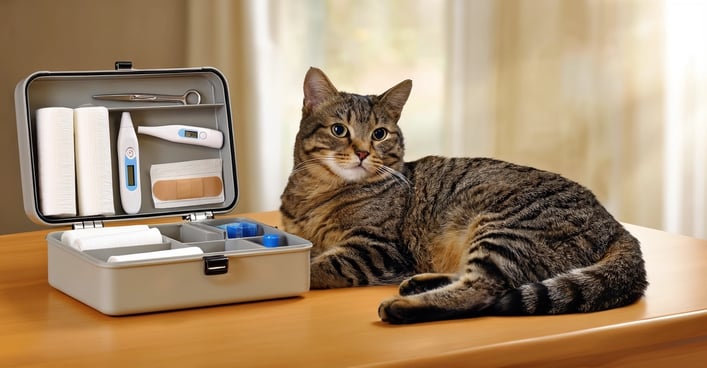
Cat First Aid Kit 2026: Essential Supplies & Emergency Guide
A comprehensive guide to building and using a cat first aid kit. Learn essential supplies, emergency procedures, and when to seek veterinary care to protect your feline friend.
Share this page
Cat First Aid Kit 2026: Essential Supplies & Emergency Preparedness
Preparing for feline emergencies can save your cat's life. A well-stocked first aid kit, combined with knowledge of basic procedures, empowers you to respond effectively to accidents or sudden illness until veterinary care is available.
Cat First Aid Kit 2026: Essential Supplies & Emergency Guide - Articles
Item
Purpose
Cost
Sterile gauze pads (various sizes)
Covering and protecting wounds
$5-8
Gauze roll bandage (2-inch)
Securing dressings and providing support
$4-6
Hypoallergenic adhesive tape
Securing bandages without skin irritation
$3-5
Non-stick pads (Telfa)
Wound dressing that won't adhere
$6-10
Self-adherent wrap (Vetrap)
Secure wrapping without tape or clips
$5-8
Sterile saline solution
Safely flushing wounds and eyes
$5-8
Chlorhexidine antiseptic wipes
Cleaning wounds to prevent infection
$5-8
Plain antibiotic ointment (no pain relief)
Protecting minor wounds
$4-6
Critical Note: Never use hydrogen peroxide or alcohol on cat wounds—they damage tissue and delay healing.
Bleeding Control:
Styptic powder or pencil: For nail bleeding - $5-8
Silver nitrate sticks: For minor bleeding control - $8-12
Hemostatic gauze (QuikClot): For more significant bleeding - $15-25
Medications and Treatments
Over-the-Counter (Use Only with Veterinary Approval):
Item
Purpose
Cost
Diphenhydramine (Benadryl) 25mg tablets
Managing allergic reactions
$5-8
Activated charcoal tablets
For certain types of poisoning
$8-12
Kaolin-pectin suspension
Addressing mild diarrhea
$8-12
Sterile saline eye wash
Flushing irritants from eyes
$5-8
Artificial tears
Lubricating dry eyes
$5-8
Prescription Medications (Store if Prescribed):
Current daily medications
Emergency medications prescribed by your veterinarian
Travel sedatives (if prescribed)
⚠️ Always consult your veterinarian before administering any medication to your cat. Dosages are critical and species-specific.
Tools and Equipment
Item
Purpose
Cost
Digital rectal thermometer
Accurately checking body temperature
$10-15
Petroleum jelly
Lubricant for thermometer use
$3-5
Fine-point tweezers
Removing splinters, ticks, or stingers
$4-6
Blunt-end scissors
Safely cutting bandages and matted fur
$5-8
Cat nail clippers
For emergency nail trims or broken nails
$8-12
Various size syringes (no needles)
Administering fluids or oral medications
$5-10
Eye dropper
Precise liquid medication administration
$2-4
Penlight or small flashlight
Examining mouth, eyes, ears, and wounds
$5-10
Cat-sized muzzle or restraint bag
Preventing bites during stressful treatment
$8-12
Thick towel or blanket
For safe restraint, warmth, and comfort
$10-15
Documentation and Information
Keep These Items in Your Kit:
Primary veterinarian's emergency contact card
Local 24-hour emergency clinic information
ASPCA Animal Poison Control Hotline: (888) 426-4435
Copy of your cat's medical records
Current vaccination records
Recent, clear photo of your cat for identification
Microchip number and registry contact
Detailed list of all medications with dosages
Your cat's weight and normal vital sign ranges
Understanding Your Cat's Normal Vital Signs
Establish a Healthy Baseline:
Vital Sign
Normal Range
How to Check
Temperature
100.5°F - 102.5°F (38°C - 39.2°C)
Rectal thermometer
Heart Rate
140 - 220 beats per minute (bpm)
Feel pulse inside rear thigh
Respiratory Rate
20 - 30 breaths per minute
Watch chest rise and fall
Gum Color
Healthy pink
Gently lift lip to check
Capillary Refill Time
Less than 2 seconds
Press gum, release, time color return
Pro Tip: Practice checking these signs when your cat is calm and healthy. This makes it easier to recognize abnormalities during an emergency.
Common Emergency Situations and How to Respond
Wounds and Bleeding
For Minor Cuts or Scrapes:
Apply gentle, direct pressure with clean gauze
Clean gently with sterile saline solution
Apply a thin layer of plain antibiotic ointment
Cover with a non-stick pad
Secure with a gauze wrap and tape
For Severe Bleeding:
Apply firm, direct pressure with a clean cloth or gauze
Do not remove saturated dressings—add new layers on top
Maintain pressure for at least 10 minutes
Transport to a veterinarian immediately
Call the clinic ahead if possible
Burns
Thermal Burns (from heat):
Cool the area with room-temperature water (never ice)
Continue cooling for 10-15 minutes
Cover loosely with a clean, dry cloth
Seek veterinary care promptly
Chemical Burns:
Wear gloves to protect yourself
Flush the affected area with copious amounts of lukewarm water
Do not apply ointments or creams
Transport to a vet immediately
Bring the chemical container if safe to do so
Choking
Recognize the Signs:
Pawing frantically at the mouth
Difficulty breathing, gagging, or coughing
Blue-tinged gums or tongue
Extreme distress or panic
Response Protocol:
If conscious: Carefully look in the mouth and remove any visible object with your fingers (avoid pushing it deeper).
If unconscious: Perform a modified Heimlich maneuver—lay the cat on its side and apply quick, upward pressure just behind the rib cage.
If the object is not dislodged: Proceed to emergency veterinary transport immediately.
Safety First: A choking cat may bite out of panic. Use a towel for restraint if necessary.
Poisoning
Common Feline Toxins:
Lilies (all parts are extremely toxic to cats)
Acetaminophen (Tylenol)
Antifreeze (ethylene glycol)
Rodenticides (rat poison)
Chocolate (especially dark)
Many essential oils (tea tree, eucalyptus)
Onions, garlic, and chives
Immediate Response:
Remove your cat from the source of poison
Note what was ingested, the approximate amount, and the time
Call the ASPCA Poison Control Hotline: (888) 426-4435 (a $75 fee may apply)
Do NOT induce vomiting unless specifically instructed by a professional
Transport to the vet with the poison container or information
Seizures
During a Seizure:
Clear the immediate area of any dangerous objects
Do not restrain your cat or put anything in its mouth
Note the duration and characteristics of the seizure
Time the event accurately
Post-Seizure Care:
Keep your cat in a warm, quiet, and dimly lit space
They may be disoriented—prevent falls from furniture
Contact your veterinarian for guidance
A single seizure lasting over 5 minutes or multiple seizures in a row is a life-threatening emergency.
Heatstroke
Warning Signs:
Excessive panting with an open mouth
Bright red tongue, gums, or ears
Thick drooling
Weakness, stumbling, or collapse
Vomiting
Body temperature over 103°F (39.4°C)
Critical Response:
Move your cat to a cool, shaded area immediately
Apply cool (not ice-cold) water to their fur and skin
Use a fan to promote evaporation and cooling
Offer small amounts of cool water to drink
Transport to a vet even if they appear to recover, as internal damage can occur.
Hypothermia
Signs of Dangerously Low Body Temperature:
Violent shivering followed by lethargy
Weakness and muscle stiffness
Cold ears and paws
Body temperature below 99°F (37.2°C)
Warming Protocol:
Wrap your cat in warm, dry towels or blankets
Place warm (not hot) water bottles wrapped in towels near them
Avoid direct heat sources like heating pads or hair dryers, which can cause burns
Seek veterinary attention for monitoring and care
Bite Wounds
All bite wounds require veterinary evaluation due to the high risk of infection from bacteria in another animal's mouth.
Initial Care:
Flush the wound gently with sterile saline
Apply light pressure with gauze if bleeding
Do not pack ointments deep into puncture wounds
See a veterinarian within 24 hours
If bitten by an unknown animal, report it due to rabies risk
When to Seek Immediate Veterinary Care
True Emergencies (Go Immediately)
Difficulty breathing or choking
Uncontrolled bleeding
Seizures or collapse/unconsciousness
Major trauma (hit by car, significant fall)
Suspected poisoning
Bloated, hard, or painful abdomen
Straining to urinate with no production (especially in males)
Labor complications or prolonged straining
Acute eye injury or sudden blindness
Severe, persistent vomiting or diarrhea with lethargy
Urgent Situations (Seek Care Same Day)
Vomiting multiple times in 24 hours
Diarrhea lasting more than 24 hours
Refusal to eat or drink for over 24 hours
Sudden lameness or inability to bear weight
Wounds that may need stitches
Signs of painful ear or skin infection
Mild allergic reactions (hives, facial swelling)
Building Your Kit: Cost Breakdown
Basic Starter Kit: $50 - $75
Covers essential items for common minor emergencies like small cuts, splinters, and eye irritants.
Comprehensive Preparedness Kit: $100 - $150
A complete kit including specialized tools, a broader range of supplies, and reference materials for more serious situations.
Annual Maintenance Cost: $20 - $40
Budget for replacing expired items, restocking used supplies, and updating documentation.
Storage and Maintenance
Smart Storage Tips:
Use a durable, waterproof container
Label it clearly as "CAT FIRST AID"
Store in an easily accessible, known location
Keep separate from your human first aid supplies
Ensure it's portable for travel or evacuation
Maintenance Schedule:
Quarterly: Check contents, restock used items
Bi-Annually: Review and update emergency contact information
Annually: Replace all expired medications and solutions; review procedures
First Aid Training and Education
Recommended Learning Resources
Formal Pet First Aid Courses:
American Red Cross Pet First Aid Course (Online or in-person)
Courses offered by local veterinary schools or tech programs
Reputable online certification courses
Workshops at pet stores or community centers
Essential Skills to Master:
Feline CPR and rescue breathing
Safe response to choking
Proper bandaging and splinting techniques
Accurate assessment of vital signs
Protocol for suspected poisoning
Differentiating between emergency and urgent situations
Travel and Disaster Preparedness
Compact Travel First Aid Kit
Create a smaller, portable version for trips containing:
Basic gauze and bandage materials
Antiseptic wipes
Tweezers and blunt scissors
Digital thermometer
Several days' supply of any current medications
Emergency contact card
Copies of vital medical records
Prescribed sedatives or anti-anxiety medication (if applicable)
Disaster Preparedness Additions
In case of evacuation or extended emergency, add:
3 to 7-day supply of your cat's regular food and water
Two-week supply of any medications
Portable litter box and litter supply
Secure, labeled carrier that is always accessible
Recent photo for identification purposes
Copies of vaccination records (especially rabies)
Familiar comfort items like a small toy or blanket
Understanding the Limits of First Aid
A Crucial Mindset:
First aid is temporary stabilization, not a substitute for veterinary medicine.
Its goal is to safely bridge the gap until professional help is available.
Delaying professional care for serious conditions can worsen the outcome.
When First Aid is Not Enough:
Suspected internal injuries
Broken bones or fractures
Severe systemic infections
Organ failure or disease
Cancer diagnosis and treatment
Management of chronic conditions like diabetes or kidney disease
Final Thoughts
A thoughtfully assembled first aid kit and a foundation in emergency procedures are fundamental components of responsible cat ownership. While these tools can stabilize your cat in a crisis and may save their life, they are designed to support—not replace—timely veterinary intervention.
Make it a habit to review your kit contents quarterly, refresh your knowledge of basic procedures annually, and consider formal pet first aid training to build confidence. In any serious situation, remember: the most effective first aid is often calm, safe transport to professional veterinary care. Your preparedness creates a critical safety net for your feline companion.
Disclaimer: This guide is for informational purposes and is not a substitute for professional veterinary advice, diagnosis, or treatment. Always seek the advice of your veterinarian with any questions regarding your pet's health.
Get expert advice about cat care, behavior, nutrition, grooming, and training. Ask our AI cat care expert anything about your cat and receive professional guidance.