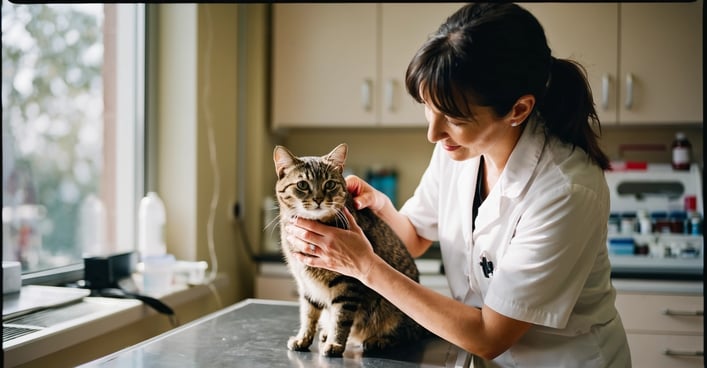
Cat First Aid: Essential Emergency Care Skills for 2026
Master life-saving cat first aid skills for choking, bleeding, poisoning, and trauma. Your guide to stabilizing your feline friend before veterinary help arrives.
Share this page
Cat First Aid: Essential Emergency Care Skills for 2026
Meta Description: Master critical cat first aid skills for emergencies. Learn to handle choking, bleeding, poisoning, heatstroke, and trauma to stabilize your cat before veterinary care.
Introduction
Cat first aid knowledge can mean the difference between life and death during the critical minutes before professional veterinary care is available. While cats are remarkably resilient, emergencies—from household accidents to sudden illness—demand immediate and appropriate responses from their caregivers.
This comprehensive guide provides the essential first aid skills every responsible cat owner should master. From recognizing emergency signs to performing life-saving interventions, these techniques prepare you to act decisively when seconds count. Remember: first aid is not a substitute for veterinary care; it's the vital bridge that keeps your cat stable until professional help arrives.
Cat First Aid: Essential Emergency Care Skills for 2026 - Articles
Building Your First Aid Kit
Essential Supplies
Basic Kit Contents:
Item
Purpose
Notes
Digital thermometer
Check temperature
Rectal use; normal range is 100-102.5°F
Gauze pads
Wound covering
Stock various sizes
Roll gauze
Bandaging
Include 2-inch and 3-inch rolls
Adhesive tape
Securing bandages
Use non-stick, medical-grade tape
Non-stick pads
Wound dressings
Telfa or similar brand
Cotton balls
Cleaning
Use unscented only
Hydrogen peroxide (3%)
Inducing vomiting
Use only with explicit veterinary guidance
Sterile saline
Wound/eye flushing
Clean water can be a substitute
Tweezers
Foreign object removal
Flat-tipped are preferred
Scissors
Cutting bandages
Blunt-tipped for safety
Flashlight
Examination
Penlight or small flashlight
Additional Helpful Items:
Eyedropper or oral syringe (without needle)
Styptic powder (for nail bleeding)
Instant cold pack
Hot water bottle or low-heat heating pad
Emergency blanket (foil type)
Pet carrier (always kept accessible)
Medications to Keep on Hand
Veterinary Prescription (Discuss with Your Vet):
Anti-nausea medication
Cat-safe pain relief
Travel sedatives
Emergency antibiotics
Never Use Without Veterinary Guidance:
Human pain medications (e.g., acetaminophen, ibuprofen—highly toxic)
Human antibiotics (dosing is inappropriate)
Essential oils (many are toxic to cats)
Human first aid creams or ointments
Recognizing Emergencies
Critical Warning Signs
Seek Immediate Veterinary Care for These Symptoms:
Respiratory Distress:
Open-mouth breathing (especially at rest)
Blue, purple, or pale gums/tongue
Rapid, labored, or noisy breathing
Choking sounds or gestures
Circulatory Collapse (Shock):
Very pale or white gums
Rapid, weak, or absent pulse
Cold legs and ears
Extreme lethargy or collapse
Neurological Signs:
Seizures or convulsions
Inability to stand or walk
Sudden head tilt or circling
Rapid, involuntary eye movements (nystagmus)
Loss of consciousness
Trauma Signs:
Bleeding that does not stop with direct pressure
Obvious bone deformity or fracture
Large open wounds
Difficulty breathing after impact
Paralysis or inability to move limbs
Toxicity Signs:
Sudden onset of vomiting (especially with blood) or diarrhea
Tremors, twitching, or seizures
Difficulty breathing
Known or suspected ingestion of a toxin
When to Call Poison Control
ASPCA Animal Poison Control Center: (888) 426-4435
Fee: $75 per case (as of 2026)
Availability: 24 hours a day, 7 days a week
Preparation: Have the toxin's packaging ready when you call
Call Immediately For:
Human or pet medication ingestion
Poisonous plant consumption (e.g., lilies)
Household chemical exposure (cleaners, antifreeze)
Pesticide or rodenticide exposure
Ingestion of any unknown substance
Choking and Airway Emergencies
Recognizing Choking
Signs:
Frantic pawing at the mouth
Gagging or retching without producing anything
Difficulty inhaling; high-pitched wheezing
Blue or purple gums/tongue (cyanosis)
Panicked behavior, distress
Feline Heimlich Maneuver
For a Conscious Cat:
Restrain Safely: Gently wrap the cat in a towel ("burrito method") to protect yourself and keep them still.
Position: Hold the cat with their back against your chest, head up, and feet hanging down.
Perform Thrusts: Make a fist and place it just below the ribcage (in the soft abdomen). Give sharp, inward and upward thrusts.
Check the Mouth: After each thrust, quickly check the mouth. If you see the object and it's easily accessible, sweep it out with a finger. Do not blindly finger-sweep, as you may push the object deeper.
Repeat: Perform 3-5 thrusts if needed. If unsuccessful, proceed to an emergency vet while continuing efforts if possible.
For an Unconscious Cat:
Lay the cat on its side.
Perform abdominal thrusts by placing hands on the abdomen just below the ribs and pushing upward and inward.
Check the mouth and clear the airway if possible.
If the cat is not breathing, begin rescue breathing.
Rescue Breathing (Artificial Respiration)
When It's Needed:
The choking object is removed, but the cat is not breathing.
In cases of drowning or respiratory arrest.
Technique:
Ensure the airway is clear.
Close the cat's mouth and gently extend the neck to straighten the airway.
Place your mouth over the cat's nose, forming a complete seal.
Give a small, gentle puff of air—just enough to see the chest rise slightly.
Give one breath every 4-5 seconds.
Continue until the cat begins breathing on its own or until you reach veterinary help.
Bleeding Control
Types of Bleeding
Capillary (Minor):
Slow oozing from superficial scrapes.
Typically stops with brief direct pressure.
Venous (Moderate):
Steady, dark red flow.
Requires firm, sustained pressure to control.
Arterial (Severe - Emergency):
Bright red blood that spurts in time with the heartbeat.
Life-threatening; requires immediate, aggressive pressure and emergency transport.
Controlling Bleeding: Step-by-Step
1. Apply Direct Pressure:
Place a clean gauze pad or cloth directly over the wound.
Press down firmly with the palm of your hand.
Maintain constant pressure for a minimum of 3-5 minutes without peeking.
2. Layer if Necessary:
If blood soaks through the first layer, add more gauze or cloth on top.
Do not remove the initial layer, as this can disrupt clotting.
3. Bandage Securely:
Once bleeding is controlled, apply a snug but not tight bandage over the dressing.
Check toes or extremities beyond the bandage for warmth and color to ensure circulation is not cut off.
Additional Techniques:
Elevation: Raise the bleeding limb above the level of the heart to reduce blood flow.
Pressure Points: For severe, uncontrolled bleeding, apply pressure to the major artery supplying the limb (e.g., brachial artery inside the front leg). This is a temporary measure.
Special Cases
Nail Bleeding (Quick Injury):
Apply styptic powder, silver nitrate stick, or cornstarch directly to the nail.
Hold pressure for 2-3 minutes.
Ear Bleeding:
Ears have many blood vessels and can bleed profusely.
Apply a gauze pad and wrap the ear flat against the head with a bandage.
Do not pack the ear canal.
Always seek veterinary follow-up.
Tail Bleeding:
Clean gently, apply pressure, and bandage.
Tail injuries are very painful. Check for sensation and movement.
Often requires veterinary care for assessment and pain management.
Handling Fractures and Injuries
Recognizing Fractures
Signs:
Obvious deformity or bone protruding (open fracture).
Inability to bear weight on the limb.
Severe pain, swelling, or bruising.
A grinding sensation (crepitus) when the limb is moved.
Limb held at an unnatural angle.
Splinting for Transport
When to Splint:
For an open fracture (bone visible).
If there is severe deformity and transport to the vet is necessary.
To prevent further injury during movement.
Materials:
Cardboard, a rolled magazine, sturdy sticks, or a commercial splint.
Padding (soft cloth, gauze).
Bandage material (gauze roll, vet wrap).
Technique:
If the fracture is open, cover it lightly with sterile gauze.
Place the splint so it extends beyond the joints above and below the fracture.
Pad the splint generously to protect the skin.
Wrap the splint snugly with bandage material to immobilize it. Do not wrap too tightly.
What NOT to Do:
Do not attempt to "set" or realign the bone.
Do not push a protruding bone back in.
Do not force a splint if the cat is fighting violently, as this may cause more injury.
Head and Spinal Injuries
Signs:
Altered consciousness, disorientation.
Unequal pupil size.
Bleeding from the nose or ears.
Inability to move limbs or dragging limbs.
Neck or back pain.
Handling (Critical):
Minimize all movement.
Transport the cat on a rigid surface (board, baking sheet).
Keep the head and neck in a stable, neutral position.
This is a dire emergency requiring immediate veterinary care.
Poisoning and Toxicity
Common Cat Toxins
Highly Toxic (Small Amounts Can Be Fatal):
Lilies (all parts, even pollen)
Antifreeze (Ethylene Glycol)
Acetaminophen (Tylenol)
Rodenticides (Rat Poison)
Xylitol (sweetener)
Chocolate (dark is worse)
Moderately to Severely Toxic:
NSAIDs (ibuprofen, naproxen)
Essential oils (tea tree, eucalyptus, citrus)
Household cleaners
Onions, garlic, chives
Many human medications
Immediate Response Protocol
If Toxin Was Ingested:
Identify: Determine what, how much, and when. Save all packaging.
Call: Contact ASPCA Poison Control (888) 426-4435 and/or your emergency vet immediately.
Follow Instructions: Do not induce vomiting unless specifically instructed. Some caustic substances cause more damage coming back up.
Transport: Bring the cat and the toxin's container to the vet.
If Toxin Contacted Skin or Eyes:
Flush the affected area with lukewarm water for 15-20 minutes.
Prevent the cat from licking the area.
Seek veterinary examination.
If Toxin Was Inhaled:
Remove the cat to fresh air immediately.
Seek veterinary care, as lung irritation may not be immediately apparent.
Inducing Vomiting
Only when explicitly directed by a veterinarian or poison control expert.
Potential Method (if advised):
Use 3% hydrogen peroxide.
Dose: 1 teaspoon (5 ml) per 10 lbs of body weight, up to 3 teaspoons max.
Can repeat once only after 10 minutes if no vomiting occurs.
Never Induce Vomiting For:
Caustic substances (acids, alkalis, bleach).
Petroleum products (gasoline, oil).
Sharp objects.
If the cat is unconscious, seizing, or has difficulty swallowing.
Burns
Types of Burns
Thermal: Caused by heat (fire, hot surfaces, scalding liquids, severe sunburn).
Chemical: Caused by acids, alkalis, or solvents.
Electrical: Caused by chewing cords or electrical shock.
First Aid for Burns
For Thermal Burns:
Cool the Area: Gently run cool (not ice-cold) water over the burn for 10-15 minutes. This reduces tissue damage and pain.
Cover: Place a clean, non-stick dressing (like Telfa) over the burn. Do not apply butter, ointments, or break blisters.
Seek Veterinary Care: All but the most minor burns require professional care due to high infection risk and pain management needs.
For Chemical Burns:
Remove the Chemical: Brush off dry powders. Flush the affected area with copious amounts of lukewarm water for 20-30 minutes.
Do Not Neutralize: Do not apply other chemicals (e.g., vinegar on an alkali burn).
Get Immediate Veterinary Care.
For Electrical Burns:
Ensure the power source is OFF before touching the cat.
Even with minor external burns, there can be severe internal lung or heart damage.
This is an emergency requiring immediate veterinary evaluation and monitoring.
Heatstroke and Hypothermia
Heatstroke (Hyperthermia)
Causes: Left in a hot car, overexertion in heat, lack of shade/water, brachycephalic (flat-faced) breeds.
Signs:
Excessive panting, drooling.
Bright red gums and tongue.
Lethargy, weakness, vomiting.
Collapse, seizures (in severe cases).
Emergency Treatment:
Move Immediately: Get the cat to a cool, shaded, or air-conditioned area.
Cool Gradually: Apply cool (not ice-cold) water to the belly, groin, paw pads, and ears. Use wet towels and a fan if available.
Monitor Temperature: Stop active cooling when the rectal temperature reaches 103°F to prevent hypothermia.
Transport to Vet: Even if the cat seems better, internal organ damage can occur. IV fluids are often necessary.
Never: Use ice baths, cover the cat in wet towels without airflow, or cool too rapidly.
Hypothermia
Causes: Prolonged cold exposure, wet fur, shock, very young kittens.
Signs: Shivering (early stage), then lethargy, cold skin, weak pulse, body temperature below 99°F.
Treatment:
Warm Gradually: Move to a warm room. Wrap in dry blankets. Use a warm water bottle or heating pad on low setting, wrapped in towels to prevent burns.
Monitor Closely: Check temperature frequently to avoid overheating.
Energy Support: For weak kittens, rub a small amount of honey or Karo syrup on the gums.
Veterinary Care: Moderate to severe hypothermia requires professional care for safe core re-warming.
Seizures
During a Seizure
Signs: Collapse, stiffening, paddling legs, drooling, loss of consciousness, vocalizing, involuntary urination/defecation.
What to Do:
Stay Calm & Time It: Most seizures last 1-3 minutes. Note the start time.
Make the Area Safe: Move nearby objects away. Do not restrain the cat or put anything in its mouth.
Protect: You may gently cushion the head with a towel.
Emergency: If a seizure lasts over 5 minutes (status epilepticus), or if seizures cluster, it is a life-threatening emergency—transport immediately.
After a Seizure (Post-Ictal Phase)
Behavior: The cat will be disoriented, confused, may be temporarily blind, and may stumble. They may be fearful or even aggressive.
Care:
Keep the environment calm, quiet, and dimly lit.
Speak softly and avoid sudden movements.
Allow them to recover in a safe, confined space.
A veterinary evaluation is needed to determine the cause of the seizure.
Emergency Transport
Preparing for Transport
Call Ahead: Alert the emergency clinic you are coming and briefly describe the emergency.
Use a Secure Carrier: Place the cat in a sturdy carrier lined with a towel or blanket.
Drive Safely: Your safety and the cat's safety depend on calm, focused driving.
Positioning an Injured Cat
Unconscious/General: Lay on their side, keep the neck extended to maintain an open airway, and keep them warm.
Shock: Elevate the hindquarters slightly.
Breathing Difficulty: Allow them to remain in whatever position is most comfortable (often sitting or standing).
Suspected Spinal Injury: Immobilize on a rigid board as described above.
When to Seek Emergency Care
Immediate Veterinary Emergencies (Go Now)
Difficulty breathing or choking
Uncontrolled bleeding
Collapse or loss of consciousness
Seizures (especially first-time, prolonged, or clustered)
Known or suspected poisoning
Major trauma (fall, car accident)
Burns (thermal, chemical, electrical)
Heatstroke
Sudden inability to urinate (especially in male cats—can be fatal)
Prolonged labor or birthing difficulties
Urgent Veterinary Care (Schedule for Same Day)
Persistent vomiting or diarrhea (especially with blood)
Not eating or drinking for 24 hours
Obvious pain or severe lameness
Minor wounds that may need cleaning/stitches
Eye squinting, redness, or discharge
Conclusion
Mastering cat first aid equips you to be your feline companion's first responder in a crisis. These skills create the crucial bridge between the onset of an emergency and the professional care of a veterinarian. While we hope you never need to use them, preparation transforms panic into purposeful action.
Remember the core principles: Stay Calm, Ensure Safety, Provide Stabilizing Care, and Seek Professional Help. First aid is temporary; a veterinary evaluation is always the necessary next step.
Build your kit, post emergency numbers, and periodically review these procedures. Your commitment to this knowledge is a profound act of responsible pet ownership. It empowers you to turn a potential tragedy into a story of timely intervention and recovery, giving your cat the best possible chance.
Keep your supplies accessible, your knowledge current, and your love for your cat at the forefront. They depend on you.
Get expert advice about cat care, behavior, nutrition, grooming, and training. Ask our AI cat care expert anything about your cat and receive professional guidance.