Cat First Aid: Your Essential Emergency Care Guide for 2026
Be prepared for feline emergencies. Learn life-saving first aid techniques, how to build a kit, and when to rush to the vet. Your quick action can save your cat's life.
Share this page
Cat First Aid: Your Essential Emergency Care Guide for 2026
Emergencies strike without warning. Your ability to respond calmly and effectively in the critical minutes before reaching a veterinarian can be the difference between life and death for your cat. While first aid is never a substitute for professional veterinary care, it is a vital bridge that can stabilize your pet, prevent further injury, and significantly improve their chances of a full recovery.
This comprehensive guide for 2026 equips you with the knowledge and confidence to handle common feline emergencies.
Preparing for Emergencies
Building a Comprehensive Cat First Aid Kit
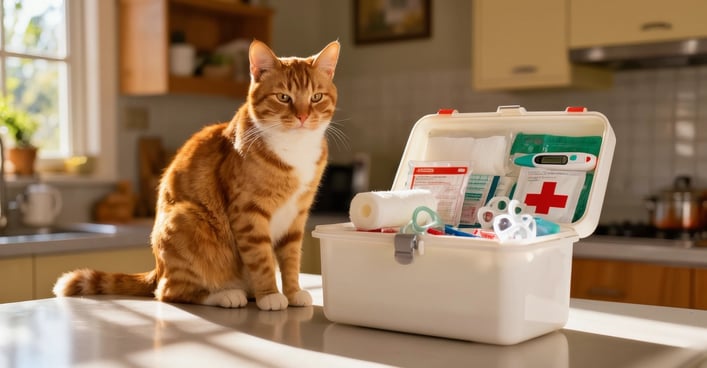
A well-stocked kit is your first line of defense. Keep it in an easily accessible location and check expiration dates biannually.
Diphenhydramine (Benadryl): For allergic reactions (know your cat's correct dosage).
Styptic Powder or Pencil: To stop minor nail bleeding.
Activated Charcoal: For certain poisonings (only use under direct veterinary instruction).
Note on Hydrogen Peroxide: While sometimes used to induce vomiting, only do so under explicit veterinary guidance, as it can be harmful in many situations. Its inclusion in a kit is debated.
Total Estimated Kit Cost: $100 - $200
Critical Emergency Information
Keep this information on your refrigerator and saved in your phone:
Your primary veterinarian's phone number and address.
The phone number and directions to the nearest 24/7 emergency veterinary clinic.
Pet Poison Helpline: (855) 764-7661 (Note: A fee may apply).
Your pet insurance policy number and details.
A recent photo of your cat (for identification).
A copy of your cat's key medical records (vaccinations, chronic conditions).
Transportation Preparedness
Ensure your cat's carrier is always easily accessible, not buried in storage.
Keep old towels or a blanket in your vehicle.
Program the address of your emergency clinic into your GPS.
Practice getting your cat into the carrier calmly.
Assessing Your Cat's Vital Signs
Knowing what's normal helps you recognize what's not.
Normal Feline Vital Ranges
Parameter
Normal Range
Temperature (Rectal)
100.5°F - 102.5°F (38.1°C - 39.2°C)
Heart Rate
140 - 220 beats per minute
Respiratory Rate
20 - 30 breaths per minute (at rest)
Capillary Refill Time (CRT)
1 - 2 seconds
How to Check Vital Signs
Temperature:
Use a digital thermometer with a lubricant (pet-safe or KY jelly).
Gently insert the tip about ½ inch into the rectum.
Hold until it beeps. A temperature above 103°F or below 99°F is an emergency.
Heart Rate:
Place your hand on the left side of the chest, just behind the front elbow.
Count the number of beats in 15 seconds and multiply by 4.
Alternatively, feel for the femoral pulse on the inside of the hind leg.
Respiratory Rate:
Watch your cat's chest or flank rise and fall while they are completely at rest.
Count one breath (in + out) for 15 seconds and multiply by 4.
Capillary Refill Time (CRT):
Lift your cat's lip and press your finger firmly on the gum above a tooth.
Release. The white spot should return to a healthy pink color within 1-2 seconds. Prolonged CRT can indicate shock.
Common Emergencies & First Aid Response
Choking
Signs: Pawing at mouth, gagging, excessive drooling, blue-tinged gums/tongue, panic, inability to breathe.
Action:
Remain calm. Safely open the cat's mouth and look for a visible object.
If visible and easily accessible, carefully remove it with tweezers. Do NOT perform a blind finger sweep.
If not visible or dislodged: For a conscious cat, perform a modified Heimlich maneuver:
Hold the cat with its back against your chest.
Place a fist in the soft hollow just below the ribcage.
Give 3-5 quick, upward thrusts.
Check the mouth again.
Transport to a vet immediately, even if the object is removed, to check for injury.
Poisoning / Toxic Ingestion
Common Cat Toxins: Lilies (all parts), acetaminophen (Tylenol), antifreeze, certain essential oils (tea tree, eucalyptus), rodenticides, human NSAIDs (ibuprofen, naproxen), chocolate, xylitol.
Action:
Call your vet or pet poison control IMMEDIATELY. Time is critical.
Do NOT induce vomiting unless specifically instructed to do so (vomiting can worsen poisoning from caustic substances).
If possible, identify the toxin, estimate the amount ingested, and note the time.
Bring the container or a sample of the substance with you to the vet.
Transport immediately.
Bleeding
External Bleeding:
Apply direct, firm pressure with a clean gauze pad or cloth.
Maintain pressure for a full 5-10 minutes. If blood soaks through, add more layers on top; do not remove the initial dressing.
Once controlled, bandage the wound loosely.
Seek veterinary care for any significant wound.
Internal Bleeding (EMERGENCY):Signs: Pale or white gums, cold extremities, rapid breathing, weakness, distended or painful abdomen, collapse.
Action: Keep the cat as calm and still as possible, wrap in a blanket to maintain body temperature, and transport to an emergency vet immediately.
Burns
Chemical Burns:
Wear gloves. Brush off any dry powder first.
Flush the area copiously with lukewarm water for at least 20 minutes.
Do not apply ointments or creams.
Transport to the vet.
Thermal Burns (from heat):
Gently cool the area with cool (not ice-cold) running water or a cool compress for 10 minutes.
Cover loosely with a clean, non-stick cloth or gauze.
Do not apply ice, butter, or ointments. Do not pop any blisters.
Transport to the vet.
Seizures
During a Seizure:
Do not restrain the cat or put anything in its mouth.
Clear the immediate area of furniture or objects to prevent injury.
Dim the lights and reduce noise.
Time the seizure.
After a Seizure:
Keep the cat warm and in a quiet, safe space as it recovers (post-ictal phase), as it may be disoriented and blind temporarily.
Seek immediate veterinary care if:
It's the cat's first seizure.
The seizure lasts more than 5 minutes (status epilepticus).
Multiple seizures occur in a 24-hour period.
Fractures & Limb Injuries
Signs: Non-weight bearing, limb held at an odd angle, swelling, pain, visible deformity.
Action:
Do not attempt to set or splint the bone unless you are trained.
Minimize movement. Slide the cat onto a rigid surface (like a board or baking sheet) or into a box/carrier.
If there is an open wound, cover it lightly with sterile gauze.
Transport carefully to the vet.
Heatstroke
Signs: Excessive panting, drooling, bright red gums, lethargy, vomiting, collapse, rectal temperature over 104°F.
Action:
Move the cat to a cool, shaded area immediately.
Begin gradual cooling by applying cool (not cold) water to the paw pads, ears, and groin. You can also use a fan.
Offer small amounts of cool water.
Stop cooling when the temperature reaches 103°F to avoid hypothermia.
Transport to the vet immediately, even if the cat seems better, as internal damage can be delayed.
Shock
Shock is a life-threatening condition where the body's organs aren't getting enough blood flow. It can result from trauma, blood loss, severe infection, or allergic reaction.
Signs: Pale or gray gums, rapid heartbeat, weak pulse, rapid shallow breathing, cold extremities, lethargy, collapse.
Action:
Keep the cat calm and still.
Control any visible bleeding.
Wrap the cat in a blanket to conserve body heat.
Position the cat with its head level with or slightly below the body (unless there's difficulty breathing).
This is a dire emergency—transport to a vet immediately.
Safe Restraint for an Injured Cat
Even the gentlest cat may bite or scratch when in pain or fear. Your safety and theirs depends on proper restraint.
The Towel Wrap (Burrito Method)
This is the safest and most effective technique for calming and immobilizing a cat for examination or transport.
Drape a large towel on a flat surface. Place your cat in the center, slightly toward one end.
Firmly wrap one side of the towel over the cat's body and tuck it underneath.
Wrap the other side over, ensuring the cat is snug but not constricted. Tuck the end under.
You can leave the head exposed or loosely cover it if the cat is very agitated.
The Scruff Technique
Use sparingly and only for very brief procedures (like giving a pill). Never carry a cat by the scruff alone.
Grasp the loose skin at the back of the neck firmly.
Always support the cat's full body weight with your other hand/arm.
Release immediately once the task is done.
When to Seek Emergency Veterinary Care
Go IMMEDIATELY for:
Difficulty breathing or choking
Unconsciousness or collapse
Seizures lasting more than 2-3 minutes
Suspected poisoning
Major trauma (hit by car, fall from height)
Profuse or uncontrolled bleeding
Signs of shock (pale gums, rapid breathing, weakness)
Inability to urinate (especially in male cats—a blockage is fatal)
Heatstroke
Protruding eye or severe eye injury
Burns covering a significant area
Suspected broken bone or spinal injury
Schedule a Prompt Veterinary Visit (Within 24 Hours) for:
Minor wounds or lacerations
Mild, intermittent vomiting or diarrhea
Decreased appetite for more than 24 hours
Mild lameness
Eye discharge or squinting
Transporting an Injured Cat
Prepare: Place a towel or blanket in the bottom of the carrier. In cold weather, warm up the car first.
Secure: Gently place the cat in the carrier using the towel wrap method if needed. Secure the carrier in the car with a seatbelt.
Drive: Drive calmly and safely. Avoid sudden stops. Keep the car quiet (turn off loud music).
Communicate: Call the emergency clinic ahead to alert them you're on your way.
At the Clinic: Bring your ID, payment method, and any relevant information (toxin container, medical history).
CPR for Cats (Cardiopulmonary Resuscitation)
Only attempt if the cat is: Unconscious, Not Breathing, and has No Heartbeat.
The Basic Steps (C-A-B):
Check for responsiveness and breathing.
A = Airway: Gently pull the tongue forward and check for obstructions.
B = Breathing: If not breathing, give rescue breaths:
Close the cat's mouth.
Place your mouth over its nose, forming a seal.
Give a gentle breath for 1 second, just enough to make the chest rise. Give 2 breaths.
C = Compressions:
Lay the cat on its right side on a firm surface.
Place one hand over the heart (behind the left elbow).
Compress the chest by ½ to 1 inch, at a rate of 100-120 compressions per minute.
Perform cycles of 30 compressions to 2 breaths.
Continue until the cat revives, you reach veterinary help, or after 20 minutes.
Note: The success rate for CPR in cats is low, but it is worth attempting in a true cardiac arrest while transporting or awaiting help.
Understanding Emergency Costs & Insurance
Being financially prepared is part of responsible pet ownership.
Pet insurance can provide crucial financial support during an unexpected crisis. Plans typically cost $20 - $60 per month and can cover a significant percentage of emergency bills, allowing you to focus on your cat's care rather than cost.
Prevention: The Best Medicine
Cat-Proof Your Home: Secure toxic plants, chemicals, medications, and small objects. Ensure windows have secure screens.
Provide Regular Veterinary Care: Annual wellness exams are essential for early detection of problems. Senior cats (7+) may need biannual check-ups.
Maintain a Healthy Weight: Obesity predisposes cats to numerous health issues.
Keep Identification Current: Ensure your cat is microchipped and wears a collar with an ID tag.
Conclusion
Facing a pet emergency is a terrifying prospect, but knowledge is power. By taking the time now to prepare a first aid kit, learn basic assessment and stabilization techniques, and know the signs that demand immediate veterinary care, you transform fear into capability.
Your calm, informed actions in the first few minutes of a crisis are a priceless gift to your feline companion. Always follow up with a veterinarian after any first aid incident, as hidden complications are common. Stay prepared, stay vigilant, and give your cat the best chance possible.
Disclaimer: This guide is for informational purposes only and is not a substitute for professional veterinary advice, diagnosis, or treatment. Always seek the advice of your veterinarian with any questions you may have regarding your pet's medical condition. In an emergency, contact your veterinarian or an emergency animal hospital immediately.
Get expert advice about cat care, behavior, nutrition, grooming, and training. Ask our AI cat care expert anything about your cat and receive professional guidance.