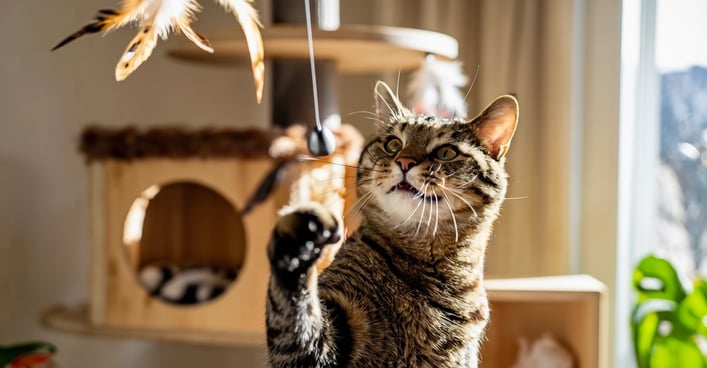
Cat Enrichment for Indoor Cats: The 2026 Complete Activity Guide
Prevent boredom and boost wellbeing with our expert guide to creating a stimulating indoor environment that satisfies your cat's natural instincts.
Share this page
Cat Enrichment for Indoor Cats: The 2026 Complete Activity Guide
By Dr. Patricia Williams, Certified Animal Behaviorist | Updated: 2026 | Reading Time: 16 minutes
Introduction
Indoor cats enjoy significantly longer, healthier lives—averaging 12 to 18 years compared to just 2 to 5 years for outdoor cats. However, a static indoor environment can lead to monotony, resulting in boredom, obesity, stress, and unwanted behaviors.
Effective enrichment satisfies your cat's innate drives to hunt, climb, scratch, and explore, all within the safety of your home. This definitive guide provides actionable strategies to help your indoor cat thrive both physically and mentally.
Observe Weekly: Note which activities and toys your cat prefers.
Track Behavior: Keep a simple log of playtimes and any problematic behaviors.
Rotate Faithfully: The most critical step to preventing boredom is consistent rotation of toys and activities.
Cost Analysis & DIY Solutions
Basic Starter Setup (Estimated)
Cat Tree: $100 - $200
Scratching Posts (2): $50 - $100
Assorted Toys: $50 - $100
Puzzle Feeders (2): $30 - $60
Hiding Places: $20 - $50
Total Initial Investment: ~$250 - $510
Ongoing Monthly Costs
New/Rotating Toys: $10 - $30
Catnip/Silvervine Refills: $5 - $15
Treats for Puzzles: $10 - $20
Replacement Scratchers: $10 - $20
Total Monthly: ~$35 - $85
Maximizing Value with DIY
You can save 50-75% with homemade options:
Scratchers: Cardboard slabs or sisal rope wrapped around a sturdy post.
Puzzles: Toilet paper tubes with folded ends, muffin tins covered with balls.
Toys: Crinkled paper balls, fabric scraps tied to a string, box "castles."
Hiding Places: Strategically arranged boxes and blankets.
Special Considerations
Senior Cats (Ages 11+)
Adjustments: Provide lower climbing options, easier puzzle feeders, more frequent but shorter play sessions, and orthopedic bedding for comfort.
Focus: Maintain mental stimulation while accommodating reduced mobility and potential arthritis.
Kittens
Focus Areas: Critical socialization, teaching appropriate play (redirect from hands to toys), bite inhibition, and safe exploration of the home environment.
Establish positive routines early.
Cats with Special Needs
Visually Impaired: Rely on sound-based toys (crinkles, bells) and keep furniture layout consistent.
Hearing Impaired: Use visual toys (laser pointers with a final tangible reward, wand toys) and be mindful of approaching from within their sightline.
Mobility Impaired: Focus on ground-level enrichment—puzzle feeders, rolling toys, and comfortable resting/hiding spots.
Cognitive Dysfunction: Maintain simple, consistent routines and use familiar, low-stress enrichment.
Conclusion
Environmental enrichment is a non-negotiable component of responsible indoor cat care—it is essential for their physical health and mental wellbeing. By proactively providing for their natural behaviors, you directly prevent boredom, reduce stress, manage weight, and deepen your mutual bond.
The Six Core Principles of Successful Enrichment:
Variety: Rotate toys, puzzles, and experiences regularly.
Access: Provide multiple resources (food, water, litter, scratching) in different locations.
Challenge: Offer puzzles and play at an appropriate difficulty level to engage without frustrating.
Safety: Always supervise with new items and ensure all equipment is secure.
Observation: Be a student of your cat. Their preferences are your best guide.
Consistency: Maintain daily routines for security while weaving in novelty for stimulation.
Begin with simple, cost-effective steps. A cardboard box or a paper bag can provide immense joy. The investment you make in enrichment will be repaid many times over with a happier, healthier, and more harmonious life with your feline companion.
Get expert advice about cat care, behavior, nutrition, grooming, and training. Ask our AI cat care expert anything about your cat and receive professional guidance.