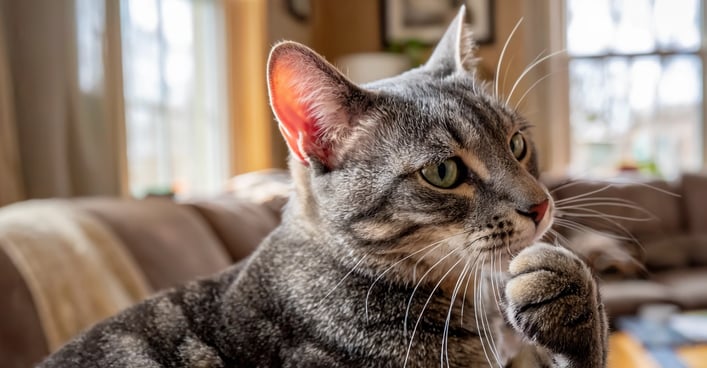
Cat Ear Mites: A Complete 2026 Guide to Treatment, Prevention & Home Care
Learn how to identify, treat, and prevent painful ear mite infestations in cats. Our 2026 guide covers symptoms, vet-recommended treatments, and effective home care strategies.
Share this page
Cat Ear Mites: A Complete 2026 Guide to Treatment, Prevention & Home Care
Ear mites are the leading cause of ear infections in cats, causing intense itching and significant discomfort. These highly contagious microscopic parasites spread easily between pets but are entirely treatable with proper veterinary care. This guide will help you recognize the signs, understand treatment options, and implement effective prevention.
What Are Ear Mites?
Otodectes cynotis, the scientific name for ear mites, are tiny parasitic arachnids that inhabit the ear canals of cats, dogs, and other animals. Barely visible to the naked eye, they feed on ear wax and skin oils, triggering inflammation, severe itching, and potentially serious secondary infections if left untreated.
Lifecycle and Biology
Reproduction Cycle:
Female mites lay eggs within the ear canal.
Eggs hatch into larvae within approximately 4 days.
Larvae develop into reproducing adults over about 21 days.
A distinct, unpleasant odor emanating from the ears.
Redness and inflammation of the ear canal and pinna (ear flap).
Scratches, scabs, or raw skin around the ears.
Hair loss around the ear area from excessive scratching.
Advanced Symptoms (From Untreated Infestations):
Secondary bacterial or yeast infections.
Partial hearing loss from canal blockage.
Aural hematoma (blood-filled swelling of the ear flap) from violent head shaking.
Rare balance problems or head tilt from inner ear involvement.
Differentiating Ear Mites From Other Ear Problems
Symptom
Ear Mites
Yeast Infection
Bacterial Infection
Discharge
Dark, dry, crumbly (coffee grounds)
Brown, waxy, moist
Yellow/green, pus-like
Odor
Mild to moderate
Strong, yeasty, sweet
Foul, pungent
Itching Intensity
Severe, constant
Moderate to severe
Mild to moderate
Ear Canal
Filled with dry debris
Moist, red, inflamed
Swollen, hot, painful
Contagious to Pets
Yes
No
No
Professional Diagnosis
A veterinarian will perform one or more of the following to confirm ear mites:
1. Otoscopic Examination ($25-$50):
Visualizes the ear canal with a lighted scope.
The veterinarian may see tiny white mites moving against the dark debris.
Assesses the eardrum's integrity and the degree of inflammation.
2. Microscopic Examination ($20-$40):
A sample of ear debris is collected with a swab.
Viewed under a microscope to confirm the presence of Otodectes cynotis mites, eggs, or larvae.
Also identifies any concurrent bacterial or yeast infections.
3. Skin Scraping ($25-$45):
Sometimes performed as mites can migrate to the skin around the ears.
Helps rule out other parasitic conditions like mange.
Veterinary Treatment Options for 2026
Prescription Medications (Most Effective)
1. Revolution® (Selamectin)
Type: Topical "spot-on" solution.
Application: Applied to the skin between the shoulder blades.
Frequency: Often a single dose, repeated in 30 days for severe cases.
Effectiveness: Kills ear mites and provides month-long protection against reinfestation.
Pros:
Easy, non-invasive application.
Also prevents fleas, heartworm, roundworms, and hookworms.
No need for messy ear cleaning beforehand.
Cons:
Higher upfront cost than some OTC options.
Requires a veterinary prescription.
Takes a few days to clear an active infestation completely.
Estimated Cost: $15 - $25 per dose.
2. Acarexx® (Ivermectin) Otic Suspension
Type: Prescription-strength ear drops.
Application: Applied directly into the ear canal by a veterinarian.
Frequency: Typically a single treatment is sufficient.
Effectiveness: Kills mites on contact rapidly.
Pros:
Fast-acting and highly effective.
Direct application to the problem site.
Often eliminates the need for prolonged home treatment.
Cons:
Usually administered in-clinic.
Does not treat mites that may have migrated to other body areas.
May need a follow-up if the infestation is severe.
Estimated Cost: $25 - $45 per treatment.
3. Bravecto® (Fluralaner)
Type: Topical solution or oral chewable tablet.
Application: Applied to skin or given orally.
Frequency: Lasts for 12 weeks per dose.
Effectiveness: Provides broad-spectrum parasite protection, including ear mites.
Estimated Cost: $50 - $65 per dose.
Over-the-Counter (OTC) Treatments
Important Note: OTC treatments are generally less reliable than prescription options. They may not kill all life stages (eggs) and often require strict, prolonged application, which can be stressful for the cat.
1. Eradimite® Ear Mite Treatment
Active Ingredient: Pyrethrins.
Application: Daily ear drops for 7-10 days.
Cost: $10 - $15.
Pros: Affordable and readily available.
Cons: Can irritate sensitive ears; inconsistent efficacy.
2. Zymox® Otic with Hydrocortisone
Application: Applied daily for 7-14 days.
Benefits: Enzymatic formula that addresses inflammation and secondary infections.
Cost: $20 - $30.
Pros: Soothes inflammation; no pre-cleaning required.
Cons: Not specifically FDA-approved for mites; effectiveness varies.
Proper Ear Cleaning Protocol
Cleaning is crucial before applying certain medications and for removing debris.
Safe Technique:
Apply a veterinarian-approved ear cleaner into the ear canal.
Gently massage the base of the ear for 20-30 seconds (you'll hear a squishing sound).
Allow your cat to shake its head.
Wipe away loosened debris from the outer ear with a cotton ball or gauze.
Never use cotton swabs (Q-tips) deep in the ear canal, as this can compact debris and damage the eardrum.
Recommended Ear Cleaners:
Zymox Ear Cleanser: $12 - $18
Vet's Best Ear Relief Wash: $8 - $14
Virbac Epi-Otic Advanced: $10 - $16
The 4-Step Comprehensive Treatment Plan
Step 1: Treat ALL Pets in the Household
Every cat, dog, and ferret in the home must be treated simultaneously, even if they show no symptoms. Asymptomatic carriers are common and will cause endless reinfestation cycles.
Step 2: Deep Clean the Environment
Ear mites can live off a host for a limited time. Break the cycle by:
Washing all pet bedding, blankets, and soft toys in hot water.
Thoroughly vacuuming carpets, furniture, and cat trees. Dispose of the vacuum bag immediately.
Wiping down hard surfaces.
Step 3: Schedule a Follow-Up Veterinary Exam
A recheck appointment 2-3 weeks post-treatment is essential to:
Confirm all mites and eggs are eradicated.
Check for and treat any lingering secondary infections.
Ensure the ears are healing properly.
Step 4: Implement Ongoing Prevention
Use a broad-spectrum monthly parasite preventive (like Revolution or Advantage Multi) year-round to prevent future infestations.
Home Care & Support During Treatment
Administering Ear Medications
Warm the medication vial in your hands to room temperature.
Restrain your cat gently; wrapping in a towel ("purrito" style) can help.
Apply the exact number of drops prescribed into the ear canal.
Massage the base of the ear gently.
Allow your cat to shake its head.
Wipe away any excess from the outer ear.
Reward immediately with a high-value treat and praise.
Monitoring Your Cat's Progress
Signs of Improvement (Within 2-7 Days):
Noticeable decrease in scratching and head shaking.
Reduction in dark discharge and odor.
Cat is more comfortable having its ears handled.
Red Flags – Contact Your Vet If:
No improvement after one week of treatment.
Symptoms worsen (increased redness, swelling, or pain).
Blood vessel rupture in the ear flap from violent head shaking.
Surgical repair ($300-$800) or needle aspiration. Left untreated, it causes permanent "cauliflower ear."
Chronic Otitis/Hearing Loss
Long-term inflammation and debris blockage can damage the ear canal and eardrum.
Requires aggressive long-term management. Hearing loss is often reversible if treated promptly.
Cost Analysis of Ear Mite Treatment (2026 Estimates)
Typical Treatment Scenarios
Scenario
Estimated Cost Range
Simple case (one cat, diagnosis + prescription)
$75 - $200
Multi-pet household treatment
$150 - $400+
Case with secondary infection
$200 - $500
Case requiring aural hematoma surgery
$500 - $1,200
Annual preventive medication (per cat)
$180 - $300
Cost Breakdown
Veterinary Exam & Diagnosis: $50 - $100
Prescription Medication: $15 - $65
Ear Cleaner & Supplies: $10 - $20
Follow-up Recheck Exam: $40 - $80
E-collar (if needed): $10 - $30
Proactive Prevention Strategies
1. Consistent Parasite Prevention
This is the most effective strategy. Use a veterinarian-recommended monthly product that protects against ear mites, such as:
Revolution Plus® (Selamectin/Sarolaner)
Advantage Multi® (Imidacloprid/Moxidectin)
Bravecto® (Fluralaner) – lasts 12 weeks.
2. Environmental Management
Wash bedding weekly.
Vacuum high-traffic pet areas frequently.
Quarantine and vet-check all new pets before introducing them to resident animals.
3. Regular Monitoring
Make a quick weekly ear check part of your grooming routine. Look for redness, odor, or debris.
Note any changes in behavior, like increased scratching.
Special Considerations
Kittens: Very susceptible, often infected by their mother. Use only veterinarian-prescribed, age-appropriate treatments (e.g., Revolution is safe for kittens over 6 weeks).
Multi-Cat Homes/Shelters: The ultimate challenge. Treat every animal simultaneously and maintain strict environmental cleaning and monthly prevention for all.
Outdoor Cats: At highest risk. Non-negotiable monthly prevention is required.
When to Seek Veterinary Care
Schedule a Prompt Appointment If You Observe:
Any ear scratching or head shaking lasting more than a day.
Visible dark discharge or foul odor.
Signs of ear pain (flinching, yelping).
Seek Emergency Care For:
A suddenly swollen, puffy ear flap (aural hematoma).
Severe head tilt, loss of balance, or circling.
Obvious extreme pain or bleeding from the ear.
A Note on Natural/Home Remedies
While some owners explore options like mineral oil, apple cider vinegar, or diatomaceous earth, these are not recommended as primary treatments in 2026. They lack proven, consistent efficacy, can irritate the delicate ear canal, and often prolong the cat's suffering, allowing complications to develop. Always consult your veterinarian before trying any alternative remedy.
Conclusion
Ear mite infestations are a common but manageable problem for cat owners. With today's effective single-dose prescription treatments, relief can be swift. The cornerstone of success is a comprehensive approach: accurate veterinary diagnosis, treatment of all household pets, thorough environmental cleaning, and consistent monthly preventive care.
By incorporating regular ear checks into your grooming routine and acting quickly at the first sign of trouble, you can keep your feline friend comfortable, healthy, and free from these pesky parasites. When in doubt, your veterinarian is your best partner in ensuring your cat's ear health.
Get expert advice about cat care, behavior, nutrition, grooming, and training. Ask our AI cat care expert anything about your cat and receive professional guidance.