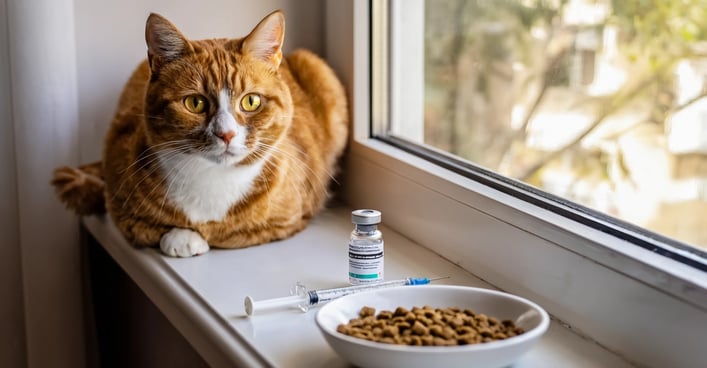
Cat Diabetes: The Complete Guide to Symptoms, Treatment, and Management
Learn to recognize, treat, and manage feline diabetes. This guide covers symptoms, insulin therapy, diet, costs, and how to help your cat achieve remission.
Share this page
Cat Diabetes: The Complete Guide to Symptoms, Treatment, and Management
By Dr. Sarah Mitchell, DVM | Published: January 19, 2026 | Reading Time: 18 minutes
Introduction
Diabetes mellitus is a prevalent endocrine disorder in cats, affecting approximately 1 in 200 felines. With dedicated management, many diabetic cats can lead happy, healthy lives—and some may even achieve remission. Early detection and a thorough understanding of the condition are crucial for effective long-term care.
This comprehensive guide provides everything you need to know about feline diabetes, from identifying early warning signs to implementing daily management strategies.
What is Feline Diabetes?
Understanding the Condition
Cats almost exclusively develop Type II diabetes (similar to adult-onset diabetes in humans). This condition involves either insufficient insulin production by the pancreas or the body's cells becoming resistant to insulin's effects.
Insulin's Role:
Insulin is a vital hormone produced by the pancreas. It acts as a key, allowing glucose (sugar) from the bloodstream to enter cells and be used for energy. When this process fails, blood glucose levels rise to dangerous levels.
Key Differences from Human Diabetes:
Cats develop Type II diabetes almost exclusively.
Achieving remission is a realistic goal for many cats, unlike in humans.
Management protocols, including diet and monitoring, are specifically tailored for felines.
Stress can have a more pronounced impact on a cat's blood glucose levels.
Causes and Risk Factors
Primary Risk Factors
Obesity:
The single greatest risk factor for feline diabetes.
Overweight cats are four times more likely to develop the condition.
Excess fat cells produce hormones that can interfere with insulin function.
Age:
Most commonly diagnosed in cats aged 8 years and older.
Peak incidence occurs between 10-13 years of age.
Rarely seen in cats under 5 years old.
Gender:
Male cats are more susceptible.
Neutered males represent the highest-risk group.
Females can develop diabetes but do so less commonly.
Breed Predisposition:
Breed
Risk Level
Burmese
High
Norwegian Forest Cat
High
Russian Blue
High
Domestic Shorthair
Moderate
Siamese
Moderate
Contributing Factors
Physical Inactivity:
Indoor-only lifestyle with limited stimulation.
Lack of regular exercise.
Strongly correlated with obesity.
Diet:
High-carbohydrate dry food diets.
Free-feeding (constant food availability).
Excessive calorie intake.
Medications:
Long-term corticosteroid use.
Progestagens.
Certain diuretics.
Pancreatic Disease:
Chronic pancreatitis.
Pancreatic inflammation.
Previous pancreatic damage.
Recognizing Symptoms
Early Signs (Stage 1)
The Four Classic Signs:
Increased Thirst (Polydipsia)
Drinking from the bowl more frequently.
Seeking out alternative water sources (taps, showers).
Water bowls emptying faster than usual.
Increased Urination (Polyuria)
Larger, heavier clumps in the litter box.
More frequent trips to the litter box.
Possible accidents outside the box due to urgency.
Increased Appetite (Polyphagia)
Ravenous hunger, even shortly after eating.
Increased begging or vocalizing for food.
Eating meals much faster than usual.
Unexplained Weight Loss
Occurs despite a normal or increased appetite.
Gradual but noticeable over weeks.
Muscle wasting may be visible in advanced cases.
Progressive Symptoms (Stage 2)
As the Condition Worsens:
Lethargy: Noticeable decrease in activity and playfulness.
Poor Coat Condition: Fur becomes dull, dry, and unkempt.
Weakness: Particularly evident in the hind legs.
Dehydration: Signs include skin tenting and sunken eyes.
Vomiting: May become intermittent or chronic.
Emergency Symptoms (Diabetic Crisis)
Seek Immediate Veterinary Care if You Observe:
Diabetic Ketoacidosis (DKA):
Severe lethargy progressing to collapse or unconsciousness.
Extreme dehydration.
Sweet or fruity odor on the breath.
Rapid, labored breathing.
Vomiting and/or diarrhea.
Diagnosis Process
Blood Tests
Blood Glucose Test:
Normal Range: 80-120 mg/dL.
Diabetic Range: Typically >200-250 mg/dL when fasting.
Note: Stress can cause temporary elevation (stress hyperglycemia).
Approximate Cost: $30-50.
Fructosamine Test:
Measures average blood glucose levels over the preceding 2-3 weeks.
Not affected by short-term stress.
Used to confirm a diabetes diagnosis.
Approximate Cost: $50-80.
Complete Blood Count (CBC):
Identifies underlying infections or inflammation.
Detects anemia.
Approximate Cost: $40-70.
Chemistry Panel:
Assesses kidney function (BUN, creatinine).
Evaluates liver enzymes.
Checks electrolyte balance.
Approximate Cost: $70-120.
Urine Tests
Urinalysis:
Detects glucose spillage into urine (glycosuria).
Identifies ketones, an indicator of Diabetic Ketoacidosis (DKA).
Checks for urinary tract infections, which are common in diabetic cats.
Approximate Cost: $25-45.
Urine Culture:
Rules out or confirms a bacterial urinary tract infection.
Approximate Cost: $40-80.
Total Diagnostic Cost
Initial Diagnosis Workup: $250 - $500.
If DKA is Present (Requiring Hospitalization): $1,000 - $3,000+.
Treatment Options
Insulin Therapy
Most Common Insulin Types for Cats:
Insulin Type
Duration
Approximate Cost/Month
Glargine (Lantus)
12-18 hours
$200 - $350
Detemir (Levemir)
12-16 hours
$250 - $400
ProZinc (PZI)
10-14 hours
$100 - $150
NPH
6-8 hours
$50 - $80
Administration:
Typically given via twice-daily subcutaneous injections.
Injected under the skin, usually at the scruff or along the back.
Ideally administered concurrently with meals.
Most owners can be trained to perform injections comfortably at home.
Dietary Management
Dietary Goals:
Low carbohydrate content (<10% of dry matter).
High-quality, high-protein formulation.
Moderate fat levels.
Consistent, measured feeding schedule (no free-feeding).
Recommended Food Types:
Canned/Pate (Best Choice):
Fancy Feast Classic Pate (several flavors are low-carb).
Friskies Pate varieties.
Weruva.
Tiki Cat.
Royal Canin Glycobalance (prescription).
Veterinary Prescription Diets:
Hill's Prescription Diet m/d.
Royal Canin Glycobalance.
Purina Pro Plan Veterinary Diets DM.
Cost: Approximately $2 - $4 per can.
Foods to Avoid:
Most dry kibble (typically high in carbohydrates).
Semi-moist foods (often contain high sugar content).
Treats with significant carbohydrate content.
Monitoring at Home
Blood Glucose Curves:
Blood glucose is tested every 2-4 hours over a 12-hour period.
Requires a pet-specific glucometer.
Establishes the effectiveness and duration of the insulin dose.
Performed weekly initially, then monthly once stable.
Glucometer Options:
Meter
Approximate Cost
Test Strips (50ct)
AlphaTRAK 2
$50 - $70
$40 - $60
PetTest
$30 - $50
$30 - $40
Human meter (e.g., OneTouch)
$20 - $40
$25 - $35
Urine Glucose Monitoring:
Less accurate than blood testing but can be a useful screening tool.
Uses Keto-Diastix strips to detect both glucose and ketones.
Approximate Cost: $10 - $15 for a container of strips.
Achieving Remission
What is Remission?
Definition:
Maintaining normal blood glucose levels without the need for insulin therapy.
An achievable goal for 25-50% of diabetic cats.
Most likely to occur within the first 6 months of intensive treatment.
Requires strict adherence to diet and monitoring protocols.
Factors Affecting Remission
Positive Factors:
Early diagnosis and prompt intervention.
Immediate transition to a strict low-carbohydrate diet.
Use of appropriate long-acting insulin types (glargine/detemir).
Achieving and maintaining tight glucose control.
Weight loss in obese cats.
No history of long-term insulin use prior to diagnosis.
Negative Factors:
Long-standing, untreated diabetes.
Previous prolonged insulin therapy.
Presence of concurrent diseases (e.g., chronic kidney disease).
Persistent obesity.
Continued feeding of a high-carbohydrate diet.
Maintaining Remission
Critical Requirements:
Lifelong commitment to a low-carbohydrate diet.
Maintenance of a healthy, lean body weight.
Regular at-home and veterinary monitoring.
Proactive stress reduction in the home environment.
Annual or bi-annual blood glucose checks.
Cost Analysis
Monthly Management Costs
Insulin & Supplies:
Glargine/Lantus: $200 - $350
ProZinc: $100 - $150
Insulin Syringes: $20 - $30
Monitoring Supplies:
Glucose Test Strips: $40 - $80
Lancets: $10 - $20
Routine Vet Visits/Curves: $50 - $200
Diet:
High-quality canned food: $60 - $120
Prescription diabetic diet: $100 - $200
Total Estimated Monthly Cost:
Using Glargine: $430 - $980
Using ProZinc: $330 - $680
Annual Costs
Stable Diabetic Cat: $5,000 - $12,000 per year.
Newly Diagnosed (First Year): $7,000 - $15,000 (includes initial diagnostics and stabilization).
Cat in Remission: $1,000 - $2,000 per year (primarily for diet and monitoring).
Complications and Management
Hypoglycemia (Low Blood Sugar)
Symptoms:
Weakness, wobbliness, or collapse.
Trembling or muscle twitching.
Disorientation or confusion.
Seizures.
Unconsciousness or coma.
Emergency Treatment:
Immediately rub a small amount of corn syrup, honey, or maple syrup on the gums.
Call your veterinarian or emergency clinic.
Offer a small meal if the cat is conscious and able to swallow safely.
Never skip scheduled follow-up monitoring after an episode.
Diabetic Neuropathy
Description:
Nerve damage caused by prolonged high blood glucose levels.
Primarily affects the hind legs.
Causes weakness and a characteristic "plantigrade stance" where the cat walks on its hocks.
Management:
Achieving and maintaining tighter long-term glucose control.
Supplementation with Methylcobalamin (active B12).
Supportive physical therapy.
Often reversible with improved diabetic regulation.
Recurrent Infections
Common Issues:
Urinary tract infections (UTIs).
Skin infections.
Dental disease (gingivitis/stomatitis).
Slower wound healing.
Living with a Diabetic Cat
Daily Schedule Example
Morning (e.g., 7 AM):
Test blood glucose (if recommended by your vet).
Administer insulin injection.
Feed measured breakfast immediately after.
Evening (e.g., 7 PM):
Test blood glucose.
Administer insulin injection.
Feed measured dinner.
Weekly Tasks:
Record your cat's weight.
Check for any recurrence of classic symptoms.
Review the glucose log with your veterinarian if needed.
Monthly Tasks:
Schedule a veterinary check-up or glucose curve.
Analyze curve results with your vet.
Adjust insulin dosage if necessary.
Travel Considerations
Boarding:
Seek facilities with specific experience caring for diabetic pets.
Provide extremely detailed written instructions.
Supply all medication, food, and equipment with extras.
Leave clear emergency contact information.
Pet Sitters:
Conduct thorough, hands-on training sessions.
Provide step-by-step written instructions.
Share your veterinarian's and emergency clinic's contact details.
Demonstrate the injection technique and have them practice.
Prevention Strategies
For At-Risk Cats
Weight Management:
Maintain an ideal body weight from kittenhood through adulthood.
Schedule regular weigh-ins at home or the vet.
Practice strict portion control.
Feed a species-appropriate, low-carbohydrate diet.
Exercise & Enrichment:
Engage in daily interactive play sessions.
Provide environmental enrichment (cat trees, puzzle feeders, window perches).
Utilize vertical space.
Rotate toys to maintain interest.
Regular Veterinary Monitoring:
Annual senior wellness blood work for cats over 7 years old.
Regular weight checks and body condition scoring.
Consider periodic urine monitoring in high-risk breeds.
Early intervention at the first sign of weight gain or other changes.
When to Consider Quality of Life
Difficult Decisions
Considerations for Pet Parents:
Long-term financial sustainability of treatment.
The cat's overall stress level and happiness.
The individual's response to treatment.
Development of severe complications.
Presence of other debilitating concurrent diseases.
Potential Indicators for Euthanasia Discussion:
Diabetes is unresponsive to treatment despite best efforts.
Frequent, stressful emergency hospitalizations are required.
The cat appears to be suffering despite dedicated care.
The owner is physically or emotionally unable to continue the intensive management regimen.
Conclusion
Feline diabetes is a serious but highly manageable chronic condition. Through early detection, appropriate insulin therapy, a strict low-carbohydrate diet, and diligent at-home monitoring, many diabetic cats not only live comfortably but can also achieve remission and enjoy a normal lifespan.
The commitment—both financial (typically $5,000-$12,000 annually for a stable cat) and temporal—is significant. However, for devoted owners, the reward of successfully managing their cat's health and witnessing their improved quality of life is profoundly worthwhile.
Collaborate closely with a veterinarian experienced in feline diabetes, seek support from online communities of diabetic cat owners, and remain dedicated to the daily routine. With proper care, your diabetic cat can thrive for many happy years to come.
Get expert advice about cat care, behavior, nutrition, grooming, and training. Ask our AI cat care expert anything about your cat and receive professional guidance.