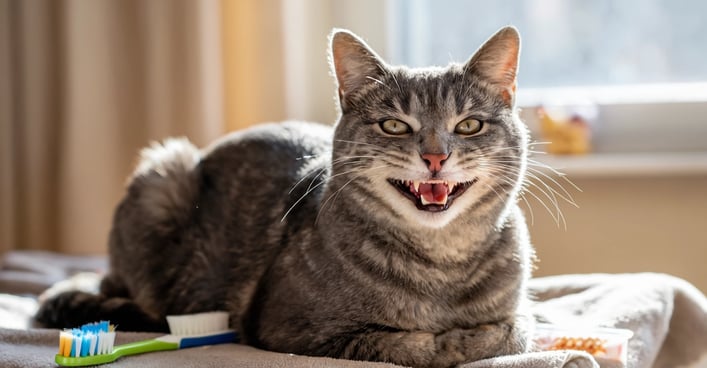
Cat Dental Disease: Your 2026 Guide to Prevention and Treatment
Learn how to protect your cat from painful dental disease. This guide covers early signs, professional treatments, and effective home care strategies for a healthier feline smile.
Share this page
Cat Dental Disease: Your 2026 Guide to Prevention and Treatment
By Dr. Patricia Williams, Veterinary Dentist | Updated: 2026 | Reading Time: 16 minutes
Introduction
Dental disease is the most prevalent health issue affecting cats, with studies showing approximately 70% of felines develop it by age three. Despite its commonality, many cat owners overlook oral health until severe, painful symptoms emerge. Untreated dental disease causes chronic discomfort, leads to tooth loss, and can trigger systemic health problems as bacteria enter the bloodstream, potentially damaging vital organs like the heart and kidneys.
This definitive guide provides cat owners with a clear understanding of feline dental disease, empowering you with knowledge on prevention, early detection, and modern treatment options to ensure your cat's long-term comfort and health.
A painful condition unique to cats where the tooth structure is dissolved by the body's own cells.
Often starts at the gum line and can affect the entire tooth.
Estimates suggest it impacts 30-70% of cats.
Stomatitis:
A severe, debilitating inflammation of the entire oral mucosa (gums, cheeks, tongue).
Believed to be an immune-mediated overreaction to dental plaque.
Extremely painful and challenging to manage.
Types of Feline Dental Disease
1. Gingivitis (Stage 1 Periodontal Disease)
Inflammation confined to the gum tissue (gingiva).
Symptoms include red, swollen gums that may bleed easily.
This stage is reversible with professional cleaning and consistent home care.
2. Periodontitis (Stages 2-4)
Inflammation progresses to destroy the supporting bone and ligaments.
Characterized by periodontal pockets (spaces between tooth and gum), bone loss, and tooth mobility.
The damage is irreversible, but progression can be halted with treatment.
3. Tooth Resorption (FORL)
Type 1: Inflammatory resorption associated with periodontal disease.
Type 2: Replacement resorption, where the tooth is gradually replaced by bone.
Type 3: A combination of both Type 1 and Type 2.
All types are painful and often require tooth extraction.
4. Feline Chronic Gingivostomatitis (FCGS)
A severe, specific form of stomatitis causing intense inflammation of the gums and oral lining.
Considered a profound immune system overreaction.
Causes significant pain, often leading to difficulty eating.
Recognizing Dental Problems in Your Cat
Subtle Early Warning Signs
Behavioral Changes During Meals:
Reluctance to eat dry or hard food.
A sudden preference for soft/wet food.
Chewing on only one side of the mouth.
Dropping food while eating.
Taking longer to finish meals.
Visible Oral Signs:
Halitosis (bad breath) - Often the first noticeable sign.
Red, swollen, or bleeding gums (gingivitis).
Excessive drooling or pawing at the mouth.
Visible yellow or brown tartar buildup on teeth.
Advanced Symptoms Requiring Immediate Attention
Physical & Systemic Signs:
Unexplained weight loss.
Decline in self-grooming, leading to a unkempt coat.
Swelling on the face or under the eye.
Nasal discharge or sneezing (from oral-nasal fistula).
Increased irritability or hiding.
Severe Cases Indicating Emergency Care:
Complete refusal to eat or drink.
Lethargy and depression.
Signs of dehydration.
Severe weight loss and systemic illness.
Professional Dental Care: What to Expect
Veterinary Dental Examination
A proper diagnosis requires more than a visual check. A Comprehensive Oral Health Assessment (COHA) includes:
Awake visual exam.
Anesthetized oral exam with probing to measure gum pockets.
Full-mouth dental radiographs (X-rays) - Essential, as 60% of a tooth and its disease lie below the gum line.
Detailed dental charting.
Cost for initial awake exam: $50 - $150
Professional Dental Cleaning (COHAT)
A Comprehensive Oral Health Assessment and Treatment (COHAT) is the standard of care and requires general anesthesia for safety and thoroughness.
1. Pre-Anesthetic Workup:
Blood tests (CBC, chemistry panel) to assess organ function.
Possibly urinalysis or chest X-rays for senior cats.
Cost: $150 - $300
2. Anesthesia & Monitoring:
Modern protocols are very safe with IV fluids and multi-parameter monitoring (heart rate, oxygen, blood pressure, temperature).
Cost: Typically bundled into the procedure fee.
3. The Cleaning & Polishing Procedure:
Scaling: Ultrasonic and hand instruments remove tartar above and below the gum line.
Polishing: Smooths enamel to slow future plaque adhesion.
Cost: $300 - $600
4. Dental Radiographs (X-rays):
Non-negotiable for a complete assessment. Reveals hidden problems like resorptive lesions, abscesses, and bone loss.
Cost: $150 - $300
Total Professional Dental Cost Estimates (2026)
Basic Cleaning & Exam: $500 - $900
Cleaning with Radiographs: $700 - $1,200
Cleaning with Extractions: $1,200 - $3,000+
(Costs vary significantly by geographic location and case complexity.)
Treatment Options for Dental Disease
Non-Surgical Treatments
Professional Dental Cleaning (COHAT): The cornerstone treatment for gingivitis and early periodontitis.
Antibiotic Therapy: Used to control active infection before or after dental procedures (e.g., Clindamycin). Cost: $20 - $50.
Pain Management: Crucial for comfort. Options include buprenorphine, veterinarian-prescribed NSAIDs (like meloxicam), or gabapentin. Cost: $20 - $60.
Surgical Treatments
Tooth Extractions are often necessary for advanced disease:
Simple Extraction: For single-rooted teeth. Cost: $50 - $150 per tooth.
Surgical Extraction: For multi-rooted teeth, requiring gum flaps and bone removal. Cost: $150 - $400 per tooth.
Canine Tooth Extraction: Most complex due to long roots. Cost: $200 - $500 per tooth.
Full-Mouth Extraction: A treatment of last resort for severe stomatitis, often providing immense relief. Cost: $2,000 - $4,000.
Advanced & Specialized Treatments
Root Canal Therapy: Preserves strategic teeth (like canines) by removing infected pulp. Performed by a veterinary dentist. Cost: $800 - $1,500 per tooth.
Crown Therapy: Placed after a root canal to protect the remaining tooth structure. Cost: $1,000 - $2,000 per tooth.
FCGS Management: May involve full or partial extractions, immunosuppressive drugs (e.g., cyclosporine), or laser therapy. Cost: $2,000 - $5,000+.
Home Dental Care: Your Daily Defense
Daily Tooth Brushing (The Gold Standard)
Getting Started Successfully:
Use only cat-specific toothpaste (never human toothpaste, which contains toxic xylitol).
Start by letting your cat taste the toothpaste, then gently rub their gums with your finger or gauze.
Gradually introduce a soft-bristled cat toothbrush or finger brush.
Keep sessions short (5-10 seconds initially) and positive with praise and treats.
Aim for daily brushing, focusing on the outer surfaces of the teeth.
Recommended Starter Products:
Product
Type
Key Benefit
Approx. Cost
Virbac C.E.T. Enzymatic Toothpaste
Toothpaste
Dual-enzyme system, poultry flavor
$8 - $12
Petrodex Dental Care Kit
Toothpaste & Brush
Includes brush, malt flavor
$10 - $15
Cat Finger Toothbrush
Brush
Offers control for nervous cats
$3 - $5
Alternatives to Brushing
For cats who resist brushing, these adjuncts can help:
Dental Wipes/Gels: Chlorhexidine wipes or enzymatic gels applied to the teeth/gums. Monthly Cost: $10 - $20.
VOHC-Accepted Dental Diets: Prescription (e.g., Hill's t/d, Royal Canin Dental) or over-the-counter foods with a specific kibble texture that cleans teeth. Monthly Cost: $30 - $60.
VOHC-Accepted Dental Treats: Such as Greenies Feline or Purina DentaLife. Must be given daily as directed. Monthly Cost: $15 - $40.
Water Additives: Like Virbac C.E.T. Aquadent. Easy to use but offer a modest benefit best combined with other methods. Monthly Cost: $10 - $20.
(VOHC = Veterinary Oral Health Council, which validates product claims.)
Proactive Prevention Strategies
Start Early: Kitten Dental Care
Gently handle your kitten's mouth weekly to build comfort.
Introduce tooth brushing as a positive routine during kittenhood.
Feed a balanced diet appropriate for growth.
Schedule early veterinary wellness exams that include oral checks.
Adult Cat Maintenance Schedule
Daily: Brushing (ideal) or providing a dental care product (treat/diet).
Weekly: Quick oral check for bad breath, red gums, or visible tartar.
Annually/Bi-Annually: Professional veterinary oral examination. Your vet will recommend cleaning frequency (often every 1-2 years) based on your cat's individual needs.
Special Considerations for High-Risk Cats
Brachycephalic Breeds (Persian, Himalayan, etc.): Crowded teeth due to short jaws require more diligent care and often more frequent professional cleanings.
The Bottom Line: Investing in prevention saves money over your cat's lifetime and, more importantly, spares them from pain and systemic illness.
When to Seek Veterinary Care
Seek Immediate Emergency Care If Your Cat Shows:
Sudden facial swelling.
Profuse bleeding from the mouth.
Complete refusal to eat or drink for 24+ hours.
Obvious difficulty breathing.
Signs of severe pain (vocalizing, aggression when touched near face).
Schedule a Non-Emergency Veterinary Appointment If You Notice:
Persistent bad breath.
Reduced appetite or change in eating habits.
Excessive drooling.
Pawing at the mouth or face.
Visible tartar buildup or red gums.
Conclusion
Feline dental disease is a pervasive but largely preventable condition. A proactive partnership between you and your veterinarian—combining regular professional care with consistent, daily home maintenance—is the key to preserving your cat's oral health, comfort, and overall well-being.
The modest monthly investment in prevention (roughly the cost of a specialty coffee) pales in comparison to the financial and emotional cost of managing advanced disease and the silent suffering it causes. Begin dental care routines early, stay vigilant for subtle signs, and never underestimate the power of a healthy mouth for a happier, longer life with your feline companion.
Get expert advice about cat care, behavior, nutrition, grooming, and training. Ask our AI cat care expert anything about your cat and receive professional guidance.