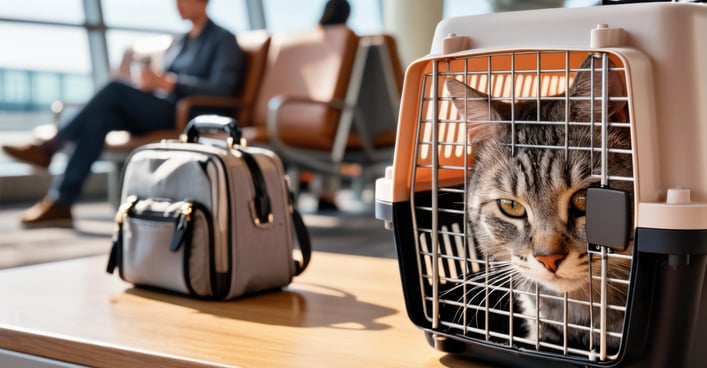
Cat Carriers for Air Travel: Your 2026 Guide to Airline-Approved Options
Navigate airline pet policies and choose the perfect carrier for safe, stress-free air travel with your cat. Our 2026 guide covers top picks, essential features, and expert preparation tips.
Share this page
Cat Carriers for Air Travel: Your 2026 Guide to Airline-Approved Options
Air travel with your feline companion demands meticulous preparation, starting with the right carrier. Airlines enforce strict pet carrier requirements, and selecting a non-compliant option can lead to denied boarding. This definitive guide for 2026 provides everything you need to know about choosing, using, and preparing an airline-approved cat carrier for a safe and comfortable journey.
Understanding Airline Pet Policies
In-Cabin vs. Cargo Travel
In-Cabin Travel (Strongly Recommended for Cats):
Your cat travels in a carrier under the seat in front of you.
You can monitor and comfort your pet throughout the flight.
The cabin is climate-controlled and less stressful.
Strict size and weight restrictions apply.
Fees typically range from $95 to $200 each way.
Availability is limited; book your pet's spot early.
Cargo Travel (Considered a Last Resort):
Your cat travels in the temperature-controlled cargo hold.
Larger carriers are permitted, but the experience is significantly more stressful.
More restrictions apply and it's not available on all airlines.
Generally not recommended for cats due to the higher anxiety and risk involved.
Crucial Reminder: Airline policies are subject to change. Always verify the most current requirements directly with your airline before your travel date.
Types of Airline-Approved Carriers
Soft-Sided Carriers (Highly Recommended for In-Cabin)
Advantages:
Slightly compressible to fit under most airline seats.
Lighter weight and easier to carry.
Often more comfortable and less intimidating for cats.
Store compactly when not in use.
Key Requirements:
Waterproof, leak-proof bottom.
Adequate ventilation on at least three sides.
Secure, locking zipper closures.
Padded interior for comfort.
Hard-Sided Carriers
Advantages:
Provides more rigid protection and structure.
Generally easier to clean and disinfect.
Can be reassuring for nervous cats who prefer a solid enclosure.
Disadvantages:
Lack compressibility, making under-seat fit difficult.
Heavier and less comfortable to carry through terminals.
Often rejected for in-cabin travel.
Best Suited For:
Cargo travel (if absolutely necessary).
Primarily car travel.
Cats prone to damaging soft-sided materials.
Top Airline-Approved Carrier Reviews for 2026
1. Sleepypod Air
Price: $165–$195
Dimensions: 22" x 10.5" x 10" (compresses to 16" x 10" x 8")
Premium, durable materials with machine-washable bedding.
Includes seatbelt loops for secure car travel.
Pros:
Superior quality and safety features.
Excellent comfort for your cat.
Highly durable for frequent travelers.
Cons:
Premium price point.
May still be tight under some airline seats.
Heavier than other soft-sided options.
Airline Compatibility: Excellent with most major airlines.
Rating: 4.8/5
2. Sherpa Original Deluxe
Price: $35–$65
Dimensions: Small (15"x10"x8.5"), Medium (17"x11"x10.5"), Large (19"x11.5"x11")
Features:
Renowned "Guaranteed on Board" program with major airlines.
Excellent multi-side ventilation and a comfortable faux lambskin liner.
Adjustable shoulder strap for easy carrying.
Pros:
Excellent value and wide acceptance.
Multiple sizes to fit different cats.
Good balance of comfort and affordability.
Cons:
Not as durable as premium brands over many trips.
Zipper quality can be inconsistent.
Airline Compatibility: Excellent across most airlines.
Rating: 4.5/5
3. Petmate Sky Kennel
Price: $30–$80
Dimensions: Multiple sizes (e.g., Small: 21" x 16" x 15")
Features:
Hard-sided, heavy-duty construction built for security.
360-degree ventilation and secure wing-nut assembly.
IATA-compliant for cargo travel; includes "Live Animal" stickers.
Pros:
Extremely secure and durable.
Ideal for necessary cargo travel.
Excellent ventilation.
Cons:
Heavy and bulky; not ideal for in-cabin use.
Requires assembly.
Airline Compatibility: The standard for cargo; limited for in-cabin.
Rating: 4.4/5
4. AmazonBasics Soft-Sided Pet Travel Carrier
Price: $20–$35
Dimensions: Large: 19.7" x 10.2" x 11.2"
Features:
Exceptional budget-friendly option.
Soft-sided with a rigid base and multiple entry points.
Includes fleece bedding and adjustable straps.
Pros:
Unbeatable price for decent quality.
Generally accepted by most domestic airlines.
Cons:
Less durable for frequent use.
Basic construction with limited padding.
Airline Compatibility: Good for most domestic airlines.
Rating: 4.0/5
5. SturdiBag Pet Carrier
Price: $70–$100
Dimensions: Multiple sizes (e.g., Large: 18" x 12" x 12")
Features:
Signature flexible height design for guaranteed under-seat fit.
Extremely durable construction and machine-washable liner.
Made in the USA with reliable customer service.
Pros:
The flexible height is a game-changer for compliance.
Built to last for many journeys.
Cons:
Pricier than mid-range options.
Utilitarian design over aesthetics.
Airline Compatibility: Excellent.
Rating: 4.6/5
How to Choose the Right Carrier
Based on Your Cat's Size
Small Cats (under 8 lbs): Most carriers work well (Sherpa Small, Sleepypod Air).
Medium Cats (8–12 lbs): Focus on medium/large soft-sided carriers (Sherpa Medium, SturdiBag Large).
Large Cats (12+ lbs): Carefully check airline dimensions for Sherpa Large or SturdiBag Large. In-cabin may not be feasible; cargo is a last resort.
Based on Travel Frequency
Frequent Flyers: Invest in a premium, durable carrier (Sleepypod Air, SturdiBag).
Occasional Travelers: A reliable mid-range option is sufficient (Sherpa Original Deluxe).
One-Time/Emergency Trip: A budget carrier is acceptable (AmazonBasics).
Based on Your Cat's Temperament
Nervous/Shy Cats: Choose enclosed, den-like carriers (Sleepypod). Carrier training is essential.
Confident Cats: Most well-ventilated carriers are suitable.
Carrier-Hating Cats: Prioritize training and positive associations. Consider calming aids (consult your vet).
Essential Features Checklist
Airline Compliance:
Confirmed fit for your airline's under-seat dimensions.
Ventilation on at least three sides.
Secure, locking closures (zippers, clips).
Waterproof, leak-proof bottom.
No external wheels (typically prohibited).
Safety & Security:
Interior leash clip or tether.
Sturdy construction with a rigid base.
No loose parts or toxic materials.
Cat Comfort & Practicality:
Soft, removable/washable bedding.
Enough space for your cat to stand, turn, and lie down.
Easy to carry (padded straps, multiple handles).
Easy to clean interior.
Storage pocket for documents and treats.
Preparing for Air Travel: A Timeline
4–6 Weeks Before Departure
Carrier Training: Leave the carrier out with the door open. Feed meals and place treats inside to create positive associations. Practice short car rides.
Veterinary Visit: Schedule an appointment to obtain a health certificate (usually required within 10 days of travel). Ensure vaccinations are current and discuss travel anxiety (sedation is rarely advised).
1 Week Before Departure
Finalize Logistics: Confirm your pet's reservation with the airline. Gather all documentation (health certificate, vaccine records).
Pack a Travel Kit: Include absorbent pads, wet wipes, plastic bags, a harness/leash, a small amount of food, a collapsible bowl, and a recent photo of your cat.
Day of Travel
Pre-Flight: Offer a light meal 4+ hours before. Provide exercise and a final bathroom break. Line the carrier with an absorbent pad.
At the Airport: Arrive early. At security, you will need to remove your cat from the carrier (harness and leash on!) and carry them through the metal detector while the empty carrier goes through the X-ray. You can request a private screening room.
Cost Analysis
Carrier Investment
Category
Price Range
Example Brands
Budget
$20 – $40
AmazonBasics, Basic Sherpa
Mid-Range
$40 – $80
Sherpa Deluxe, Henkelion
Premium
$80 – $200
Sleepypod, SturdiBag, Wild One
Total Travel Cost (One-Way, In-Cabin)
Airline Fee: $95 – $200
Health Certificate: $50 – $150
Carrier (amortized): $10 – $50
Estimated Total: $155 – $400+
Premium carriers are worth the investment if you travel frequently, value dual-purpose (car/air) safety, or prioritize long-term durability.
Troubleshooting Common Issues
Problem: Carrier Rejected at Gate.
Cause: Often due to oversized dimensions or insufficient ventilation.
Prevention: Measure your carrier and verify with your airline's specific aircraft policies. Use brands with airline approval programs.
Problem: Cat in Distress During Flight.
Signs: Excessive meowing, panting, trying to escape.
Action: Stay calm yourself. Speak soothingly, partially cover the carrier with a breathable cloth to create a "cave," and do not open the carrier during the flight.
Frequently Asked Questions (FAQ)
Q: Is it safe for my cat to fly in cargo?
A: While possible, it is significantly more stressful and riskier than in-cabin travel. It should only be considered when in-cabin is not an option.
Q: What if my soft carrier is slightly over the size limit?
A: The compressibility of soft carriers helps, but there is no guarantee. Airlines can and do enforce size limits strictly. Do not risk denial by assuming it will fit.
Q: Should I give my cat a sedative for the flight?
A: Generally, no. The American Veterinary Medical Association (AVMA) advises against sedation for air travel as it can interfere with breathing and temperature regulation at altitude. Consult your vet for natural calming alternatives.
Q: Can I take my cat out of the carrier during the flight?
A: No. For safety and airline policy, your cat must remain securely inside the carrier under the seat for the entire flight.
Q: What about international travel?
A: Requirements are far more complex, involving additional documentation, specific vaccination timelines, and potential quarantine. Begin planning at least 3-6 months in advance.
Last Updated: 2026 | Always verify the most current policies directly with your airline and destination country before finalizing travel plans.
Get expert advice about cat care, behavior, nutrition, grooming, and training. Ask our AI cat care expert anything about your cat and receive professional guidance.