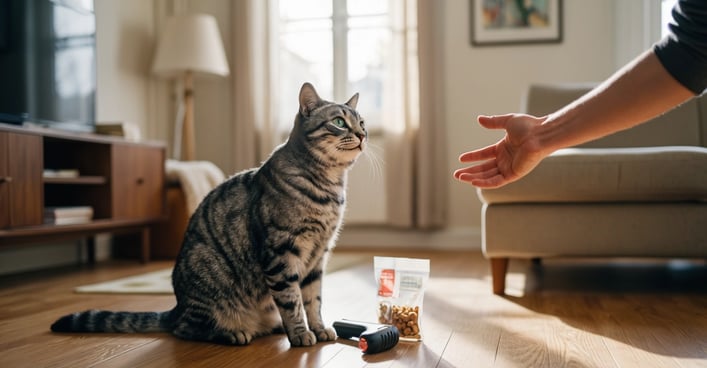
Cat Behavior Training: Your Complete Guide to Teaching Good Habits in 2026
Learn effective, positive reinforcement techniques to train your cat. From litter habits to stopping biting, build a stronger bond through clear communication.
Share this page
Cat Behavior Training: Your Complete Guide to Teaching Good Habits in 2026
Meta: Master feline behavior training with modern, positive methods. This guide covers litter training, scratching solutions, bite prevention, and essential commands to create a harmonious home.
Introduction
Contrary to popular belief, cats are highly trainable. While their learning style differs from dogs, cats respond exceptionally well to positive reinforcement and can master a wide range of useful behaviors. The key lies in understanding their unique motivations and communication style.
This comprehensive guide provides modern techniques for teaching basic manners and solving common behavioral issues, empowering you to build a deeper, more rewarding relationship with your feline friend.
1. Operant Conditioning
Cats associate actions with consequences.
Positive Reinforcement: Rewarding a desired behavior (e.g., treat, praise, play).
Negative Punishment: Withdrawing a reward for an undesired behavior.
Consistency is Key: A predictable response is crucial for learning.
2. Classical Conditioning
Cats form associations between stimuli.
Linking a clicker sound with a food reward.
Associating a specific verbal cue with an action.
Connecting a harness with outdoor exploration.
3. Social & Observational Learning
Cats learn by watching and experimenting.
Observing other cats or humans.
Trial-and-error exploration of their environment.
What Motivates Cats
Primary Motivators:
High-value food and treats
Interactive play that mimics hunting
Affection and attention (on their terms)
Access to comfortable, secure resting spots
Secondary Motivators:
Verbal praise in a happy tone
Gentle petting (for cats who enjoy it)
Access to window perches or favorite rooms
Special, rotating toys
Essential Training Supplies
Must-Have Items
Item
Purpose
Approximate Cost
Clicker
Precise behavior marker
$3 – $8
High-value treats
Primary motivation tool
$5 – $15
Target stick
For targeting & guiding behaviors
$8 – $12
Treat pouch
Keeps rewards accessible during sessions
$5 – $10
Puzzle feeders
Provides mental stimulation & slow feeding
$10 – $25
Interactive wand toys
Ideal for play-based rewards
$8 – $20
Treat Selection Guide
Ideal Training Treats:
Size: Small, soft, and easy to swallow quickly.
Smell: Highly aromatic to capture interest.
Palatability: Irresistible to your specific cat.
Health: Low-calorie options for frequent training.
Top Recommendations:
Freeze-dried chicken or salmon (PureBites)
Soft, meaty treats (Greenies Feline)
Squeezable puree tubes (Churu)
Budget-friendly, crunchy treats (Temptations)
Core Training Techniques
Clicker Training Basics
What is Clicker Training?
A method using a distinct sound (the click) to mark the exact moment a desired behavior occurs, followed immediately by a reward. This creates clear communication.
Step-by-Step Process:
Charge the Clicker (2-3 days):
Click the device and immediately give a treat.
Repeat 10-20 times in short sessions.
Goal: Your cat learns "click" means "reward is coming."
Mark Desired Behaviors:
Click at the precise second your cat performs the action you want.
Follow with a treat within 1-2 seconds.
Precision is essential for clear understanding.
Shape Complex Behaviors:
Reward small steps toward the final goal (e.g., looking at a target, then touching it).
Gradually raise your criteria as your cat succeeds.
Positive Reinforcement Principles
The RULE Method:
Reward immediately after the desired behavior.
Understand what motivates your individual cat.
Limit sessions to 5-10 minutes to maintain focus.
End every session on a successful, positive note.
Timing is Everything:
The reward must follow the marked behavior within 1-2 seconds.
A clicker provides the most precise timing.
Delayed rewards create confusion about what is being rewarded.
Teaching Essential Behaviors
1. Come When Called
Why It's Vital: Emergency recall, stress-free vet visits, and strengthening your bond.
Training Steps:
Week 1: Build Association: Say your cat's name in a happy tone just before meals. Always reward with food.
Week 2: Increase Distance: Call from across the room. Show a treat if needed, and reward every response.
Week 3: Variable Rewards: Mix rewards—sometimes a treat, sometimes play or petting. Practice in different rooms.
Advanced: Add Distractions: Practice with toys present or during mild play. For outdoor training, use a secure harness and leash.
2. Sit on Command
Training Method:
Hold a treat slightly above and behind your cat's nose.
As their head follows the treat up, their bottom will naturally lower.
The moment they sit, click and treat.
Add the verbal cue "sit" just before you lure them into position.
Gradually phase out the food lure, using just a hand signal or verbal cue.
3. Go to Mat/Bed
Useful For: Creating calm during mealtimes, guest visits, or bedtime routines.
Training Process:
Place the mat near your cat. Click/treat for any interest (looking, sniffing).
Reward for stepping onto the mat.
Gradually require longer stays before the click/treat.
Add a cue like "place" or "mat."
Slowly increase the distance you ask them to travel to the mat.
Solving Common Behavior Problems
1. Aggressive Play & Biting
Causes: Overstimulation, inappropriate play learned as a kitten, or natural predatory instinct.
Solutions:
Immediate Response: Freeze, withdraw all attention, and end the play session calmly.
Prevention: Use wand toys (never hands) for play. Recognize early signs of overstimulation (twitching tail, dilated pupils).
Management: Provide daily scheduled play sessions and independent puzzle toys to expend energy.
2. Counter Surfing
Why Cats Do It: Seeking food, a high vantage point, or attention.
Solutions:
Make Counters Unappealing: Use double-sided tape, aluminum foil, or safe, motion-activated deterrents.
Provide Alternatives: Install cat trees, wall shelves, or window perches.
Train an Incompatible Behavior: Teach a solid "go to mat" command and reward them for staying there while you're in the kitchen.
Never: Physically punish, push your cat, or be inconsistent with rules.
3. Excessive Meowing
Common Causes: Hunger, attention-seeking, medical issues, or breed tendency.
Management Strategies:
For Hunger: Use automatic feeders for scheduled meals. Ignore demanding meows before feeding; reward quiet behavior.
For Attention: Ignore demand meows (don't look, talk, or touch). Reward and engage with your cat during quiet moments.
Rule Out Medical Issues: Consult your vet to check for hyperthyroidism, pain, or cognitive decline in seniors.
4. Door Dashing
Training Solution – The Station Method:
Teach a solid "go to mat" command at a spot away from the door.
Practice having them stay on the mat while the door remains closed.
Gradually add the distraction of the door opening slightly.
Heavily reward them for staying at their station as people enter/exit.
Advanced Training & Enrichment
Leash & Harness Training
Benefits: Safe outdoor enrichment, easier travel, and vet visits.
4-Week Training Timeline:
Week 1: Let cat investigate the harness near food and play.
Week 2: Put harness on for short, positive sessions (5 mins) with treats.
Week 3: Attach leash indoors; let them drag it under supervision.
Week 4: Begin short explorations in a quiet, secure outdoor area.
Trick Training for Mental Stimulation
Popular & Fun Tricks:
Spin: Lure cat in a circle with a treat; add cue "spin."
High-Five: Shape paw-touching your hand; add verbal cue.
Fetch: Use a lightweight toy; reward for retrieving and dropping it near you.
Training Through Life Stages
Kittens (2-6 mos): Focus on socialization, bite inhibition, and litter training. Keep sessions very short (2-3 mins).
Adults (1-7 yrs): Ideal for behavior modification and learning complex tricks. Identify their strongest motivators.
Seniors (7+ yrs): Prioritize mental stimulation and comfort. Adapt exercises for mobility, using shorter, easier sessions.
Veterinary Behaviorist: $200 – $500/consultation (can address medical components)
Daily Time Commitment
Morning/Evening: Two 5-minute sessions for maintenance (recall, sit for meals).
Afternoon: One 10-minute session for learning new skills or play training.
Consistent, brief daily practice is far more effective than occasional long sessions.
When to Seek Professional Help
Consult a certified professional for:
Aggression: Directed at people or other pets.
Severe Anxiety: Manifesting as inappropriate elimination, excessive hiding, or destruction.
Compulsive Behaviors: Over-grooming to the point of injury, repetitive vocalizing.
Sudden Behavior Changes: Always rule out medical causes with your veterinarian first.
Frequently Asked Questions
Can older cats be trained?
Yes! Cats of any age can learn. Seniors may need more patience and adapted sessions, but they benefit greatly from mental stimulation.
What if my cat isn't food motivated?
Experiment with other rewards: a favorite toy, catnip, access to a sunny window, or gentle grooming. Find what your cat values.
Is punishment effective?
No. Punishment (yelling, spraying, physical correction) erodes trust, increases fear and anxiety, and often worsens the problem behavior.
How do I train multiple cats?
Train them separately initially to prevent competition and ensure each cat learns. Once behaviors are solid, you can practice with mild distractions.
Conclusion
Training your cat is a journey of mutual understanding that deepens your bond and creates a peaceful home. By embracing positive reinforcement, respecting your cat's individuality, and practicing patience, you can successfully guide their behavior.
Start with one simple behavior, celebrate small victories, and enjoy the process of communicating more effectively with your intelligent feline companion. The investment in training yields a lifetime of enriched companionship.
Disclaimer: This guide is for educational purposes. For serious behavioral concerns, especially involving aggression or anxiety, always seek guidance from a certified cat behavior consultant or veterinary behaviorist.
Get expert advice about cat care, behavior, nutrition, grooming, and training. Ask our AI cat care expert anything about your cat and receive professional guidance.