Burmese vs Tonkinese Cat: A Complete 2026 Breed Comparison
Choosing between a Burmese and a Tonkinese cat? Compare their affectionate personalities, care needs, and which social, people-oriented breed best fits your lifestyle.
Share this page
Burmese vs Tonkinese Cat: A Complete 2026 Breed Comparison
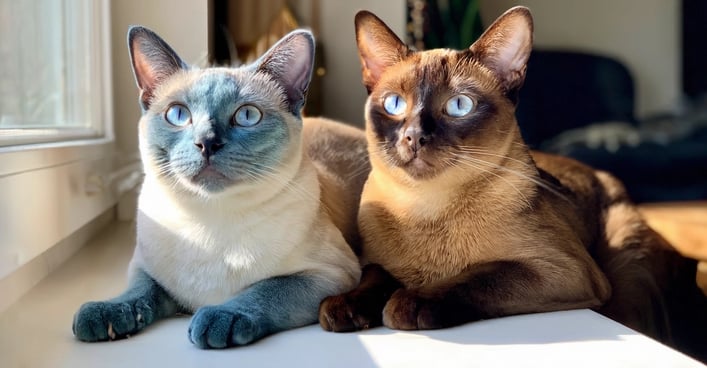
Burmese and Tonkinese cats are celebrated for their sleek Southeast Asian heritage, affectionate "dog-like" personalities, and stunning appearances. While closely related—the Tonkinese was developed from Burmese and Siamese crosses—these breeds have distinct differences in vocalization, activity levels, and social needs. This detailed comparison will help you decide which charismatic companion is the perfect match for your home.
Breed Origins and History
Burmese History
Origin: Burma (Myanmar) and Thailand
Founding Cat: Wong Mau, imported to the United States in 1930
Key Breeder: Dr. Joseph Thompson
Foundation: Developed through selective breeding with Siamese cats
Recognition: Officially recognized by the Cat Fanciers' Association (CFA) in 1936
Modern Types: American (contemporary, stockier) and European (traditional, more athletic)
Tonkinese History
Origin: A developed breed originating in Canada
Creation Era: 1960s
Foundation: Intentional crosses between Burmese and Siamese cats
Key Creators: Breeders Margaret Conroy and Jane Barletta
Recognition: Gained CFA championship status in 1984
Primary Goal: To create a cat with a balanced temperament between its two parent breeds
Unique Feel: Often described as feeling like polished stone
Standard Colors: Sable, Champagne, Blue, and Platinum
Pattern: Solid only (some kittens may show faint ghost tabby markings)
Color Feature: Coat color gradually lightens from the back toward the belly
Tonkinese Coat:
Texture: Exceptionally soft, silky, and fine
Length: Short and close-lying
Unique Feel: The source of the "mink" pattern description
Colors: Natural, Champagne, Blue, Platinum (similar palette to Burmese)
Patterns: Pointed, Mink, and Solid, offering varying contrast levels
Standout Feature: The stunning aqua eye color associated with the Mink pattern
Eye Color Distinction
Breed & Pattern
Typical Eye Colors
Note
Burmese
Consistent gold to yellow
Uniform across the breed
Tonkinese (Point Pattern)
Deep blue
Common in pointed varieties
Tonkinese (Mink Pattern)
Aqua or Turquoise
A signature, unique trait of the breed
Tonkinese (Solid Pattern)
Green to yellow-green
Less contrast than Mink pattern
Physical Profile Summary
Feature
Burmese
Tonkinese
Head Shape
Rounded
Modified wedge, more angular
Eyes
Large, round, and gold
Almond-shaped, color varies by pattern
Ears
Medium, rounded at tips
Medium, slightly pointed at tips
Expression
Sweet, innocent
Alert, inquisitive, intelligent
Overall Body
Dense, stocky, "brick wrapped in silk"
Balanced, muscular, and athletic
Temperament and Personality
Burmese Personality Profile
Activity Level: Moderate to high
Affection Style: The ultimate "Velcro cat"; intensely bonded and demanding of attention
Vocalization: Moderate; known for a distinctive, rumbling purr more than meows
Independence: Very low; thrives on constant human companionship
Playfulness: High; retains a kitten-like zest for life
Key Behavioral Traits:
Insists on being involved in all human activities
Follows owners from room to room
A champion lap cat
Can display possessive behaviors toward a favorite person
Enjoys interactive games like fetch
Often described as clownish and entertaining
Owner Insight:"My Burmese isn't a pet; she's a furry shadow with an eating habit. She must be touching me at all times."
Tonkinese Personality Profile
Activity Level: High
Affection Style: Friendly, social, and engaging but typically less demanding than the Burmese
Vocalization: Moderate; conversational and will "talk" about daily activities
Independence: Low to moderate; social but can adapt better to short periods alone
Playfulness: Very high; curious and acrobatic
Key Behavioral Traits:
Social butterfly; friendly with family, strangers, and other pets
Less prone to single-person possessiveness
Highly intelligent and benefits from puzzle toys and training
Excellent with children and adaptable in multi-pet households
Truly embodies the "middle ground" between Burmese sweetness and Siamese sociability
Owner Insight:"My Tonkinese is the welcoming committee. He greets guests, shows them his favorite toys, and ensures no one feels ignored."
Temperament Comparison Table
Trait
Burmese
Tonkinese
Affection Level
10/10
9/10
Activity Level
7/10
8/10
Playfulness
8/10
9/10
Vocalization
5/10
6/10
Independence
2/10
4/10
Intelligence
9/10
9/10
Child Friendly
9/10
9/10
Pet Friendly
7/10
9/10
Stranger Friendly
6/10
8/10
Core Difference: Burmese form an intense, often exclusive bond with their person. Tonkinese spread their social affection more evenly among everyone they meet.
Care and Lifestyle Requirements
Activity and Exercise Needs
Burmese Daily Requirements:
Play Sessions: 2-3 interactive sessions of 15-20 minutes daily.
Key Needs: Interactive toys, fetch games, and vertical climbing spaces.
Mental Stimulation: Crucial to prevent boredom-related mischief.
Note: They are deceptively strong ("brick wrapped in silk") and retain high energy levels for life.
Tonkinese Daily Requirements:
Play Sessions: 2-3 varied sessions totaling 45-60 minutes daily.
Key Needs: A mix of solo, interactive, and social play; puzzle feeders are excellent.
Mental Stimulation: Essential for this clever and curious breed.
Note: They are agile acrobats and often enjoy playing with other household pets.
Grooming Requirements
Both breeds are exceptionally low-maintenance.
Brushing: A quick weekly brush with a rubber grooming mitt or soft bristle brush is sufficient.
Shedding: Both shed minimally. The Tonkinese coat is particularly fine, resulting in very little loose hair.
Bathing: Rarely needed. An occasional wipe-down with a damp cloth keeps their coat glossy.
Annual Grooming Cost: Approximately $0-$50 for basic supplies.
Vocalization Styles
Situation
Burmese Response
Tonkinese Response
Mealtime
A gentle, persistent reminder
A running commentary on the process
Seeking Attention
Insistent but sweet nudges or purrs
Enthusiastic chirps and conversational meows
Playtime
Focused, eager sounds
Excited chattering and chatter
Home Alone
May wait quietly or protest softly
Might "discuss" their day when you return
Health and Lifespan
Burmese Health Considerations
Diabetes Mellitus: Higher genetic predisposition than many breeds. Weight management is critical.
Hypokalemia: A hereditary condition causing low blood potassium. Reputable breeders test for this.
Flat-Chested Kitten Syndrome: A developmental issue affecting some lines.
Gangliosidosis (GM2): A rare, fatal neurological disorder. DNA testing of breeding cats has largely eliminated it.
Average Lifespan: 10-16 years, with proper care.
Tonkinese Health Considerations
As a cross of Burmese and Siamese, they can inherit issues from both parent breeds:
From Burmese Side: Potential for diabetes and hypokalemia (though risk may be moderated).
From Siamese Side: Some lines may have a higher incidence of dental issues or certain heart conditions.
Average Lifespan: 12-16 years, often enjoying robust health.
Health Summary
Factor
Burmese
Tonkinese
Overall Health
Good
Good to Very Good
Diabetes Risk
Higher
Moderate
Genetic Testing
Essential for breeders
Essential for breeders
Key to Longevity
Weight management, regular vet checks
Balanced diet, preventive care
Cost of Ownership (2026 Estimates)
Initial Acquisition Costs
Expense
Burmese
Tonkinese
Kitten (Pet Quality)
$800 - $1,500
$800 - $1,500
Kitten (Show/Breeding)
$1,500 - $2,500
$1,200 - $2,200
Adult Cat (Rehoming)
$300 - $700
$300 - $700
Rescue/Adoption Fee
$100 - $300
$100 - $300
Estimated Annual Costs
Expense
Burmese
Tonkinese
High-Quality Food
$600 - $900
$600 - $900
Routine Veterinary Care
$400 - $700
$400 - $700
Litter & Supplies
$250 - $350
$250 - $350
Toys & Enrichment
$100 - $200
$150 - $250 (they thrive on variety)
Pet Insurance / Medical Fund
$300 - $600
$300 - $600
Total Annual Range
$1,650 - $2,750
$1,700 - $2,800
Ideal Living Environment
Best for a Burmese:
Your Lifestyle: You work from home, are retired, or have someone home most of the day.
Home Setup: Apartments or houses are fine, but your presence is the key requirement.
Family: Excellent with gentle children. May do best as an only pet or with a very compatible companion.
Critical Need:Constant companionship. They are prone to severe separation anxiety.
Best for a Tonkinese:
Your Lifestyle: Active families, working households with another pet, or individuals with regular time for interaction.
Home Setup: Enjoys space to explore and climb. Adapts well to various living situations.
Family: Thrives in families with children, dogs, or other cats. A true socialite.
Critical Need:Regular social interaction and mental stimulation. They are bored easily.
Pros and Cons Summary
Burmese: The Devoted Shadow
Pros:
✅ Unmatched Devotion: Forms the deepest, most loyal bond imaginable.
✅ Lifelong Playfulness: Eternal kitten energy makes them endlessly entertaining.
✅ Low-Maintenance Grooming: Their satin coat requires minimal care.
✅ Compact Companion: Their size makes them perfect lap warmers for any home.
Cons:
❌ Intense Need for Company: Suffers greatly when left alone; not suitable for long workdays.
❌ Potential for Possessiveness: May become a "one-person" cat and show jealousy.
❌ Higher Health Monitoring: Requires vigilant weight and health management.
Tonkinese: The Social Ambassador
Pros:
✅ Balanced Personality: The perfect blend of Siamese brains and Burmese heart.
✅ Social with All: Loves everyone—family, friends, guests, and other pets.
✅ Stunning Unique Eyes: The aqua eyes of the Mink pattern are breathtaking.
✅ Adaptable and Active: Fits into more varied lifestyles than the Burmese while being highly playful.
Cons:
❌ Still Demands Engagement: Requires active play and interaction daily.
❌ Can Be Harder to Find: Fewer breeders than more common breeds; may involve a waitlist.
❌ Inherited Health Considerations: Buyers must research breeder health screening practices thoroughly.
Which Breed Should You Choose?
Choose a Burmese if:
You desire the most profoundly affectionate, "shadow" cat who will be your constant companion.
You are home most of the time and can provide near-constant interaction.
You want a cat whose world revolves around you.
You prefer a slightly less vocal but equally intelligent companion.
Choose a Tonkinese if:
You want a highly social, friendly cat who will entertain guests and get along with other pets.
You have a busy but active household and can provide dedicated playtime.
You are captivated by their unique aqua eyes and balanced "mink" coat.
You want the best traits of both Siamese and Burmese in one adaptable package.
Finding a Reputable Breeder
Essential Questions to Ask Any Breeder:
What specific genetic tests do you perform on breeding cats (e.g., for Hypokalemia, GM2)?
Can you provide documentation of health screening for the kitten's parents?
How do you socialize your kittens?
What is your policy on health guarantees?
Can I visit your cattery and meet the kitten's parents?
Major Red Flags:
Kittens are always available immediately.
The breeder cannot provide health records or genetic testing proof.
They offer multiple, unrelated breeds.
They refuse to allow any form of visit or video call.
The price seems unusually low for a pedigreed kitten.
Final Verdict
Both the Burmese and Tonkinese offer extraordinary companionship wrapped in sleek, beautiful packages. Your choice ultimately hinges on your lifestyle and the type of bond you seek.
For the deepest, most exclusive bond: The Burmese is unparalleled, offering lap-cat perfection and utter devotion to their chosen person.
For versatile, social charm: The Tonkinese is the winner, bringing intelligence, playful energy, and friendly grace to any welcoming home.
Whichever you choose, you are gaining a loving, interactive, and unforgettable feline family member. Prepare for a lifetime of conversation, play, and affection.
Last Updated: 2026 | Both breeds thrive on love and interaction. Choosing a responsible breeder or rescue is the first step to a happy, healthy life with your new companion.
Get expert advice about cat care, behavior, nutrition, grooming, and training. Ask our AI cat care expert anything about your cat and receive professional guidance.