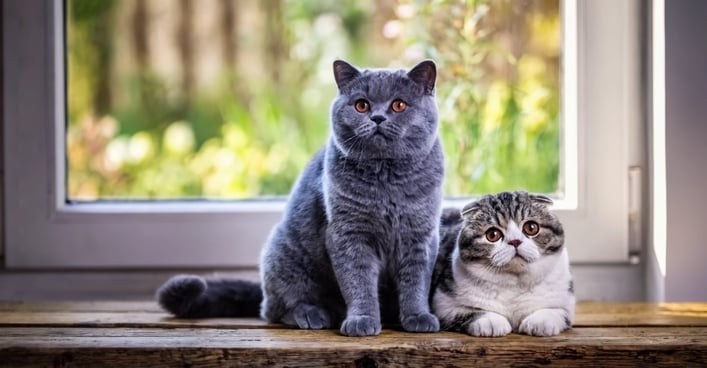
British Shorthair vs Scottish Fold: A Complete 2026 Breed Comparison Guide
Compare two iconic British cat breeds: the dignified British Shorthair and the sweet Scottish Fold. Discover key differences in health, temperament, and care to find your perfect feline companion.
Share this page
British Shorthair vs Scottish Fold: A Complete 2026 Breed Comparison Guide
By Dr. Emily Chen, Veterinary Behaviorist | Updated: 2026 | Reading Time: 14 minutes
Introduction
The British Shorthair and Scottish Fold are two beloved British-origin cat breeds, each offering a unique blend of charm and companionship. Known for their relaxed temperaments and round faces, they make excellent pets for various lifestyles. While they share a laid-back nature and British heritage, they differ significantly in physical traits, health profiles, and historical backgrounds.
This comprehensive 2026 guide provides an in-depth comparison to help prospective owners make an informed decision between these adorable breeds.
British Shorthair vs Scottish Fold: A Complete 2026 Breed Comparison Guide - Articles
Ancient Roman Roots:
Origin: Great Britain
Historical Period: Roman times (over 2,000 years ago)
Foundation: Roman working cats
Status: One of Britain's oldest recognized breeds
Development:
Roman soldiers introduced cats to Britain for pest control. These cats interbred with native wildcats, evolving into a robust, hardy population. The modern British Shorthair was refined through selective breeding in the 19th century, with official recognition following in the early 1900s.
Near Extinction and Recovery:
The breed faced near extinction during World War II. Post-war, dedicated breeders crossed remaining cats with Persians, Russian Blues, and domestic shorthairs to successfully rebuild the population.
Scottish Fold Origins
Farm Cat Discovery:
Origin: Tayside region, Scotland
Historical Period: 1961
Foundation Cat: Susie, a white barn cat
Recognition: From 1966 onward
The Folded Ear Mutation:
Shepherd William Ross discovered Susie, a cat with distinctive folded ears, on a neighboring farm. When Susie had kittens, two inherited the folded ears. Ross and his wife acquired one and began developing the breed.
Controversy and Evolution:
The breed's history includes ethical debates regarding health issues linked to the cartilage mutation. Modern, responsible breeding practices have evolved to prioritize health and minimize associated problems.
Physical Characteristics Comparison
Body Type
Feature
British Shorthair
Scottish Fold
Key Difference
Male Weight
12-18 lbs (5.4-8.2 kg)
9-13 lbs (4.1-5.9 kg)
British Shorthair is significantly larger
Female Weight
8-14 lbs (3.6-6.4 kg)
6-9 lbs (2.7-4.1 kg)
British Shorthair is larger
Body Type
Cobby, substantial, muscular
Medium, rounded, compact
British Shorthair has a more powerful build
Bone Structure
Heavy and dense
Medium
British Shorthair is more substantial
Overall Build
Powerful, chunky, broad
Well-rounded, solid
Both are solid, but the British Shorthair is bigger-boned
Head and Face
British Shorthair:
Round, massive head with full cheeks (especially in males)
Large, round, wide-set eyes
Medium-sized, rounded ears
Distinct "teddy bear" expression
Straight nose with a gentle curve
Scottish Fold:
Round head with a sweet expression
Large, round, expressive eyes
Unique folded ears that bend forward and downward
Short nose
Often described as having an "owl-like" appearance
Coat Characteristics
British Shorthair:
Length: Short
Texture: Dense, crisp, and plush—often compared to a teddy bear
Density: Very dense double coat
Colors: All colors and patterns accepted
Iconic Color: Blue (gray) is particularly famous
Grooming: Weekly brushing is sufficient
Scottish Fold:
Length: Two varieties: Shorthair and Longhair (Highland Fold)
Texture: Soft and dense
Density: Good undercoat
Colors: All colors and patterns accepted
Grooming: Weekly for shorthairs; 2-3 times weekly for longhairs
The Folded Ears (Scottish Fold Specific)
Caused by a natural cartilage mutation.
Kittens are born with straight ears; the fold develops at 3-4 weeks of age.
Varying degrees of fold: single, double, or triple.
A single litter can produce both folded-ear (Folds) and straight-ear (Straights) kittens.
Critical Note: Ethical breeders never breed Fold to Fold due to significant health risks. Folds are typically bred to British Shorthairs or American Shorthairs.
Temperament Comparison
Personality Traits at a Glance
Trait
British Shorthair
Scottish Fold
Activity Level
Low to moderate
Low to moderate
Playfulness
Moderate
Moderate
Independence
High
Moderate
Affection
Loyal but undemanding
Sweet, openly affectionate
Vocalization
Very quiet
Quiet, with a soft voice
Overall Energy
Easygoing, calm
Easygoing, gentle
British Shorthair Personality
Key Characteristics:
Calm, dignified, and self-possessed
Loyal to their family but typically not "lap cats"
Independent and content with their own company
Reserved with strangers but patient and tolerant
Typical Behavior:
Prefers to keep "four on the floor" rather than being carried
Not usually avid climbers or jumpers
Provides quiet companionship without demanding constant attention
Scottish Fold Personality
Key Characteristics:
Sweet-natured, gentle, and highly adaptable
Known for sitting in unusual positions, like the "Buddha sit"
Enjoys being near their people and can be lap cats
Playful and engaging without being hyperactive
Generally good with children and other pets
Typical Behavior:
More interactive and likely to follow owners around than the British Shorthair
Exhibits amusing sitting and sleeping postures
Seeks gentle companionship
Health Comparison
British Shorthair Health Profile
Common Health Concerns:
Hypertrophic Cardiomyopathy (HCM): A form of heart disease.
Hemophilia B: A bleeding disorder (now rare).
Obesity: A major concern due to their low activity level and love of food.
Dental Disease: Requires regular dental care.
Polycystic Kidney Disease (PKD): Now rare due to widespread genetic testing.
Average Lifespan: 14-20 years.
Scottish Fold Health Profile
Breed-Specific Concern:Osteochondrodysplasia:
A cartilage and bone development disorder linked to the folded-ear gene.
Affects all folded-ear cats to some degree, potentially causing arthritis, pain, and stiffness.
Severity varies; ethical breeding practices aim to reduce risk.
Other Health Issues:
Hypertrophic Cardiomyopathy (HCM): Heart disease screening is essential.
Ear Infections/Mites: The folded ear structure requires regular cleaning and monitoring.
Obesity: Prone to weight gain.
Joint Stiffness: Potential for degenerative joint disease.
Average Lifespan: 11-14 years, often shorter than the British Shorthair due to breed-specific health challenges.
Ethical Breeding Considerations for Scottish Folds
Never breed Fold to Fold.
Responsible breeders pair Folds with British Shorthairs, American Shorthairs, or Scottish Straights.
"Scottish Straights" (non-folded littermates) are healthy and make wonderful pets.
Comprehensive health screening of breeding stock is non-negotiable.
Some veterinary associations advise caution due to inherent welfare concerns.
Care Requirements Comparison
Exercise & Activity Needs
British Shorthair:
Low exercise requirements.
Short, daily play sessions are sufficient.
Highly prone to obesity—activity must be encouraged.
Often content to watch the world go by.
Scottish Fold:
Moderate exercise needs.
Enjoys interactive play with wand toys or puzzles.
Also prone to obesity; weight management is crucial.
Generally slightly more playful and interactive than the British Shorthair.
Grooming Comparison
Aspect
British Shorthair
Scottish Fold
Brushing
Weekly to remove dead hair
Weekly (Shorthair), 2-3x weekly (Longhair)
Bathing
Rarely needed
Rarely needed
Ear Care
Standard cleaning
Weekly check and gentle cleaning of folded ears
Shedding
Moderate, seasonal
Moderate, seasonal
Professional Grooming
Rarely needed
Occasionally beneficial for Longhairs
Weight Management
Crucial for Both Breeds:
Both are highly prone to obesity.
Strict portion control with measured meals is essential.
Regular weigh-ins help track progress.
Use puzzle feeders or interactive toys to encourage activity during mealtimes.
Consult your veterinarian for a tailored diet plan.
Cost Comparison (2026 Estimates)
Initial Acquisition Costs
Source
British Shorthair
Scottish Fold
Pet Quality Kitten
$1,200 - $2,500
$1,500 - $3,000
Show Quality Kitten
$2,500 - $4,000+
$2,500 - $4,000+
Adoption/Rescue
$100 - $300
Rare, but possible for Straights or mixes
Note: Scottish Folds often command a higher price due to their unique appearance and relative rarity. Always prioritize breeders who conduct full health testing.
Estimated Annual Care Costs
Expense
British Shorthair
Scottish Fold
High-Quality Food
$400 - $600
$400 - $600
Routine Veterinary Care
$300 - $500
$400 - $700*
Grooming
$0 - $100
$0 - $150
Toys, Litter, & Supplies
$100 - $200
$100 - $200
Total Annual Estimate
$800 - $1,400
$900 - $1,650
*Scottish Folds may incur higher veterinary costs for joint health monitoring, ear care, and potential breed-specific issues.
Living Environment Suitability
Ideal Home for a British Shorthair
Thrives In:
Quiet, calm households or apartments.
Homes with owners who work full-time.
Families with respectful, older children.
With first-time cat owners seeking a low-drama pet.
Environments where an independent companion is desired.
May Struggle In:
Very loud, chaotic, or high-traffic homes.
Situations where constant lap-sitting interaction is expected.
Homes with very young children who may not understand gentle handling.
Ideal Home for a Scottish Fold
Thrives In:
Family homes with gentle children.
Multi-pet households (with proper introductions).
Indoor-only living environments.
Homes seeking a sweet, affectionate shadow.
With owners who have researched and accept the breed's ethical considerations.
May Struggle In:
Homes unable to budget for potential higher vet costs.
Where outdoor access is expected or desired.
With owners uncomfortable with the breed's health controversy.
Extremely active, noisy environments.
Breed-Specific Considerations
British Shorthair Considerations
Weight Management is Paramount:
Their love of food and low activity create a perfect storm for obesity. Consistent diet management is a lifelong commitment.
Appreciate Their Independence:
They show love through quiet presence, not constant demands. They are perfect for those who want a companion, not a clingy shadow.
Scottish Fold Considerations
Commit to Ethical Sourcing:
Your most important task is finding a breeder who prioritizes health: testing for HCM, breeding Fold x Straight, and being transparent about osteochondrodysplasia.
Dedicated Ear and Joint Care:
Weekly ear checks and gentle cleaning are mandatory to prevent infections.
Monitor for signs of joint pain or stiffness (reluctance to jump, limping) and maintain a healthy weight to reduce stress on joints.
Which Breed Is Right for You?
Choose a British Shorthair If You:
Desire an independent, low-maintenance companion.
Work outside the home and need a cat content alone.
Love the classic, plush "teddy bear" aesthetic.
Prefer a quiet, dignified presence over constant interaction.
Want a generally healthy breed with a long lifespan.
Are a first-time cat owner.
Choose a Scottish Fold If You:
Have thoroughly researched and are comfortable with the breed's ethical landscape.
Want a sweet, openly affectionate, and engaging companion.
Are captivated by their unique folded-ear appearance and charming poses.
Are committed to sourcing from a truly responsible breeder.
Are prepared for potential future health monitoring and associated costs.
Enjoy a cat with a gentle, sometimes silly personality.
Conclusion
Both the British Shorthair and Scottish Fold offer immense rewards as companion animals, but they cater to slightly different preferences and lifestyles.
The British Shorthair is the quintessential easygoing, independent companion, boasting a robust constitution and longer average lifespan with fewer inherent health concerns.
The Scottish Fold is an undeniably sweet and affectionate charmer with a unique look. Choosing this breed requires a commitment to ethical sourcing and proactive health care.
A Compassionate Alternative: If you love the Scottish Fold's sweet temperament but have ethical concerns, consider adopting a Scottish Straight (a Fold littermate with straight ears). You'll get the wonderful personality without the genetic health risks associated with the fold.
Whichever breed you choose, providing a loving home, proper veterinary care, and responsible stewardship will ensure a fulfilling life with your feline friend.
Get expert advice about cat care, behavior, nutrition, grooming, and training. Ask our AI cat care expert anything about your cat and receive professional guidance.