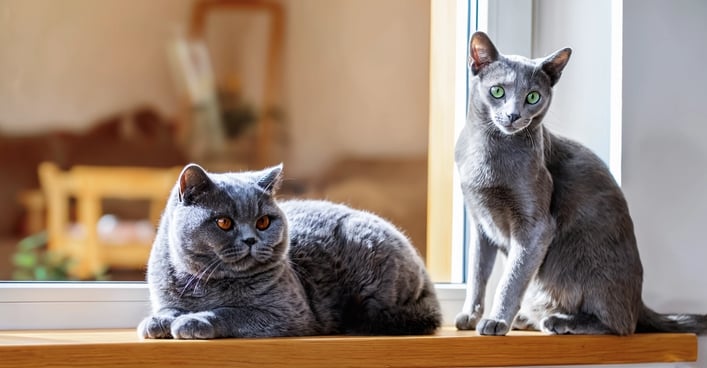
British Shorthair vs Russian Blue: The Complete 2026 Comparison Guide
Discover the key differences between British Shorthair and Russian Blue cats, from temperament and grooming to health and costs, to find your perfect feline companion.
Share this page
British Shorthair vs Russian Blue: The Complete 2026 Comparison Guide
By Emily Rodriguez, Certified Animal Behaviorist | Published: January 15, 2026 | Reading Time: 13 minutes
Introduction
With their captivating blue-gray coats and regal presence, the British Shorthair and Russian Blue are often mistaken for one another. Yet beneath their similar hues lie two distinct feline personalities with unique histories, care needs, and temperaments. This definitive guide for 2026 provides a detailed, side-by-side comparison to help you determine which aristocratic breed aligns best with your lifestyle and home.
Breed Histories
British Shorthair Origins
Ancient Heritage:
Origin: United Kingdom
Ancestry: Roman cats introduced to Britain
Formal Recognition: Late 19th century
Status: One of Britain's oldest natural breeds
The British Shorthair's lineage traces back to domestic cats brought by Roman legions, which later interbred with native European wildcats. They developed naturally over centuries, evolving a famously dense, plush coat to withstand the damp British climate. The breed was formally standardized by feline pioneer Harrison Weir during the first modern cat shows in the 1870s.
British Shorthair vs Russian Blue: The Complete 2026 Comparison Guide - Articles
Historical Development:
The Cheshire Cat Connection:
Their round faces and seemingly permanent smiles have led many to believe the British Shorthair inspired Lewis Carroll's iconic Cheshire Cat in Alice's Adventures in Wonderland.
Russian Blue Origins
Mysterious Beginnings:
Origin: Archangel Isles, Northern Russia
Introduction to the West: Sailors in the 1860s
Recognition: Early 20th century
Status: A natural breed shrouded in folklore
Historical Development:
The Russian Blue's exact origins are enigmatic. They are believed to have developed in the cold climate of the Archangel (Arkhangelsk) port region, where their double-layered, silver-tipped coat provided essential insulation. Sailors transported them to England and Scandinavia in the mid-19th century, where they were prized for their beauty and hunting prowess.
Near Extinction and Recovery:
World War II decimated their numbers across Europe. Dedicated breeders initiated crossbreeding programs with Siamese and British Shorthairs to preserve the gene pool, later meticulously working to eliminate these influences and restore the breed's original, distinctive characteristics.
Physical Characteristics Comparison
Size and Build
Feature
British Shorthair
Russian Blue
Larger Breed
Male Weight
12-18 lbs (5.4-8.2 kg)
10-14 lbs (4.5-6.3 kg)
British Shorthair
Female Weight
8-14 lbs (3.6-6.3 kg)
7-10 lbs (3.2-4.5 kg)
British Shorthair
Body Type
Stocky, "cobby," muscular
Elegant, slender, graceful
British Shorthair
Bone Structure
Heavy, substantial
Fine to medium
British Shorthair
Height
Medium
Medium-tall
Russian Blue
Overall Impression
Powerful, rounded
Lithe, elongated
Distinctly different
Size Verdict: The British Shorthair is a robust, substantial cat, often described as a "teddy bear." The Russian Blue presents a more refined, medium-sized, and elegantly proportioned silhouette.
Coat Comparison
Feature
British Shorthair
Russian Blue
Coat Density
Extremely dense, plush
Dense but fine and silky
Texture
Crisp, "standing away" from body
Soft, silky, lying close to the body
Undercoat
Very thick, abundant
Moderate
Silver Tipping
Not present
Distinctive, creating a luminous glow
Color Variations
Many (Blue is most iconic)
Only blue-gray with silver tipping
Shedding
Moderate to heavy seasonally
Moderate, consistent
The Signature Looks:
British Shorthair:
Appearance: Teddy bear-like, rounded, and solid.
Coat: A dense, crisp "carpet" that resists matting.
Famous Color: The "British Blue" with copper eyes.
Overall: Characterized by roundness—face, eyes, and paws.
Russian Blue:
Appearance: Elegant, refined, and somewhat mysterious.
Coat: A shimmering, silver-tipped double coat that appears to glow.
Color: Exclusively a uniform blue-gray.
Overall: A graceful feline that moves with quiet poise.
Facial Features
British Shorthair:
Head: Broad, round skull with full cheeks.
Eyes: Large, round, and typically copper, gold, or orange.
Ears: Medium-sized, rounded at the tips.
Nose: Short, broad, and straight.
Expression: Sweet, perpetually smiling.
Russian Blue:
Head: Wedge-shaped, forming a triangle from nose to ears.
Eyes: Almond-shaped, vivid green in adults (kittens have yellow eyes).
Ears: Large, pointed, and set wide apart.
Nose: Straight profile with a slight stop.
Expression: Alert, intelligent, with a subtle "Mona Lisa" smile.
Temperament Comparison
British Shorthair Personality
Core Traits:
Easygoing & Adaptable: Thrives in various living situations.
Independent: Content with solitude; not clingy.
Affectionate but Undemanding: Shows loyalty without being needy.
Calm & Dignified: A quiet, steady presence in the home.
Patient & Tolerant: Excellent with gentle children and other pets.
Behavioral Notes:
Often follows family members as a quiet observer.
Enjoys play in short, gentle bursts.
Rarely vocal; communicates with presence and gentle chirps.
Not typically a "lap cat," but a devoted "nearby" companion.
Activity Level: Low to Moderate (3/10)
Vocalization: Very Low
Russian Blue Personality
Core Traits:
Reserved with Strangers: Initially shy, but deeply loyal to family.
Intelligent & Playful: Enjoys puzzle toys, fetch, and learning tricks.
Gentle & Sensitive: Highly attuned to owner's emotions and household mood.
Devoted: Forms an intense bond with one or two special people.
Energetic: Retains a playful, kitten-like demeanor into adulthood.
Behavioral Notes:
May hide when visitors arrive until comfortable.
Thrives on routine and can be stressed by chaos.
Enjoys high vantage points and cat trees.
Has a soft, melodic voice used sparingly.
Activity Level: Moderate (5/10)
Vocalization: Low
Temperament Comparison Table
Trait
British Shorthair
Russian Blue
More Pronounced In
Affection Style
Independent, steady
Devoted, shadow-like
Russian Blue
Energy Level
Low
Moderate
Russian Blue
Stranger Sociability
Reserved but curious
Shy, cautious
Russian Blue
Intelligence
Good
Exceptionally High
Russian Blue
Playfulness
Moderate
High
Russian Blue
Independence
High
Moderate
British Shorthair
Adaptability to Change
High
Moderate
British Shorthair
Care Requirements
Grooming Needs
British Shorthair:
Frequency: Weekly brushing; daily during heavy spring shed.
Key Focus: Managing seasonal shedding and preventing matting in the dense undercoat.
Russian Blue:
Frequency: Weekly brushing with a soft bristle brush or grooming mitt.
Tools: Soft brush, chamois cloth to enhance coat shine.
Key Focus: Removing loose hair and distributing skin oils for their signature sheen.
Verdict: Both are relatively low-maintenance. The British Shorthair requires more diligent brushing during peak shedding seasons due to its denser coat.
Health Comparison
British Shorthair Health Considerations:
Hypertrophic Cardiomyopathy (HCM): A form of heart disease; screening recommended.
Polycystic Kidney Disease (PKD): Now rare due to responsible breeding.
Obesity: A significant risk; requires strict portion control.
Dental Disease: Prone to gingivitis; regular dental care is essential.
Russian Blue Health Considerations:
Generally Robust: Considered one of the healthiest pedigreed breeds.
Urinary Tract Health: Slight predisposition to bladder stones/crystals.
Genetic Issues: Very few; responsible breeders screen for rare conditions like PRA.
Health Summary Table:
Factor
British Shorthair
Russian Blue
Overall Health
Good
Excellent
Genetic Issue Risk
Moderate
Very Low
Obesity Risk
High
Moderate
Typical Lifespan
14-20 years
15-20+ years
Average Veterinary Costs
Moderate
Lower
Exercise and Activity Needs
British Shorthair:
Daily Need: 10-15 minutes of encouraged play.
Style: Prefers short, interactive sessions (wand toys, laser pointers). Not a natural climber.
Critical:Weight management is non-negotiable. Combine controlled feeding with consistent, gentle exercise.
Russian Blue:
Daily Need: 15-20+ minutes of interactive and independent play.
Style: Loves fetch, puzzle feeders, and climbing. Provide ample vertical space with cat trees.
Critical: Mental stimulation is as important as physical activity. Boredom can lead to anxiety.
Cost of Ownership (2026 Estimates)
Initial Acquisition & Setup
Expense
British Shorthair
Russian Blue
Purchase Price (Pet Quality)
$1,200 - $2,800
$900 - $2,200
Purchase Price (Show/Breeder)
$2,800 - $5,500+
$1,800 - $4,000
Initial Supplies (Carrier, etc.)
$300 - $600
$300 - $600
Initial Veterinary (Vaccinations, etc.)
$200 - $500
$200 - $500
Estimated Initial Total
$1,700 - $4,400
$1,400 - $3,300
Annual Recurring Costs
Expense
British Shorthair
Russian Blue
High-Quality Food
$450 - $700
$400 - $600
Litter & Supplies
$200 - $300
$200 - $300
Routine Veterinary Care
$350 - $700
$250 - $500
Pet Insurance
$350 - $600
$300 - $500
Annual Total
$1,350 - $2,300
$1,150 - $1,900
Lifetime Cost Estimate (17 years):
British Shorthair: $25,000 - $45,000+
Russian Blue: $21,000 - $35,000+
Note: Costs vary widely by region, breeder reputation, and individual cat health. Always budget for unexpected emergencies.
Compatibility with Households & Pets
British Shorthair:
Ideal For: Families with children, multi-pet households, first-time owners, apartments, and busy homes.
Compatibility: Excellent with cat-friendly dogs and other cats. Their calm, tolerant nature makes them adaptable.
Watch For: Food possessiveness with other pets due to their love of eating.
Russian Blue:
Ideal For: Quiet homes, singles or couples, experienced cat owners, and calm environments.
Compatibility: Best with gentle, respectful pets. Needs slow, proper introductions to new animals. Can be stressed by boisterous dogs or highly active cats.
Watch For: Sensitivity to loud noises and household conflict.
Pros and Cons Summary
British Shorthair
Pros:
Exceptionally easygoing and adaptable.
Low-maintenance grooming needs.
Patient and wonderful with gentle children.
Independent, tolerates alone time well.
Quiet and undemanding companion.
Generally healthy with a long lifespan.
Cons:
High risk for obesity—diet must be managed.
Low activity level requires owner encouragement.
Not typically a cuddly lap cat.
Can be expensive to purchase from a reputable breeder.
Prone to seasonal heavy shedding.
Russian Blue
Pros:
Renowned for robust health and longevity.
Often better tolerated by people with mild cat allergies (produces less Fel d1 protein).
Highly intelligent, playful, and trainable.
Strikingly beautiful, plush coat.
Forms deeply loyal, devoted bonds with family.
Minimal grooming requirements.
Cons:
Can be shy or reserved with strangers.
Often has a high purchase price and limited availability.
Sensitive to stress and changes in routine.
Requires consistent mental and physical engagement.
Not suited for chaotic or loud households.
Final Verdict: Which Cat Is Right For You?
Choose a British Shorthair If...
You desire a calm, undemanding, and steady presence.
Your household is active, has children, or includes other pets.
You love their classic, rounded "teddy bear" aesthetic.
You want a cat that is highly adaptable to routine changes.
You can commit to proactive weight management.
Choose a Russian Blue If...
You seek an intelligent, interactive, and playful partner.
Your home is generally peaceful, quiet, and predictable.
You are captivated by their elegant, shimmering beauty.
You want a deeply loyal cat that will form a strong bond.
You or a family member have mild allergies (with testing).
Important Similarities
Despite their differences, both breeds share:
Stunning blue-gray coat colors (in their signature forms).
Relatively quiet dispositions.
Long life expectancies with proper care.
Suitability for indoor-only living.
A generally low-maintenance approach to grooming.
Frequently Asked Questions (2026)
Q: Are Russian Blue cats truly hypoallergenic?A: No cat breed is 100% hypoallergenic. However, many Russian Blue owners with mild allergies report significantly fewer reactions. This is attributed to their potentially producing lower levels of the Fel d1 allergen protein. Always spend time with a breed before bringing one home if allergies are a concern.
Q: Which breed is better for a small apartment?A: Both adapt well. The British Shorthair is often the more flexible choice for apartments, as its lower energy and tolerance for ambient noise make it less stressed by close quarters. The Russian Blue needs vertical space and a quiet environment to thrive in an apartment.
Q: Can these two breeds live together harmoniously?A: Yes, their complementary calm natures can make them good companions. The British Shorthair's easygoing attitude can help a shy Russian Blue feel more secure. Always introduce them slowly and properly.
Q: Which breed is more expensive overall?A: Initial purchase prices are comparable for well-bred kittens. Over a lifetime, the British Shorthair may incur slightly higher potential veterinary costs due to breed-specific health monitoring (e.g., cardiac screening) and obesity-related issues.
Q: Are these good breeds for first-time cat owners?A: The British Shorthair is often considered one of the best breeds for first-time owners due to its forgiving, adaptable, and low-maintenance nature. The Russian Blue can be a good first cat for a committed, quiet household owner who is prepared for their sensitivity and need for engagement.
Q: Which breed has a longer lifespan?A: Both are long-lived. The Russian Blue frequently has a slight edge, with many living into their early 20s. The British Shorthair typically enjoys a lifespan of 14-20 years.
Disclaimer: This guide outlines general breed tendencies. Individual personality, health, and behavior can vary significantly. Always interact with a specific cat and choose a responsible breeder or rescue organization. Consult with a veterinarian for personalized advice.
Get expert advice about cat care, behavior, nutrition, grooming, and training. Ask our AI cat care expert anything about your cat and receive professional guidance.