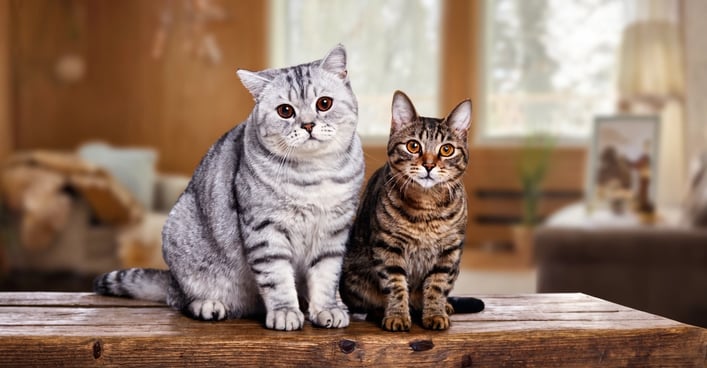
British Shorthair vs American Shorthair: The Complete 2026 Breed Comparison
Discover the key differences between British and American Shorthair cats, from their distinct personalities and care needs to which breed best fits your lifestyle.
Share this page
British Shorthair vs American Shorthair: The Complete 2026 Breed Comparison
The British Shorthair and American Shorthair are two of the world's most beloved pedigreed cats, each representing a distinct national character and breeding heritage. While both share the "shorthair" classification and offer exceptional companionship, they differ significantly in appearance, temperament, and history. This definitive guide helps prospective owners determine which breed aligns best with their lifestyle.
Historical Origins
British Shorthair History
Ancient Roots
The British Shorthair boasts one of the oldest pedigrees, descending from working cats brought to Britain by Roman legions nearly 2,000 years ago.
Development Timeline:
Roman Era: Cats arrive for rodent control.
1800s: Harrison Weir features them in the first organized cat shows.
Late 1800s: Strategic outcrossing with Persians enhances the cobby body and dense coat.
Early 1900s: Formal breed establishment through selective breeding.
WWI & WWII: The breed nears extinction twice but is revived through dedicated preservation efforts.
British Shorthair vs American Shorthair: The Complete 2026 Breed Comparison - Articles
Modern Era: Globally recognized, with the "British Blue" as its iconic color.
Breed Preservation:
Originally known as the British Blue, the breed was saved from extinction through careful outcrossing, primarily with Persians. This preserved its robust, natural constitution while refining its distinctive plush coat and rounded physique.
American Shorthair History
Working Cat Origins
The American Shorthair evolved from European cats brought to North America by early settlers, prized for their rodent-control abilities on ships and farms.
Development Timeline:
1600s-1700s: European working cats arrive with settlers.
1800s: They become established as hardy farm and barn cats.
1895: A brown tabby wins best in show at Madison Square Garden.
Early 1900s: Selective breeding programs begin.
1906: Initially registered as the Domestic Shorthair.
1966: Renamed "American Shorthair" to distinguish it from random-bred domestic cats.
Modern Era: Celebrated as a distinct, pedigreed breed with a focus on health and temperament.
Breed Recognition:
The name change from Domestic Shorthair emphasized its status as a purpose-bred pedigree. The breed was developed to retain the working cat's athleticism, intelligence, and agreeable nature, with the silver tabby becoming its most famous pattern.
Physical Characteristics
Size and Build Comparison
Feature
British Shorthair
American Shorthair
Weight (Females)
7-12 lbs
8-12 lbs
Weight (Males)
9-17 lbs
11-15 lbs
Body Type
Cobby, substantial, rounded
Athletic, muscular, well-balanced
Bone Structure
Heavy and dense
Medium to large, strong
Body Length
Compact
Medium-long, rectangular
Height
Low to medium
Medium
Key Distinctions:
British Shorthair: Known for a "teddy bear" appearance with a cobby, rounded body.
American Shorthair: Displays an athletic, balanced physique reflecting its working heritage.
Both breeds are generally larger than the average domestic cat, with males being notably larger than females.
Coat Characteristics
British Shorthair Coat:
Length & Texture: Short, incredibly dense, and plush with a crisp, "cracking" texture.
Feel: Remarkably like a stuffed animal.
Maintenance: Weekly brushing is sufficient to manage moderate shedding and maintain coat health.
American Shorthair Coat:
Length & Texture: Short to medium-short, hard, protective, and dense.
Feel: Sleek and resilient, lying close to the body.
Maintenance: Very easy care; weekly brushing handles moderate shedding and seasonal undercoat.
Head and Facial Features
British Shorthair:
Head: Round and massive with full, prominent cheeks.
Eyes: Large, round, and typically copper or gold in blue cats.
Accepted Varieties: All solid colors, tabby patterns, bicolor, van, tortoiseshell, calico, and rare colorpoints.
American Shorthair:
Iconic Pattern: Silver tabby.
Accepted Varieties: Over 80 recognized colors and patterns, including all solids, tabbies (especially brown), bicolors, calico, and tortoiseshell.
The Signature Looks
British Shorthair - The Teddy Bear:
Defined by its round, chubby cheeks, dense plush coat, cobby body, sweet expression, and striking copper eyes (in blue cats).
American Shorthair - The Classic Tabby:
Known for its athletic build, distinctive forehead "M," bullseye side swirls, iconic silver tabby pattern, and alert, intelligent gaze.
Temperament and Personality
British Shorthair Personality
Core Traits: Easygoing, placid, quietly confident, and dignified. They are independent yet affectionate, patient, and undemanding.
Behavior & Activity:
Prefers "four feet on the floor"—enjoys being near you rather than on your lap.
Exhibits low to moderate activity with playful bursts.
Highly self-sufficient and content to observe household activities.
Social & Vocal Traits:
Good with gentle children and other pets; welcoming to visitors.
Typically not a lap cat.
Exceptionally quiet, using a soft voice only when necessary.
American Shorthair Personality
Core Traits: Easygoing, adaptable, friendly, and intelligent. Their good-natured and curious disposition reflects their working cat heritage.
Behavior & Activity:
Moderately active and playful throughout life, enjoying interactive games.
Excellent hunters and problem-solvers.
Adaptable to family routines and enjoys high perches.
Social & Vocal Traits:
Excellent with children, other pets, and strangers—a versatile companion.
Generally quiet but will communicate pleasantly when needed.
More likely to seek lap time than the British Shorthair.
Obesity: Prone to weight gain due to low activity; portion control is crucial.
Lifespan: 14-20 years
American Shorthair Health Profile
Common Health Concerns:
Hypertrophic Cardiomyopathy (HCM): The most common heart concern; screening recommended.
Obesity: Can be food-motivated; requires diet management and exercise.
Generally Robust:
Benefits from healthy genetic diversity and a strong working-cat constitution, resulting in minimal breed-specific issues.
Lifespan: 15-20 years
Health Comparison
Factor
British Shorthair
American Shorthair
Overall Health
Good
Very Good
Genetic Issues
Some concerns
Minimal
Average Lifespan
14-20 years
15-20 years
Veterinary Costs
Moderate
Low-Moderate
Robustness
Good
Excellent
Obesity Risk
Higher
Moderate
Grooming and Care
Grooming Needs
British Shorthair:
Routine: Weekly brushing (15-20 mins) with a metal comb, bristle brush, or rubber mitt.
Focus: Managing the dense undercoat, especially during seasonal sheds.
American Shorthair:
Routine: Weekly brushing (10-15 mins) with a bristle brush or rubber mitt.
Focus: Very easy maintenance due to the close-lying coat; minimal matting risk.
Grooming Comparison
Aspect
British Shorthair
American Shorthair
Weekly Time
15-20 minutes
10-15 minutes
Shedding Level
Moderate
Moderate
Matting Risk
Low
Very Low
Ease of Care
Easy
Very Easy
Living Environment
Ideal British Shorthair Home
Environment: Prefers a calm, indoor, climate-controlled setting with comfortable resting spots.
Best Match: Adults, gentle children, working professionals, or those in apartments seeking a low-maintenance, undemanding companion.
Ideal American Shorthair Home
Environment: Highly adaptable to houses or apartments; enjoys interactive toys and scratching posts.
Best Match: Families with children, multi-pet households, first-time owners, and active or working families.
Cost Comparison (2026 Estimates)
Initial Acquisition Costs
Source
British Shorthair
American Shorthair
Pet Quality
$800-$2,000
$600-$1,200
Show Quality
$1,500-$4,000
$1,000-$3,000
Adoption
$75-$200
$75-$200
Annual Care Costs
Expense
British Shorthair
American Shorthair
Food
$400-$700
$400-$700
Litter
$200-$350
$200-$350
Veterinary Care
$250-$450
$200-$400
Grooming
$50-$100
$50-$100
Insurance
$250-$450
$250-$450
Total Annual
$1,150-$2,050
$1,100-$2,000
Training and Intelligence
British Shorthair Intelligence
Learning Style: Intelligent but independent; learns household routines well but is not highly motivated to perform tricks.
Trainable Behaviors: Easy litter training, household rules, and basic commands.
American Shorthair Intelligence
Learning Style: Highly intelligent, observant, and a quick problem-solver.
Trainable Behaviors: Easy litter training, interactive games, household routines, and some tricks.
Making Your Decision
Choose a British Shorthair If You:
Desire a calm, undemanding, and dignified companion.
Love the "teddy bear" appearance and plush coat.
Have a quieter household or work outside the home.
Want minimal grooming and an independent cat.
Have gentle children or are an adult-only household.
Choose an American Shorthair If You:
Want a friendly, adaptable, and social family cat.
Have an active family with children or other pets.
Appreciate the classic, athletic tabby look.
Are a first-time cat owner seeking a robust, healthy breed.
Prefer a moderately active and easygoing pet.
Consider Another Breed If You:
Want a highly active, constantly playful cat.
Need a constant lap companion or a very vocal pet.
Cannot commit to a 15+ year lifespan.
Prefer a small, delicate feline.
Similar Breeds to Consider
If You Like the British Shorthair:
Chartreux: Similar robust build and calm demeanor (French origin).
Russian Blue: Comparable gentle and reserved temperament.
Exotic Shorthair: Similar calmness with a Persian-type face.
If You Like the American Shorthair:
Domestic Shorthair: Similar appearance and temperament (non-pedigreed).
European Shorthair: Shares similar working origins.
Ocicat: For a more active, spotted alternative.
Burmese: Offers similar friendliness in a compact package.
Final Verdict
British Shorthair: 4.7/5 Stars
An exceptional companion for those seeking calm, dignified, and undemanding company. Their iconic looks and patient nature make them ideal for quieter homes and professionals.
American Shorthair: 4.6/5 Stars
A wonderful all-around family cat, offering friendly, adaptable companionship with excellent health and easy care. Their versatility and good nature suit almost any household.
Both breeds are outstanding choices. Your decision should hinge on whether you prefer the British Shorthair's reserved dignity or the American Shorthair's social adaptability.
Last Updated: 2026 | Both breeds make exceptional companions for the right home. Carefully consider your lifestyle, activity level, and expectations before choosing.
Get expert advice about cat care, behavior, nutrition, grooming, and training. Ask our AI cat care expert anything about your cat and receive professional guidance.