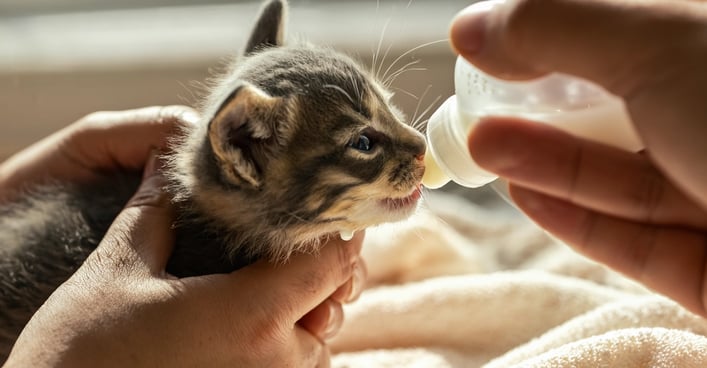
Bottle Feeding Kittens: The Complete 2026 Guide to Success
Learn how to save orphaned or rejected kittens with expert bottle feeding techniques. This guide covers formula, schedules, troubleshooting, and weaning for healthy development.
Share this page
Bottle Feeding Kittens: The Complete 2026 Guide to Success
Meta Description: Master the art of bottle feeding kittens with this definitive guide. Learn proper techniques, feeding schedules, formula preparation, and essential troubleshooting for orphaned or nursing kittens.
Introduction
Bottle feeding kittens is a critical skill for caregivers when mother cats cannot nurse due to illness, rejection, insufficient milk, or death. While nature designed kittens to nurse from their mothers, dedicated humans can successfully raise healthy felines through precise bottle feeding techniques. This life-saving practice requires knowledge, patience, and meticulous attention to detail, transforming vulnerable newborns into thriving young cats.
This comprehensive guide provides everything you need—from selecting the right supplies to troubleshooting common issues—ensuring you can nourish kittens confidently from birth through weaning.
Bottle Feeding Kittens: The Complete 2026 Guide to Success - Articles
Situations Requiring Human Intervention
Mother Cat Cannot Nurse:
Mastitis (infected mammary glands)
Insufficient milk production (agalactia)
Illness, fever, or postpartum complications
Medical emergencies requiring separation
Death during or after delivery
Kitten Cannot Nurse:
Cleft palate preventing proper suction
Weakness or failure to thrive
Rejection by mother (common in first-time queens)
Litter size exceeding milk supply
Competition preventing smaller kittens from accessing teats
Emergency Scenarios:
Mother cat deceased or euthanized
Abandoned or orphaned kittens found
Maternal aggression toward offspring
Kittens removed for safety concerns
Immediate Assessment Protocol
Before initiating bottle feeding, conduct a thorough assessment:
Check for the Mother:
Observe from a distance (mothers may be hiding nearby)
Search for concealed nests in quiet, dark areas
Contact local shelters or rescues if the mother is confirmed absent
Evaluate the Kittens:
Temperature: Are they warm or cold to the touch?
Vocalization: Constant crying indicates hunger; silence may signal weakness.
Physical Condition: Check for visible deformities or injuries.
Age Estimation: Use physical characteristics (eyes, ears, mobility) to approximate age.
Decision Timeline:
Healthy kittens with absent mother: Begin care immediately.
Weak or cold kittens: Warm them gently before attempting to feed.
Rejected kittens: Intervene without delay.
Uncertain situations: Contact a veterinarian for guidance.
Essential Supplies for Bottle Feeding
Selecting a Milk Replacer
Commercial Kitten Milk Replacers (KMR) are essential. Never substitute with cow's milk, goat's milk, human infant formula, or plant-based alternatives, as these cause severe digestive upset and nutritional deficiencies.
Top Recommended Brands for 2026:
PetAg KMR (Kitten Milk Replacer)
The industry gold standard
Available in liquid and powder forms
Complete, balanced nutrition profile
Price: $15–$30 (varies by size)
Breeder's Edge Foster Care
Highly digestible formula
Contains beneficial probiotics
Ideal for kittens with sensitive stomachs
Price: $20–$35
Esbilac Puppy Milk Replacer
Acceptable emergency substitute for kitten formula
Similar nutritional profile, widely available
Price: $15–$25
Just Born Milk Replacer
Reliable alternative formula
Easily digestible
Readily available at most pet stores
Price: $12–$20
Formula Type Comparison:
Type
Pros
Cons
Best For
Powder
Longer shelf life, cost-effective
Requires precise mixing
Raising multiple kittens, long-term use
Liquid (Ready-to-Use)
Maximum convenience, no mixing
More expensive, shorter shelf life
Single kitten, emergency situations
Liquid (Concentrate)
Middle-ground cost
Requires careful dilution
Regular, ongoing use
Feeding Equipment Checklist
Bottles & Nipples:
PetAg Nurser Bottles: Specifically designed for kittens, with graduated measurements and replaceable nipples ($3–$5 each).
Miracle Nipple: Advanced design mimics a mother cat, reducing aspiration risk and easing feeding for weak kittens ($15–$20 per set).
Syringe Feeding (1-3 ml): For critically weak newborns; offers greater flow control but requires expert technique. Use temporarily until bottle feeding is established.
Nipple Selection Criteria:
Size: Must fit the kitten's mouth comfortably.
Flow Rate: Ideal flow is one drop per second when bottle is inverted.
Material: Soft, flexible silicone is preferred.
Maintenance: Replace nipples when torn, enlarged, or discolored.
Additional Critical Supplies:
Item
Purpose
Approximate Cost
Digital Kitchen Scale (grams)
Daily weight monitoring for growth tracking
$15–$30
Thermometer
Ensuring formula is at perfect temperature
$10–$20
Timer/App
Maintaining strict feeding schedules
$5–$15
Soft Towels & Blankets
For burping, cleaning, and bedding
$10–$20
Snuggle Safe Heating Pad
Providing consistent, safe warmth
$15–$30
Unflavored Pedialyte
Emergency hydration for diarrhea or weakness
$5–$10
Karo Syrup or Honey
Source of quick glucose for hypoglycemic kittens
$5–$10
Formula Preparation and Storage
Mixing Powdered Formula Correctly
Step-by-Step Instructions:
Measure: Use the provided scoop—level, not packed.
Hydrate: Add warm water (not hot) per package directions.
Mix: Stir or shake thoroughly until completely dissolved with no clumps.
Temperature Check: Aim for 100–105°F (38–41°C)—body temperature.
Wrist Test: A drop should feel slightly warm, not hot.
Use: Feed immediately or refrigerate promptly.
Key Consistency Notes:
Formula should flow easily through the nipple.
Too thick: Can cause constipation.
Too thin: May lead to diarrhea and inadequate calorie intake.
Safe Storage Guidelines
Mixed Formula:
Refrigerate immediately in a sealed container.
Use within 24 hours.
Warm only the amount needed for each feeding.
Discard if it develops a sour odor.
Powdered Formula:
Store in a cool, dry place in its original airtight container.
Use by the expiration date and note the opening date.
Liquid (Ready-to-Use) Formula:
Refrigerate after opening.
Use within 72 hours.
Warm gently before feeding.
Warming Formula Safely
Recommended Methods:
Warm Water Bath: Place sealed bottle in a bowl of warm water for 2–3 minutes.
Bottle Warmer: Use a device designed for infant bottles.
Running Warm Water: Hold bottle under warm tap water.
Never Use:
Microwave: Creates dangerous hot spots and destroys nutrients.
Direct stovetop heat or boiling water.
Always test temperature on your wrist before feeding and periodically during the feeding as formula cools.
Feeding Schedule and Amounts
Age-Based Feeding Guidelines
Age
Feeding Frequency
Amount per Feeding
Daily Total
Newborn – 1 Week
Every 2 hours (12× daily)
2–6 ml
24–72 ml
1 – 2 Weeks
Every 3–4 hours (8× daily)
6–10 ml
48–80 ml
2 – 3 Weeks
Every 4 hours (6× daily)
10–14 ml
60–84 ml
3 – 4 Weeks
Every 4–6 hours (4–6× daily)
14–18 ml
56–108 ml
4 – 5 Weeks
Every 6 hours (4× daily)
18–22 ml
72–88 ml
5 – 6 Weeks
3–4 times daily
22–25 ml
66–100 ml
Important Notes:
These are guidelines; individual needs vary. The hungriest kitten dictates the schedule.
Monitor weight gain as the ultimate indicator of sufficient intake.
Increase amounts gradually as the kitten grows.
Never force-feed a kitten that is full or refusing.
Daily Weight Monitoring: The Key to Success
Procedure:
Use a digital kitchen scale with gram precision.
Weigh at the same time each day (e.g., before the first morning feeding).
Record weights in a dedicated log.
Focus on the overall upward trend, not minor daily fluctuations.
Expected Weight Gain:
Newborn: 3–4 ounces (85–115 grams)
Daily Gain: ¼ to ½ ounce (7–14 grams)
Weekly Gain: 2–4 ounces (56–112 grams)
Red Flags Requiring Attention:
No weight gain for 24 hours.
Any weight loss.
A kitten consistently falling behind littermates.
Bottle Feeding Technique
Correct Positioning
The Right Way:
Place the kitten on its belly in a natural nursing posture.
Never feed on its back (high aspiration risk).
Gently support the head with your fingers, allowing slight elevation.
Tilt the bottle at a 45-degree angle to prevent air swallowing.
Let the kitten approach the nipple; don't force it into the mouth.
Positioning Tips:
Keep the kitten's head slightly higher than its stomach.
Provide full body support on a soft towel on your lap.
Mimic the angle of nursing from a mother cat.
The Feeding Process
Step-by-Step:
Prepare: Mix, warm, and test the formula.
Position: Place kitten on its belly, fully supported.
Stimulate: Gently touch the nipple to the lips to trigger the rooting reflex.
Latch: Wait for the kitten to accept and latch onto the nipple.
Monitor: Watch for steady suckling and listen for swallowing sounds.
Watch for Bubbles: Bubbles in the bottle are normal; bubbles from the nose are an emergency.
Allow Pauses: Kittens naturally take breaks. Be patient.
Burp: Gently pat or rub the back after feeding.
Stimulate Elimination: Use a warm, damp cloth to rub the genital/anal area.
Clean Up: Gently wipe the kitten's face and body.
Pacing: A typical feeding lasts 10–20 minutes. Let the kitten set the pace to prevent aspiration.
Hold the kitten upright against your shoulder, supporting its head and bottom.
Gently pat or rub its back in an upward motion.
Continue for 1–2 minutes or until you hear a soft burp.
Alternative positions: seated on your lap leaning forward, or across your lap on its belly.
Common Problems and Solutions
Refusal to Eat
Potential Causes & Solutions:
Cause
Solution
Wrong Formula Temperature
Re-check and adjust to 100–105°F (38–41°C).
Incorrect Nipple Flow
Adjust hole size or try a different nipple. Flow should be one drop per second.
Kitten is Too Cold
Warm the kitten slowly using your body heat or a heating pad before feeding.
Kitten is Too Weak
Try syringe feeding tiny amounts and seek immediate veterinary care.
Underlying Illness
Veterinary evaluation is crucial.
Formula Mix is Wrong
Ensure you're following mixing directions precisely; try a slight dilution.
Techniques for Reluctant Feeders:
Rub a drop of formula on the lips.
Express a tiny drop from the nipple into the mouth.
Try different holding angles.
Ensure there is no physical obstruction like a cleft palate.
Aspiration (Formula Entering the Lungs)
Emergency Signs:
Coughing, gagging, or choking during feeding.
Formula dripping from the nose.
Bubbling at the nostrils.
Wheezing or difficulty breathing afterward.
Immediate Action:
STOP FEEDING.
Hold the kitten head-down for 20–30 seconds to allow drainage.
Gently clear the mouth and nose with a soft cloth.
Tap the back gently to help expel fluid.
Keep the kitten warm and monitor breathing closely.
CONTACT A VETERINARIAN IMMEDIATELY. Aspiration can lead to fatal pneumonia.
Prevention: Always feed in the correct belly-down position, ensure proper nipple flow, and never force-feed.
Diarrhea
Common Causes: Overfeeding, formula too concentrated, bacterial infection, parasites, or sudden formula changes.
Management Steps:
Temporarily dilute formula to 75% strength.
Feed smaller amounts more frequently.
Ensure hydration with unflavored Pedialyte between feedings.
Clean the kitten meticulously after each episode to prevent urine scalding.
Monitor closely for signs of dehydration (sunken eyes, lethargy, skin tenting).
Seek Veterinary Care If: Diarrhea contains blood, persists over 24 hours, or is accompanied by lethargy.
Constipation
Causes: Formula too concentrated, inadequate stimulation, dehydration.
Signs: Straining without producing stool, hard/dry feces, crying during attempts, distended belly.
Management:
Increase the frequency and duration of genital stimulation.
Slightly dilute the formula.
Ensure the kitten is well-hydrated.
Perform gentle belly massages in a clockwise motion.
Consult a vet if no stool is produced in 48 hours.
Regurgitation vs. Vomiting
Normal Regurgitation:
Small amount of clear/milky liquid immediately after feeding.
Often due to eating too fast.
Concerning Vomiting:
Large amounts, projectile vomiting.
Occurs hours after feeding.
Contains blood, bile, or is foul-smelling.
Accompanied by lethargy.
Management for Simple Spit-up:
Feed smaller amounts more frequently.
Burp thoroughly during and after feeding.
Keep the kitten upright for 10–15 minutes post-feeding.
Seek veterinary care for concerning signs.
Transitioning to Solid Food (Weaning)
Timing the Weaning Process
Begin weaning around 3–4 weeks of age when kittens show interest in their mother's food or start chewing on the bottle nipple. This is a gradual process that typically takes 2–4 weeks. Continue bottle feeding throughout the initial stages.
The Weaning Process
Week 1 (3–4 Weeks Old):
Offer a "kitten gruel"—high-quality wet kitten food mixed with formula to a soupy consistency.
Place on a shallow saucer. Let kittens explore and walk through it.
Expect mess! Clean faces after each attempt.
Continue regular bottle feeding schedules.
Week 2 (4–5 Weeks Old):
Gradually decrease the amount of formula in the gruel, thickening the consistency.
Begin reducing the number of bottle feedings slightly.
Introduce a shallow dish of fresh water.
Week 3 (5–6 Weeks Old):
Offer wet food alone.
Introduce high-quality dry kitten kibble, softened with water or formula.
Bottle feed only 2–3 times per day, primarily for comfort and supplemental nutrition.
Week 4 (6–7 Weeks Old):
Kittens should be eating primarily solid food.
Bottle feeding can be phased out, perhaps offering one nighttime feeding for comfort.
Provide constant access to dry kibble and fresh water.
Weaning is complete!
Appropriate First Foods
Offer:
High-quality, name-brand kitten wet/pate food.
Kitten dry food specifically formulated for growth.
KMR as a mixer or occasional treat.
Avoid:
Adult cat food (inadequate nutrition).
Cow's milk.
Human food.
Raw meat (high bacterial risk for immature immune systems).
Fish-based foods (risk of mercury and thiaminase).
Cost of Bottle Feeding
Initial Investment (One-Time Costs)
Item
Cost Range
KMR Powder (Large Can)
$25 – $35
Bottles & Nipples (Set)
$15 – $25
Digital Kitchen Scale
$15 – $30
Thermometer
$10 – $20
Towels, Bedding, Heating Pad
$35 – $70
Miscellaneous (Bowls, etc.)
$15 – $30
Total Initial Cost
$115 – $210
Ongoing Weekly Costs
Age
Estimated Weekly Formula Cost
Notes
0–2 Weeks
$20 – $30
Frequent, small feedings
2–4 Weeks
$25 – $40
Peak consumption period
4–6 Weeks
$15 – $25
Consumption decreases as weaning begins
Total Estimated Cost (Birth to Weaning)
Scenario
Estimated Cost Range
Single Kitten, No Complications
$200 – $400
Litter of 4, Healthy
$400 – $800
With Necessary Veterinary Care
$500 – $1,500+
Conclusion
Bottle feeding kittens is a profound commitment that demands dedication, patience, and meticulous care. Successfully guiding a vulnerable newborn to a playful, weaned kitten is an incredibly rewarding experience. The core principles for success are:
Use Only Kitten Formula: Never compromise with cow's milk or inadequate substitutes.
Master Positioning: Always feed on the belly, never on the back, to prevent aspiration.
Adhere to Schedules: Follow age-appropriate feeding frequencies and amounts.
Monitor Weight Religiously: Consistent daily gain is your best indicator of health.
Be Vigilant: Recognize and act on early signs of trouble (refusal, diarrhea, lethargy).
Practice Patience: Gentle, paced feeding is safer and less stressful.
Wean Gradually: Allow several weeks for a smooth transition to solid food.
Remember, each kitten is an individual. Use these guidelines as a framework, but be prepared to adapt to your kitten's unique needs. When in doubt, always consult a veterinarian, especially one experienced with neonatal care.
Your investment of time, resources, and heart transforms helpless orphans into confident, healthy cats. This remarkable journey not only saves lives but forges an unbreakable bond between caregiver and kitten—a truly extraordinary achievement.
Get expert advice about cat care, behavior, nutrition, grooming, and training. Ask our AI cat care expert anything about your cat and receive professional guidance.