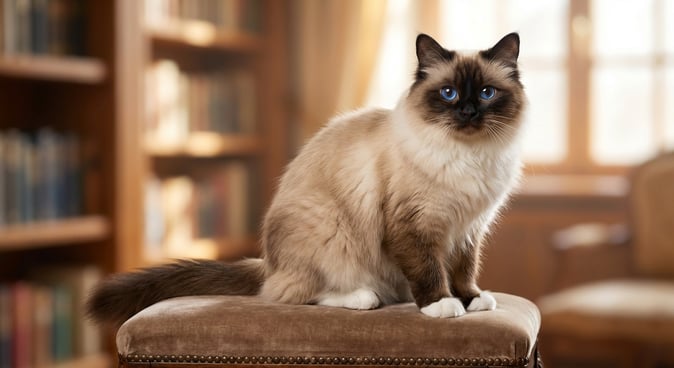
Birman Cats: The Sacred Cat of Burma with Enchanting Blue Eyes
Step into the legend of the Birman, a sapphire-eyed temple cat whose snow-white paws once padded silently beside Burmese priests. Discover how this sacred guardian traded Asian temples for European parlors and stole modern hearts without losing its soulful mystique.
With their deep sapphire eyes, silky coats, and distinctive white paws, Birman cats captivate hearts as easily as they claim laps. Known as the 'Sacred Cat of Burma,' these enchanting felines combine striking beauty with an exceptionally gentle disposition. Whether you're seeking a devoted family companion or a serene presence in your home, the Birman's affectionate nature and moderate energy make them an ideal choice for cat lovers worldwide.
History & Origin
The Birman's mystical origins trace back to the temples of Myanmar (formerly Burma), where they were revered as sacred companions to Kittah priests. According to legend, these cats were the earthly vessels of departed temple guardians, distinguished by their pure white paws that symbolized their holy nature. The breed's journey to the Western world began in the early 20th century when a pair of Birman cats was allegedly gifted to a French explorer for assisting a temple. While historical records remain cloudy, what's certain is that the Birman established itself in France by the 1920s.
World War II nearly extinguished the breed, leaving only a handful of surviving cats. Dedicated European breeders painstakingly rebuilt the Birman population through careful outcrossing with Persians and Siamese, preserving the breed's distinctive traits. The first Birmans arrived in the United States in 1959, and the Cat Fanciers' Association recognized the breed in 1967. Today, this "Sacred Cat of Burma" continues to enchant families with its gentle soul and storied heritage, maintaining its status as one of the most beloved companion breeds.
Physical Characteristics
The Birman cat weaves together mystical heritage, breathtaking beauty, and an exceptionally gentle heart into one remarkable companion. Their devotion to family, patience with children, and serene confidence make them ideal house cats for those seeking a true bond with their feline friend. While they require regular grooming and companionship, the love and tranquility they bring to a home far outweigh these modest commitments. For families and individuals ready to welcome a sacred soul with sapphire eyes and pure white paws, the Birman promises years of quiet affection and loyal companionship.
Tags
BirmanBirman catSacred Cat of Burmablue-eyed catlong-haired catfamily cat
Birman Cats: The Sacred Cat of Burma with Enchanting Blue Eyes - Articles
The Birman presents a picture of elegant balance, with adult males typically weighing 5-6 kg (11-13 lbs) and females slightly smaller at 4-5 kg (9-11 lbs). Their medium-length bodies stretch 35-45 cm from nose to tail base, giving them a substantial yet graceful presence. Unlike some long-haired breeds, Birmans possess a single-layer silky coat that lies close to the body, creating a luxurious texture that resists matting better than many comparable breeds.
Their most arresting feature is undoubtedly those deep, vivid blue eyes—an intense sapphire shade that seems to gaze directly into your soul. The breed's color-point pattern features darker "points" on the ears, face, legs, and tail, creating striking contrast with the lighter body. Recognized colors include Seal Point (rich brown), Blue Point (soft gray), Chocolate Point (warm brown), and Lilac Point (frosty gray-pink). But the Birman's signature trait is the pristine white "gloves" on all four paws, perfectly symmetrical markings that appear as if dipped in pure white paint. These gloves extend up the back paws in an inverted V shape, a breed standard that remains strictly enforced in show cats.
Temperament & Personality
Birmans earn their reputation as ideal family companions through their exceptional temperament, scoring a perfect 5/5 in affection level, friendliness, kid-friendliness, and pet-friendliness. These cats form deep bonds with their human families, often following their favorite people from room to room like devoted shadows. Their social nature means they thrive on interaction and can become lonely if left alone for extended periods.
Despite their affectionate nature, Birmans aren't demanding or clingy. Their moderate energy level (3/5) and playful yet gentle disposition (playfulness 4/5) make them adaptable to various household rhythms. They're intelligent enough (4/5) to learn tricks, play fetch, and solve puzzle toys, but their quiet vocalization (2/5) means they communicate through soft chirps rather than insistent meows. This breed excels with children, showing remarkable patience and tolerance, and they typically integrate seamlessly with other cats and respectful dogs. Their gentle spirit doesn't mean they're boring—Birmans retain a kitten-like playfulness well into adulthood, enjoying interactive toys and games that engage their intelligent minds.
Care Requirements
While Birmans aren't hypoallergenic, their moderate shedding level (3/5) and unique coat structure make grooming more manageable than many long-haired breeds. Their silky, single-layer coat requires thorough brushing 3-4 times weekly (grooming needs 4/5) to prevent tangles and reduce loose hair. A stainless steel comb works best to reach the undercoat without damaging the silky texture. During seasonal shedding periods, daily brushing helps keep their coat pristine and minimizes hair around your home.
Exercise needs for Birmans sit at a comfortable 3/5—moderate activity that balances playfulness with relaxation. Interactive wand toys, puzzle feeders, and vertical cat trees satisfy their need for mental and physical stimulation. Two 15-minute play sessions daily typically suffice to keep these cats content and healthy. Their moderate energy level means they'll enjoy a good play session but won't dismantle your curtains if you skip a day.
Nutritionally, Birmans thrive on high-quality cat food appropriate for their age and activity level. Monitor portion sizes carefully, as their affectionate nature makes them prone to begging. Fresh water should always be available, and some Birmans enjoy running water fountains, which encourage proper hydration important for their kidney health.
Health Considerations
Birmans enjoy a relatively healthy lifespan of 14-15 years when provided with proper care. However, like all purebred cats, they carry predispositions to certain genetic conditions. Hypertrophic cardiomyopathy (HCM), a heart disease causing thickened heart muscle, appears occasionally in the breed. Responsible breeders screen their breeding cats for HCM, but regular cardiac monitoring remains important throughout your cat's life.
Kidney disease also appears with some frequency in Birmans, making routine blood work and urinalysis valuable preventive tools. Annual veterinary check-ups should include blood pressure monitoring and kidney function assessment, especially as your cat enters senior years. Maintaining excellent hydration through wet food and water fountains supports kidney health.
Beyond these breed-specific concerns, Birmans need routine dental care, parasite prevention, and vaccinations. Their luxurious coat can hide skin issues, so regular grooming sessions double as health checks. Keep their pristine white paws clean by gently wiping with a damp cloth if they become dirty. With attentive care and early detection of potential issues, your Birman can enjoy a long, healthy life as your devoted companion.
Is This Breed Right For You?
The Birman makes an excellent choice for families seeking a genuinely affectionate, adaptable cat that thrives on companionship. Their perfect scores in kid-friendliness and pet-friendliness mean they integrate beautifully into active households with children and other animals. If you work from home or have a family member home most days, the Birman's social nature will be wonderfully fulfilled.
Seniors and singles will also appreciate the Birman's devoted yet undemanding presence—these cats offer companionship without overwhelming neediness. However, they don't suit households where everyone works long hours away from home, as they can develop separation anxiety. Their moderate grooming needs require commitment, though less intensive than many long-haired breeds.
If you're seeking a quiet, gentle cat who greets you at the door, sleeps beside you at night, and treats your entire family with equal adoration, the Birman may be your perfect match. They're not ideal for those wanting an independent, aloof cat or a highly vocal, constantly active breed. The Birman offers a golden mean: affectionate without clinginess, playful but not hyperactive, and beautiful without high-maintenance drama.
affectionate cat
gentle cat
color-point cat
kid-friendly cat
pet-friendly cat
Myanmar cat breed
cat with white paws
Cat's Doctor
Get AI-powered advice about your cat's health and care. Enter your cat's information and start a conversation with our veterinary assistant.
Get expert advice about cat care, behavior, nutrition, grooming, and training. Ask our AI cat care expert anything about your cat and receive professional guidance.